
Serengeti Calving Season Itinerary: A January–March Plan for the Southern Plains
A step-by-step calving-season itinerary for the southern Serengeti and Ndutu — when to go, how many nights, where to stay, predator-rich game drives, family pacing and green-season photography, with evergreen migration timing to verify for your dates.

Photo: Ben Preater / Unsplash
- ✓Calving season runs roughly January to March on the southern short-grass plains around Ndutu, on the Ngorongoro edge — treat the peak (usually February) as a 30-year average and verify for your dates.
- ✓In a window of about three weeks, something near half a million wildebeest calves are born, drawing the densest predator action of the year — lions, cheetahs, hyenas and jackals all working the herds.
- ✓Base yourself in the south: Ndutu and the southern Serengeti plains, not the central or northern park, which can be hours from the births.
- ✓Give it three to four nights in the south to settle into the rhythm of the plains and not chase a single morning's luck.
- ✓The open, treeless ground makes this the best window of the year for cheetahs hunting in the clear — a photographer's and a family's season.
- ✓It is the green season: lush, cinematic and better value, with afternoon storms possible and some tracks heavy going.
- ✓Verify park and Conservation Area fees, camp booking windows and the herds' likely position with official sources and your operator before you commit.
Why calving season is its own kind of safari
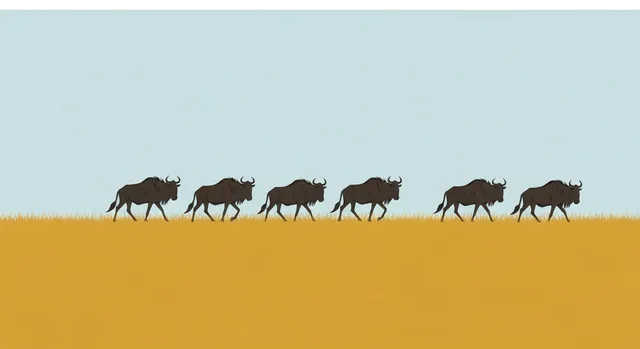
Most people picture the Serengeti as the dry-season north — dust, crocodiles and the churning drama of a Mara River crossing. Calving season is the opposite chapter of the same story, and for many travellers it is the better one. From roughly January to March the herds gather on the southern short-grass plains around Ndutu, fed by mineral-rich volcanic soils from the Ngorongoro highlands, and in a tight window of about three weeks they give birth to something close to half a million calves. The plain becomes a nursery and, inevitably, a hunting ground. It is the most concentrated predator viewing of the Serengeti year, set against emerald grass and the cinematic light of the green season.
This itinerary is built to put you in the right place for that spectacle without over-promising it. Wildlife is wild, and no honest plan can guarantee a hunt or a particular sighting. What a good calving-season itinerary can do is stack the odds: base you in the south rather than the centre, give you enough nights to read the plains, and pace the days around the early and late light when the cats are active. The result is a softer, slower, more intimate safari than the crossing season — fewer vehicles, newborns everywhere, and the rawest theatre of life and death in Africa playing out on open ground.
At a glance: the calving-season plan
A quick orientation before the day-by-day. Everything here is evergreen — confirm current fees, camp availability, flight schedules and the herds' likely position for your exact travel window with official sources and your operator close to departure.
- Best window: roughly January to March, with births usually peaking around February — verify for your dates.
- Where: the southern Serengeti short-grass plains and Ndutu, on the Ngorongoro Conservation Area edge.
- Minimum nights: three to four in the south to give the plains time to deliver.
- Headline draw: half a million calves and the year's most intense predator action — especially cheetahs.
- Style: lush green season — dramatic skies, better value, possible afternoon storms and heavy tracks.
- Access: drive in from Arusha via Ngorongoro, or fly to the Ndutu airstrip for a faster start.
- Pace: gentle and photographic — a strong fit for families and first-timers, as well as serious shooters.
Step 1 — Pin your window, then hold it loosely
Calving is the most weather-driven event in the migration calendar, so start by understanding that any date you read — including the ones on this page — is a long-run average, not a schedule. The herds follow the short rains and the flush of new grass onto the southern plains; in a typical year they are concentrated around Ndutu from roughly January, with the great pulse of births peaking around February and tailing into March. But a dry or late start to the rains can shift the whole pattern by a couple of weeks in either direction, and that is completely normal.
The practical move is to choose a window inside January–March that fits your life, then verify the herds' likely position for those exact dates with your operator before you commit camps. February is the safest single bet for peak calving and the densest predator action, but it is also the busiest of the calving months. Early January and late March are quieter and often cheaper, with the trade-off that you may catch the build-up or the tail rather than the full crescendo. Whatever you choose, build a little flexibility into your expectations — the plains will be wonderful, but the exact intensity is the herds' decision, not yours.
- Treat February's peak as a 30-year average — verify the herds' likely position for your dates.
- January: the build-up, quieter and often better value, with births beginning.
- February: usually the peak of calving and predator action — busiest of the three months.
- March: the tail of calving as the herds begin drifting; lush and quiet, rain more likely.
- Confirm timing with your operator before locking in any camp in the south.
Step 2 — Base yourself in the south, near Ndutu
The single most important decision in a calving itinerary is where you sleep, and the answer is unambiguous: the south. The births happen on the short-grass plains around Ndutu, which straddle the boundary of the Serengeti National Park and the Ngorongoro Conservation Area. A camp here puts you among the herds at dawn, when the predators are most active and the light is best. A lodge in central Seronera or anywhere north of it — however lovely — can leave you with hours of driving before you reach the action, which eats the very mornings you came for.
Camps in the south fall into two broad families. Mobile or seasonal camps follow the migration and set up on or near the calving plains for these months, putting you closest to the births; they strike camp and move on when the herds do. Permanent lodges and tented camps in and around Ndutu offer more fixed comfort and are well placed for the season, though slightly further from the moving edge of the herd. Either works. The non-negotiable is that your bed is in the south for calving — verify a camp's exact position against where the herds are expected for your dates before you book, because not every 'Serengeti' camp is anywhere near Ndutu in February.
- Sleep in the south: Ndutu and the southern short-grass plains, not central or northern Serengeti.
- Mobile and seasonal camps follow the herds and sit closest to the births.
- Permanent Ndutu lodges and tented camps trade some proximity for fixed comfort.
- Southern camps are limited and book out far ahead for February — reserve early.
- Verify your camp's location against the herds' expected position for your exact dates.
Step 3 — How many nights, and how to spend them
Give the south three to four nights. Calving season rewards patience over speed: the predator action is dense but unscheduled, and the magic often comes on the second or third morning, once you have learned where a particular cheetah likes to lie up or which pride is shadowing a section of herd. A single night in the south is a gamble that wastes the very thing that makes this season special — the slow accumulation of sightings as you settle into one stretch of plain. Three nights is a comfortable minimum; four lets you breathe, and to add a half-day toward the Ngorongoro side or the Gol Kopjes without feeling rushed.
Within each day, the rhythm is the classic Serengeti one, sharpened by the season. Be out at first light, when the cats are still hunting and the calves are most vulnerable — this is when the drama peaks. Many camps offer a packed breakfast so you can stay out through the productive early hours rather than racing back. The middle of the day is for resting at camp or a long, shaded picnic; the heat flattens the action and the light goes harsh. Then out again for the late afternoon and the golden hour, when the plains cool and the predators stir once more. On the green-season days when an afternoon storm rolls in, the light before and after it can be the most spectacular of the whole trip.
- Three nights minimum in the south; four to settle in and add a half-day excursion.
- Prioritise the early-morning drive — first light is when calving-season predators hunt.
- Take a packed breakfast to stay out through the productive dawn hours.
- Rest through the harsh midday heat; head out again for the golden afternoon.
- Don't over-schedule — the best sightings come from lingering, not covering ground.
Step 4 — A sample five-night calving route
Here is a worked route to adapt rather than follow to the letter. It assumes a drive-in via the Ngorongoro highlands, which is the classic way to reach the south and folds the Crater into the trip; a faster fly-in alternative follows in the next section. Re-point any detail to your dates and your operator's advice.
Day 1 — Arrive Arusha and overnight, shaking off the long-haul flight. Day 2 — Drive up to the Ngorongoro highlands, overnighting on the Crater rim; this breaks the journey and sets up a Crater morning. Day 3 — Descend for a morning game drive on the Crater floor, then continue down onto the southern Serengeti plains, reaching your Ndutu-area camp by late afternoon for a first taste of the herds. Days 4 and 5 — Two full days on the calving plains: dawn drives among the newborns and the predators that follow them, midday rest at camp, golden-hour drives, with the flexibility to follow whatever the herds and cats are doing. Day 6 — A final early drive, then transfer or fly back toward Arusha for onward travel. Stretch the plains days to three if you have a sixth night; the south will repay every extra dawn.
- Day 1: arrive Arusha, overnight.
- Day 2: drive to the Ngorongoro rim, overnight with Crater views.
- Day 3: Crater morning game drive, then descend onto the southern plains to your camp.
- Days 4–5: two full days on the Ndutu calving plains, dawn and golden-hour drives.
- Day 6: final morning drive, then transfer or flight back toward Arusha.
- Add a third plains day if you can — the south rewards extra mornings most.
Step 5 — Fly-in or drive-in for the south
You can reach the calving plains two ways, and the choice shapes the feel of the trip. Driving in from Arusha via Ngorongoro is the classic route: it costs less, folds in the Crater and the highland scenery, and delivers you to the south overland with a real sense of the country changing beneath you. The trade-off is time — the descent onto the plains is a long day, and green-season rains can make some tracks heavy and slow, so a sturdy 4x4 and a patient guide matter.
Flying in trades that landscape for hours. Light aircraft serve the Ndutu airstrip from Arusha and Kilimanjaro, putting you on the calving plains in a fraction of the time and saving you the muddy road legs that the long rains can throw up. It is the right call for a short trip, for travellers who do not want long days in a vehicle, and for families with young children who tire on rough roads. The costs are a higher price and the strict baggage rules of small planes — soft duffels only, with firm weight limits. Many people split the difference: drive one way to enjoy the Crater and the scenery, fly the other to save the worst of the road.
- Drive-in via Ngorongoro: cheaper, scenic, includes the Crater; a long day and possible heavy tracks.
- Fly-in to Ndutu airstrip: fast and gentle on the body; higher cost and strict soft-bag limits.
- Fly-in suits short trips, road-weary travellers and families with young children.
- A drive-one-way, fly-the-other split is a popular green-season compromise.
- Pack soft duffels within the weight cap if any leg is by light aircraft.
Step 6 — Calving season for families and photographers
Calving season is unusually friendly to two groups who can find the dry-season north demanding. For families, the green season's gentler pace, the constant presence of newborns and the open, easy-to-watch plains make for an engaging, less gruelling safari than chasing crossings in the heat. Sightings come thick and fast, drives can be shorter because the action is close to camp, and the spectacle of so many baby animals lands instantly with children. Choose a camp that welcomes families, keep the days flexible, and let the fly-in option spare young travellers the longest road legs.
For photographers, this is arguably the best window of the year. The plains are treeless and open, so cheetahs hunting in the clear are more visible here than almost anywhere; the green grass and dramatic storm light give frames a depth the dusty dry season cannot; and the density of predators and prey means action is frequent. Bring a long lens and a beanbag, shoot the early and late light hard, and let your guide position the vehicle for the cleanest angle. Whether you come with a camera or a car full of kids, the south in calving season delivers a softer, richer, more intimate Serengeti than the crowds up north ever see.
- Families: gentle pace, close action, newborns everywhere — pick a family-friendly camp and stay flexible.
- Photographers: open plains, storm light and frequent cheetah hunts make this a peak shooting season.
- Bring a long lens and a beanbag, and work the dawn and golden-hour light.
- Green-season storms create dramatic skies — shoot before and after the rain.
- Either way, the south in calving season is quieter and more intimate than the crossing crowds.
Step 7 — Verify before you book
The last step is the one that protects the whole trip: confirm the moving parts for your exact dates. Treat every timing note here as a long-run average and check the herds' likely position with your operator, because the calving pulse can swing a fortnight either way with the rains. The logic of basing yourself in the south rests entirely on the herds actually being there for your window, so this is not a detail to skip.
Beyond the migration, verify the practical layer that changes over time: park and Ngorongoro Conservation Area fees, gate hours, light-aircraft schedules and baggage limits, and the booking windows for the limited southern camps, which fill furthest ahead for February. Keep specific fee amounts and camp prices to official sources and your operator rather than relying on numbers that go stale. Build the trip on the evergreen logic here — go south, give it time, work the light — and let current data and a good operator lock down the rest. Do that, and calving season delivers the most intimate, predator-rich Serengeti there is.
Common questions about a calving-season itinerary
When is calving season in the Serengeti? Roughly January to March on the southern plains around Ndutu, with births usually peaking around February — treat that as a 30-year average and verify for your dates.
Where should I stay for calving? In the south, at or near Ndutu, in a mobile camp that follows the herds or a well-placed permanent camp — never in the central or northern park, which can be hours away.
How many days do I need? Plan three to four nights on the southern plains; one night is too few to read the predators and the herds.
Will I definitely see a hunt? No honest itinerary can promise it — wildlife is wild — but the density of predators and newborns in the south during calving makes it the most likely time of year to witness one.
Is it good for families and photographers? Yes — the gentle pace and constant newborns suit families, while the open plains and storm light make it arguably the best photographic window of the year.
Should I drive or fly to the south? Drive-in via Ngorongoro is cheaper and more scenic and folds in the Crater; fly-in to the Ndutu airstrip is faster and gentler, especially in the green-season rains.
Related guides

Calving Season in the Serengeti (Ndutu)
Calving season on the southern Serengeti plains around Ndutu — when roughly half a million wildebeest are born in about three weeks, why it draws the densest predator action of the year, and how to plan a green-season safari around it.
Read guide
Where to Stay in Ndutu
Camps and lodges for the Ndutu calving season — seasonal canvas among the acacia woodlands and short-grass plains, plus the permit logic of the Serengeti–Ngorongoro boundary that runs straight through the calving grounds.
Read guide
Serengeti Green Season Safari
Why the Serengeti's green season can be the best-value, most beautiful time to go — calving on the southern plains, dramatic light and storm skies, superb birding, lush landscapes, fewer vehicles and gentler rates.
Read guideMore in Itineraries
6
Budget Serengeti Itinerary
A realistic budget Serengeti itinerary built on group-joining safaris, camping and smart shoulder-season timing — where to save, where never to cut corners, and how to keep the magic without the luxury price tag.
Read guide
Family Serengeti Safari Itinerary
A family-paced Serengeti itinerary built around shorter drives, family-friendly camps with pools, easier logistics and real safety — the route that keeps both the children and the parents happy on an African safari.
Read guide
First-Time Serengeti Itinerary
The safest, most rewarding route for a first Serengeti safari — how to choose between central Seronera, the migration sectors, the Ngorongoro Crater and flying versus driving, without the rookie mistakes that ruin a first trip.
Read guide
Five-Day Serengeti Safari
A classic five-day Serengeti and Ngorongoro Crater route with better pacing, more wildlife diversity and sound camp logic — how to combine the central plains with the great caldera without rushing, by road or by air.
Read guide
Fly-In Serengeti Itinerary: A Time-Efficient Plan by Airstrip and Season
A time-efficient fly-in Serengeti itinerary — how to pick the right airstrip for your month, pair it with a camp and a migration target, link light-aircraft hops, pack for the weight limits, and a sample route. Evergreen timing to verify.
Read guide
Four-Day Serengeti Safari
A balanced four-day Serengeti safari: an arrival day, two full game-drive days in the central plains and a relaxed departure, with realistic flight-and-road logistics, honest pacing and the camp logic that makes a short trip feel unhurried.
Read guide