
Serengeti in February
February is peak calving in the southern Serengeti and Ndutu — roughly half a million wildebeest born in about three weeks, drawing the most intense predator action of the year. The single best month for plains drama and photography.

Photo: Frida Lannerström / Unsplash
- ✓February is the heart of calving season on the southern short-grass plains around Ndutu — around half a million calves born in roughly three weeks.
- ✓The densest predator viewing of the year: lions, cheetahs, hyenas and jackals all drawn in by the newborns.
- ✓Open, treeless plains make this the prime month for watching cheetah hunt in the clear.
- ✓Green-season weather — warm days, dramatic skies, short showers — and softer rates than peak dry season.
- ✓Calving peaks in February as a 30-year average, but its exact timing follows the rains; verify your dates and book the limited southern camps well ahead.
Peak calving: why February is special
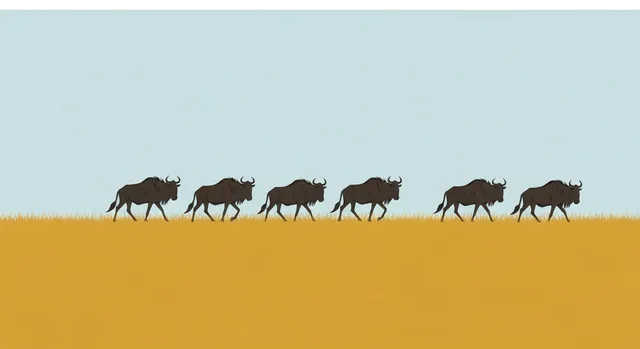
If there is a single month built for raw, concentrated drama, it is February. The migration is gathered on the southern Serengeti and the Ndutu plains, and the calving reaches its peak: in a window of roughly three weeks, something like half a million wildebeest calves are born. The plains fill with wobbling newborns finding their legs within minutes, learning to run almost before they can walk — because out here, running is survival.
The herds choose this open, short-grass country deliberately. The flush of new grass, fed by volcanic soils, fuels lactating mothers, and the treeless horizon lets them see danger coming. Synchronised birthing is its own defence: so many calves arrive at once that predators simply cannot take them all. It is one of the great natural strategies, and watching it unfold across the plains is unforgettable.
Calving peaks in February in most years, but the spectacle is governed by rain, not the calendar. Some years it runs a little earlier or later, and the herds shift across the southern plains with the storms. Treat February as the high-probability window and confirm the live picture for your exact dates.
February at a glance
A planning snapshot. Use it to set expectations, then verify the migration's live position and current fees before booking.
- Migration: peak calving on the southern plains and Ndutu (30-year average; verify your dates).
- Weather: green season — warm, bright mornings, short afternoon storms, glowing light.
- Wildlife: newborn calves en masse; the year's most intense big-cat and predator action.
- Crowds & value: quieter and better value than the dry-season peak, but the best southern camps fill early.
- Best for: photographers, predator and cheetah enthusiasts, first-timers wanting big drama.
- Best sector to base in: south / Ndutu, ideally a mobile or seasonal camp on the calving grounds.
The predator spectacle
Calving season is a study in life and death on open ground, and February is its peak. The concentration of vulnerable newborns draws predators in from across the ecosystem. Lions work the herds in prides; spotted hyenas and jackals patrol the margins; and the short-grass plains around Ndutu become some of the best cheetah country in Africa, where these open-country sprinters can hunt in the clear and be watched doing so.
This is honest, unsentimental wildlife viewing. You may witness a hunt, a kill, a calf saved by a heartbeat. It is also abundance: so much prey that sightings of multiple predators in a single morning are common, and behaviour — courtship, stalking, the standoff between mother and hunter — plays out at close range. Sightings are never guaranteed, but no month stacks the odds of predator action quite like February.
It is worth remembering that all of the Big Five inhabit the wider ecosystem, though black rhino are scarce and rarely seen, and that the central Seronera valley remains the most dependable place to find resident leopard draped in its riverine fig trees. Many February itineraries therefore pair several nights on the southern calving grounds with a night or two in Seronera, so a single trip captures both the open-plains drama of the herds and the quieter, more intimate cat sightings of the central woodlands.

A photographer's month
February is, for many, the finest photographic month in the Serengeti. The plains are green, the light between showers is soft and directional, skies build into towering cloudscapes, and the subject matter — tiny calves, hunting cats, dramatic skies over endless grass — is relentless. The open terrain means clean backgrounds and long sightlines, ideal for action and behaviour rather than animals half-hidden in bush.
Practical advice: choose a vehicle and guide set up for photography if it matters to you — low angles, bean bags, the patience to sit with a sighting. Pack a long lens for distant cheetah hunts and a wider option for herds-under-sky compositions, plus rain and dust protection. Mornings and late afternoons give the best light; midday storms can deliver the most dramatic frames of all.
Planning, basing and combining
Because the action is in the south, base yourself near the calving grounds — southern or Ndutu-area camps, many of them mobile or seasonal so they can sit on the herds. These camps are limited in number and February is one of the most sought-after windows of the green season, so book well ahead and confirm a camp's position against the migration for your exact dates. A night or two in central Seronera makes a strong complement for resident leopard and lion.
February pairs beautifully with the Northern Circuit: the herds' southern position makes it easy to add the nearby Ngorongoro Crater and Tarangire on the road in from Arusha, or to fly straight to a southern airstrip to maximise plains time. A finish on Zanzibar's beaches is a popular contrast. Park fees, conservation levies and camp rates all change over time, so rely on official and operator sources for current numbers rather than figures quoted in advance.
Related guides

Calving Season in the Serengeti (Ndutu)
Calving season on the southern Serengeti plains around Ndutu — when roughly half a million wildebeest are born in about three weeks, why it draws the densest predator action of the year, and how to plan a green-season safari around it.
Read guide
Where to Stay in Ndutu
Camps and lodges for the Ndutu calving season — seasonal canvas among the acacia woodlands and short-grass plains, plus the permit logic of the Serengeti–Ngorongoro boundary that runs straight through the calving grounds.
Read guide
Serengeti Photography Safari
How to plan a photo-first Serengeti safari — the vehicle and private guide that make or break your images, the lenses and light to plan for, and the seasons that put predators and crossings in front of your lens.
Read guideMore in When to Go
6
Best Months for Serengeti Photography
Which Serengeti months deliver the photographs you want — dramatic light and dust, emerald plains, newborns, river crossings, big cats and fewer vehicles in your frame.
Read guide
Calving Season in the Serengeti
Calving season on the southern Serengeti plains around Ndutu — when roughly half a million wildebeest are born in about three weeks, why it draws the densest predator action of the year, and how to plan a green-season safari around it.
Read guide
Calving Season vs River Crossings
Two faces of the Great Migration: the southern Ndutu calving in the green months, and the northern Mara crossings in the dry. Decide between them by wildlife, budget, crowds, predictability and the kind of drama you want.
Read guide
Christmas & New Year in the Serengeti
How to plan a Christmas or New Year safari in the Serengeti — green December plains, gathering herds, premium festive camps, family-friendly logistics and the flights that make a holiday trip work. Romantic, festive and worth booking early.
Read guide
Great Migration Planning Mistakes
The planning mistakes that make travellers miss the herds, overspend, or book the wrong Serengeti sector — and how to avoid each one so your dates, your camp and the migration actually line up.
Read guide
How to Choose a Migration Camp
Match a Serengeti camp to your month, the migration phase, the nearest airstrip, your budget and your wildlife goal — so you sleep where the herds will be, not where the brochure photo was taken.
Read guide