
How to Choose a Migration Camp
Match a Serengeti camp to your month, the migration phase, the nearest airstrip, your budget and your wildlife goal — so you sleep where the herds will be, not where the brochure photo was taken.

Photo: Peter Thomas / Unsplash
- ✓Choose the camp by where the herds will be on your exact dates, not by the camp's name or its best photographs.
- ✓The Great Migration is a year-round clockwise loop, so 'the migration camp' is really a different camp in different months.
- ✓Five levers decide the right base: month and migration phase, sector, airstrip and drive time, camp style, and budget.
- ✓Mobile camps move with the herds two or three times a year; fixed lodges trade that proximity for permanence and polish.
- ✓Treat every migration date as a 30-year average — verify current herd position and camp placement before you commit.
Start with the herd, not the brochure
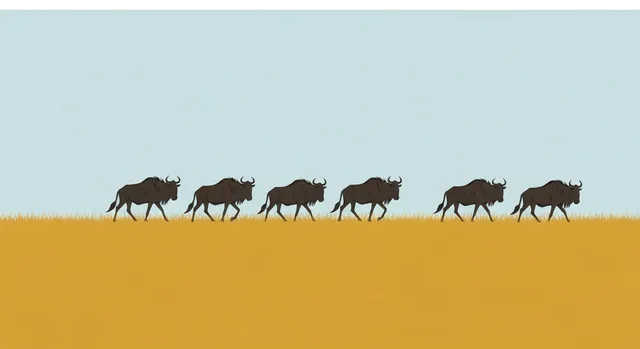
There is a romance to the idea of 'a migration camp' — canvas walls, a paraffin lamp, the low river-murmur of a million animals somewhere out in the dark. The reality is more demanding and, once you understand it, far more rewarding: there is no single migration camp. There is only the right camp for your month. The roughly 1.5 million wildebeest and their zebra and gazelle outriders trace a clockwise loop through the Serengeti–Mara ecosystem every year, chasing rain and new grass rather than a printed schedule, and a base that puts you in the middle of the action in August can sit half a day's drive from the herds in February.
So the first decision is not which camp, but which chapter. Do you want the calving plains of the south, where half a million wildebeest are born in roughly three weeks? The Grumeti in the west, where the herds meet their first real river? Or the Mara crossings in the far north, the churning hour that draws most travellers to Tanzania in the first place? Settle the chapter, and the map of sensible camps narrows from hundreds to a handful.
The five levers that decide your base
Once you accept that camp choice follows the herd, the rest is a question of trade-offs. Five levers do almost all the work, and a good plan weighs them in order rather than reaching for a famous name and hoping the timing fits.
- Month and migration phase: the single biggest lever. Your dates point to a sector before anything else does.
- Sector: south (Ndutu) for calving, west (Grumeti) for the early crossings, north (Kogatende) for the Mara, centre (Seronera) for reliable resident game in any month.
- Airstrip and drive time: how you reach the camp shapes how much of your day is spent travelling versus watching wildlife.
- Camp style: mobile camps follow the herds; fixed lodges and permanent tented camps stay put and offer more comfort.
- Budget: from no-frills seasonal camps to ultra-luxury mobile suites, the same sector can span a several-fold price range.
Lever one: month and migration phase
Everything starts here. As a 30-year average, calving peaks around February on the southern short-grass plains near Ndutu; the herds drift west toward the Grumeti through the long rains and into the early dry season; the Mara crossings in the north peak around August and run into October; then the short rains pull the herds back south from about November. These are averages, not appointments — a two-week swing in either direction is entirely normal, and an early or late rainy season can move the whole timetable.
The practical consequence is that you should fix your travel dates first, read those dates against the loop, and only then shortlist camps in the sector the herds should occupy. Booking a lovely northern camp for a February trip is a common and expensive way to spend your safari driving toward animals that are hundreds of kilometres away.
- December–March: south and Ndutu for calving and dense predator action on open plains.
- April–June: the herds move west and north-west through the Grumeti country during the long rains.
- July–October: north and Kogatende for the Mara River crossings — the dry-season headline.
- November: short rains break and the herds turn back toward the southern plains.
Lever two and three: sector, airstrip and drive time
Each Serengeti sector is effectively its own country of grass, and each has its own airstrip and its own logistics. The far north around Kogatende is remote enough that most travellers fly in on a light aircraft rather than enduring the long overland haul; that flight is part of why northern crossing trips lean fly-in. Central Seronera is the most accessible by road and air alike, which makes it a natural base for a first safari or a green-season trip built around resident wildlife. The southern Ndutu plains and the Western Corridor each have their own strips too.
Drive time inside a sector matters as much as the flight to reach it. A camp that sits an hour from the crossing points buys you slow, patient mornings on the riverbank; one positioned for a different season can mean two hours each way before the day even begins. When you compare camps, ask not just which sector they are in but where in the sector they sit relative to the action for your month.
Lever four: camp style
Broadly there are three styles, and they sit on a spectrum from movement to permanence. Mobile camps — sometimes called migration camps in the truest sense — pack up and relocate two or three times a year to stay close to the herds, typically running a southern site for calving and a northern site for the crossings. Classic permanent tented camps stay in one place all year, offering more comfort and atmosphere at the cost of being perfectly placed for only part of the migration. Permanent lodges, often in the central park, trade proximity for reliability, en-suite solidity and easy access.
No style is better in the abstract; each is better for a particular trip. If river crossings are the whole point and you are travelling in August, a well-placed mobile or seasonal camp in the north is hard to beat. If you want a comfortable, year-round base for resident big cats and a gentler first safari, a central lodge earns its keep. The deeper comparison — and how to decide — lives on the dedicated page below.
At a glance: which sector, which months, which camp
If you remember nothing else, remember this compact map of the year. It pairs the migration's likely position with the sector you should base in and the kind of camp that tends to fit. Every line is a 30-year average — useful for planning, never a promise — so treat it as a starting point to verify, not a timetable to bank on.
- December–March · South & Ndutu · calving peaks around February · mobile or seasonal camps on the short-grass plains · open ground ideal for cheetah.
- April–June · West & the Grumeti · herds move toward their first river · accessible green-season camps · lush, quiet, better value, heavier roads.
- July–October · North & Kogatende · Mara crossings peak around August · mobile or seasonal camps near the river · remote, premium, books out earliest.
- November · Turning south · short rains break, herds swing back · southern and central camps · fresh greenery, fewer vehicles.
- Any month · Central Seronera · resident lions, leopards and cheetahs year-round · permanent lodges and tented camps · the reliable all-rounder.
Private vehicle, guiding and the small print that shapes your days
Two details that travellers often treat as afterthoughts quietly determine how good a migration trip feels. The first is whether your game-drive vehicle is private or shared. A private vehicle lets you linger at a riverbank for the hour it takes the herds to find their nerve, change plans when a sighting breaks, and start before dawn — exactly the flexibility a crossing rewards. A shared vehicle is more affordable but moves to a group's rhythm, which can cut a patient morning short. On a migration-focused trip, a private vehicle is often the single highest-value upgrade.
The second is your guide. A skilled, patient guide reads the herds, the weather and the river-banks, and positions you before the action rather than reacting to it. No camp's comfort substitutes for a guide who knows when to wait. When you compare camps, ask about the guiding model and vehicle as carefully as you ask about the tents — they shape the experience more than the décor does.
Lever five: budget, honestly
The Serengeti spans no-frills seasonal camps through to ultra-luxury mobile suites with private guides and butler service, and the same sector in the same week can vary several-fold in price. The biggest cost levers are camp style, whether your vehicle is private or shared, and whether you fly or drive — not the luxury label on the door. Layered beneath all of that are fixed park and concession fees that fall on every itinerary regardless of where you sleep.
Because fees and rates change and we will not quote figures that go stale, treat any specific number you read elsewhere as a starting point to verify, not gospel. The planning principle that does hold steady: location and timing drive cost and value far more than thread count does. A perfectly placed simple camp in the right month will out-deliver a grand lodge in the wrong sector every time.

A simple decision sequence
Put the levers together and a clean order of operations falls out. Fix your dates. Read those dates against the migration loop to find the sector. Decide whether you are flying or driving, which sets your airstrip and how the days will flow. Choose a camp style that matches your appetite for comfort versus proximity. Then filter the shortlist by budget and book early, because the best-placed northern and Ndutu camps are few in number and sell out furthest ahead.
Above all, verify before you commit. The migration timing in any guide, including this one, is a long-run average; the herds answer to rain, not calendars. Cross-check current herd position and a camp's placement for your exact week with the operator before you put money down, and you will sleep where the story is, not where last year's photograph was taken.
Common questions about choosing a migration camp
Is there one camp that follows the migration all year? Not quite — but mobile camps come closest. A single mobile operation typically runs two or three sites through the year (commonly a southern site for calving and a northern site for the crossings), so booking with one operator can keep you near the herds across seasons even though the physical camp changes.
How many nights do I need to see a crossing? The crossings cannot be guaranteed, so give yourself odds rather than a single chance. Three or more nights in the north during the window — roughly July to October — meaningfully improves your chances over a rushed day, and a patient guide with a private vehicle helps you be in position when the herds finally commit.
Should I pick the camp or the dates first? Dates first, almost always. Your travel window sets which chapter of the migration you can see, which sets the sector, which sets the shortlist of sensible camps. Reversing that order — falling for a camp and forcing your dates to fit — is the classic way to end up well placed for the wrong month.
How far ahead should I book? For peak dry-season crossing camps and prime calving camps, a year or more is not unusual, because the best-placed sites are few. Green-season and central trips allow much later booking. Whenever you book, verify the camp's placement against the migration for your exact week before you commit.
Related guides

Mobile Camp vs Fixed Lodge
How to decide between a mobile migration camp that follows the herds and a permanent lodge that stays put — the trade-offs in proximity, comfort, atmosphere, cost and reliability for your Serengeti safari.
Read guide
Where to Stay in the Serengeti
Where to stay in the Serengeti — how to choose the right sector, lodge or camp by your month, your migration goal, your budget, whether you fly or drive, and the wildlife you most want to see. Camp placement matters as much as comfort, so match the bed to the herd.
Read guide
The Great Migration, Month by Month
Where the wildebeest herds usually are in the Serengeti for each month of the year — calving in the south, the Grumeti in the west, the Mara crossings in the north — with the realistic odds of a river crossing and the right sector and camp to aim for.
Read guideMore in When to Go
6
Best Months for Serengeti Photography
Which Serengeti months deliver the photographs you want — dramatic light and dust, emerald plains, newborns, river crossings, big cats and fewer vehicles in your frame.
Read guide
Calving Season in the Serengeti
Calving season on the southern Serengeti plains around Ndutu — when roughly half a million wildebeest are born in about three weeks, why it draws the densest predator action of the year, and how to plan a green-season safari around it.
Read guide
Calving Season in the Serengeti (Ndutu)
Calving season on the southern Serengeti plains around Ndutu — when roughly half a million wildebeest are born in about three weeks, why it draws the densest predator action of the year, and how to plan a green-season safari around it.
Read guide
Calving Season vs River Crossings
Two faces of the Great Migration: the southern Ndutu calving in the green months, and the northern Mara crossings in the dry. Decide between them by wildlife, budget, crowds, predictability and the kind of drama you want.
Read guide
Christmas & New Year in the Serengeti
How to plan a Christmas or New Year safari in the Serengeti — green December plains, gathering herds, premium festive camps, family-friendly logistics and the flights that make a holiday trip work. Romantic, festive and worth booking early.
Read guide
Great Migration Planning Mistakes
The planning mistakes that make travellers miss the herds, overspend, or book the wrong Serengeti sector — and how to avoid each one so your dates, your camp and the migration actually line up.
Read guide