
Great Migration Planning Mistakes
The planning mistakes that make travellers miss the herds, overspend, or book the wrong Serengeti sector — and how to avoid each one so your dates, your camp and the migration actually line up.

Photo: Jeff Lemond / Unsplash
- ✓The most common — and most expensive — mistake is booking a camp without checking where the herds will be on your exact dates.
- ✓There is no fixed migration date: timing shifts with the rains, so treat every month-by-month claim as a 30-year average.
- ✓Chasing a 'guaranteed' river crossing is a trap — no ethical operator can schedule one, and the waiting is part of it.
- ✓Too little time in one sector is a quieter mistake: a single rushed day badly hurts your odds at the Mara crossings.
- ✓Many travellers overspend on the wrong things while underspending on placement, guiding and the days that actually matter.
Why migration planning goes wrong
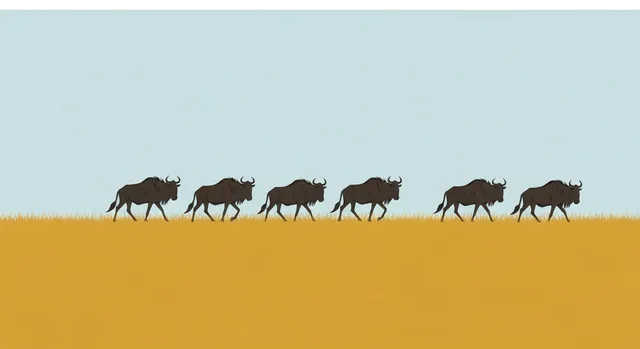
Almost every Serengeti planning mistake traces back to one misconception: that the Great Migration is an event with a date, like a festival you can buy a ticket to. It is not. It is a continuous, year-round, clockwise loop of roughly 1.5 million wildebeest following rain and new grass through the Serengeti–Mara ecosystem. The herds are always somewhere; the only question is which chapter coincides with your trip. Once you internalise that, the classic errors become easy to see and easy to dodge.
The mistakes below are listed in rough order of how much they cost travellers — in money, in missed wildlife, or in both. None of them require expert knowledge to avoid. They mostly require resisting a confident-sounding brochure and verifying a few things before you put money down.
Mistake 1: Booking a camp without checking the herd's position
This is the big one, and it is heartbreakingly common. A traveller falls for a beautiful camp, books it for their chosen dates, and only later discovers it is in the wrong sector for their month — a northern crossing camp booked for February calving season, or a southern camp booked for an August crossing trip. The herds may be hundreds of kilometres away, and no amount of luxury closes that gap.
The fix is simple and absolute: before you book any camp, read your exact dates against the migration loop, confirm which sector the herds should occupy, and then choose a camp placed for that sector. Ask the operator directly where they expect the herds to be during your week. Location comes before comfort, before price, before everything.
- Decide your dates first, then let the migration loop point you to a sector.
- Shortlist camps only within that sector — and confirm placement for your week with the operator.
- Remember mobile camps relocate seasonally; a camp's 'best months' are not all months.
Mistake 2: Treating migration dates as a fixed schedule
Every good guide, including ours, gives month-by-month timing — calving around February, crossings peaking around August — but those are 30-year averages, not appointments. An early or late rainy season can shift the whole timetable by weeks, and the herds routinely surge ahead of, or lag behind, where the calendar says they 'should' be. Travellers who treat a single chart as a guarantee set themselves up for disappointment.
Build in slack. Verify current herd position close to your trip rather than relying on a chart booked a year out, and choose dates and a sector that still work if the migration is a fortnight early or late. The herds answer to rain, not to your itinerary, and the planners who accept that are the ones who end up in the right place.

Mistake 3: Chasing a guaranteed river crossing
The Mara crossings are the spectacle most people picture, and the desire to lock one in is understandable. But no ethical operator can schedule a crossing. The herds cross when they cross — driven by grazing, weather and their own collective nerve — and on any given day they may pour across the river at dawn or never move at all. Anyone promising you a guaranteed crossing on a guaranteed day is selling something they cannot deliver.
The honest way to weight the odds in your favour is time and patience: base yourself in the north for several nights during the window — roughly July to October, peaking around August — travel with a guide who is willing to wait, and accept that the waiting itself is part of the experience. The crossing you do not control is far more moving than the one you imagined you could.
Mistake 4: Not giving a sector enough time
A close cousin of the crossing-guarantee trap is the rushed single day. Travellers squeeze the far north into one packed day on a tight itinerary, watch nothing cross, and leave deflated. The crossings are a gamble, and a single roll of the dice is poor odds. Three or more nights in the north dramatically improves your chances over one hurried visit, and the same logic applies to calving in the south — give the plains time and the action finds you.
Resist the urge to tick off every sector in a short trip. Two sectors done well beat four done in passing. If you only have a few days, pick the one chapter that matters most to you and commit to it; if you have a week, you can pair sectors or fold in Ngorongoro and Tarangire without rushing any of them.

Mistake 5: Spending money in the wrong places
Budget mistakes run in both directions. Some travellers overspend on a grand lodge in the wrong sector while underspending on the things that actually shape the safari — a well-placed camp, a private vehicle, a genuinely good guide, and enough days to let the wildlife unfold. Others cut the trip too short to save money and miss the very thing they came for. The luxury label on the door matters far less than placement and guiding.
Because park fees, concession fees and camp rates change, no responsible guide should quote you figures that go stale, and you should be wary of anyone who does. Verify current park fees and rates from official sources and your operator, and spend your budget on location, time and guiding first. That is where the value of a Serengeti safari actually lives.
Mistake 6: Booking too late for the peak sectors
The best-placed northern crossing camps and southern calving camps are few in number, and they sell out furthest ahead — often a year or more for peak dates. Leaving the booking late forces a compromise: the right sector but the wrong camp, or the right camp but a longer drive to the herds. For peak-season migration trips, early commitment is not a luxury, it is the difference between a front-row seat and a distant one.
If your dates are flexible, the green-season shoulder months reward late planners with quieter plains, lower rates and dramatic skies — a different but very real kind of Serengeti. If your dates are fixed on a peak window, book early, verify placement, and build the rest of the trip around that anchor.
Mistake 6b: Confusing the Serengeti's sectors for one place
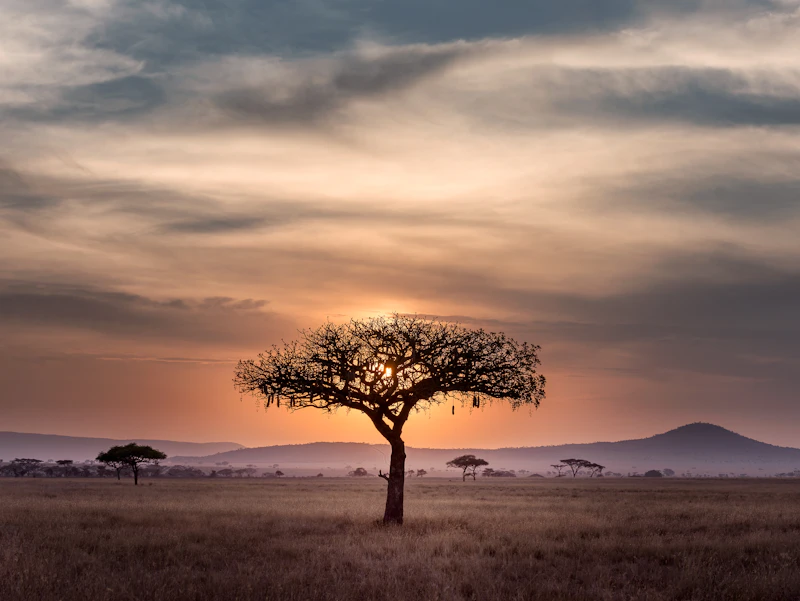
A subtler version of the placement mistake is imagining the Serengeti as a single uniform plain you can sweep across in an afternoon. It is vast — roughly 14,750 square kilometres — and its sectors are effectively separate countries of grass, hours apart by road. Central Seronera, the southern Ndutu plains, the Western Corridor along the Grumeti, and the far northern Kogatende country each have their own character, their own wildlife rhythm and their own best season. Treating them as interchangeable leads travellers to under-budget time and over-estimate how much ground a day can cover.
The remedy is to think in sectors from the start. Decide which sector your month points to, base yourself there with enough nights to let it unfold, and resist the temptation to 'just pop over' to another part of the park as though it were the next valley. When you do want to combine sectors, plan it deliberately — often with a short flight rather than a long drive — so the travel does not swallow your game-viewing time.
Mistake 7: Underpacking for cold dawns and forgetting the dust
It surprises travellers every year: the Serengeti sits high on the plateau, and although the days are warm to hot, clear high-altitude nights and pre-dawn game drives in an open vehicle can be genuinely cold. People who pack only for heat shiver through the best light of the day. The fix is layers — something warm and windproof for dawn, light and breathable clothing for midday — plus neutral colours and a way to keep camera kit safe from the dry-season dust that gets into everything.
This is a small mistake with an outsized effect on comfort, and it is entirely avoidable. Read the weather for your month, pack for both the heat and the chill, and add proper rain gear if you are travelling in the green season. Being warm at sunrise is the difference between enjoying the morning and enduring it.
Mistake 8: Skipping the rest of the circuit — or trying to do it all
Two opposite errors live here. Some travellers fly all the way to Tanzania and see only the Serengeti, skipping the Ngorongoro Crater on the road in — a self-contained caldera with one of the densest concentrations of wildlife in Africa — or Tarangire's elephants and baobabs, both of which slot naturally into a drive-in itinerary. Others over-correct and try to cram every park and a Zanzibar beach finish into a week, ending up exhausted and rushed, with no sector given the time it needs.
The middle path is to anchor the trip on the migration chapter you came for, then add only what genuinely fits the time and the route. A drive-in safari pairs easily with the Crater and Tarangire; a fly-in trip to the north pairs cleanly with a short hop to Zanzibar afterward. Sequence deliberately rather than greedily, and every part of the trip gets to breathe.
A short pre-booking checklist
Before you put money down, run through the few checks that prevent almost all of the mistakes above. They take minutes and save the whole trip.
- Read your exact dates against the migration loop and confirm the likely sector.
- Verify the camp's placement for your week directly with the operator.
- Treat all timing as a 30-year average and build in a little slack.
- Accept that crossings cannot be guaranteed — book enough nights to weight the odds.
- Spend on placement, a private vehicle and guiding before luxury labels.
- Verify current park fees and rates from official sources; ignore stale figures.
- Pack layers for cold dawns and rain gear for the green season.
- Book peak-season sectors early; they sell out furthest ahead.


Related guides

The Great Migration, Month by Month
Where the wildebeest herds usually are in the Serengeti for each month of the year — calving in the south, the Grumeti in the west, the Mara crossings in the north — with the realistic odds of a river crossing and the right sector and camp to aim for.
Read guide
How to Choose a Migration Camp
Match a Serengeti camp to your month, the migration phase, the nearest airstrip, your budget and your wildlife goal — so you sleep where the herds will be, not where the brochure photo was taken.
Read guide
Where to Stay in the Serengeti
Where to stay in the Serengeti — how to choose the right sector, lodge or camp by your month, your migration goal, your budget, whether you fly or drive, and the wildlife you most want to see. Camp placement matters as much as comfort, so match the bed to the herd.
Read guideMore in When to Go
6
Best Months for Serengeti Photography
Which Serengeti months deliver the photographs you want — dramatic light and dust, emerald plains, newborns, river crossings, big cats and fewer vehicles in your frame.
Read guide
Calving Season in the Serengeti
Calving season on the southern Serengeti plains around Ndutu — when roughly half a million wildebeest are born in about three weeks, why it draws the densest predator action of the year, and how to plan a green-season safari around it.
Read guide
Calving Season in the Serengeti (Ndutu)
Calving season on the southern Serengeti plains around Ndutu — when roughly half a million wildebeest are born in about three weeks, why it draws the densest predator action of the year, and how to plan a green-season safari around it.
Read guide
Calving Season vs River Crossings
Two faces of the Great Migration: the southern Ndutu calving in the green months, and the northern Mara crossings in the dry. Decide between them by wildlife, budget, crowds, predictability and the kind of drama you want.
Read guide
Christmas & New Year in the Serengeti
How to plan a Christmas or New Year safari in the Serengeti — green December plains, gathering herds, premium festive camps, family-friendly logistics and the flights that make a holiday trip work. Romantic, festive and worth booking early.
Read guide
Mara River Crossing Etiquette
How to watch a Mara River crossing responsibly — keeping back from the banks, following TANAPA vehicle rules, and never pressuring the herds into or out of the water.
Read guide