
Mara River Crossing Etiquette
How to watch a Mara River crossing responsibly — keeping back from the banks, following TANAPA vehicle rules, and never pressuring the herds into or out of the water.

Photo: Shripal Daphtary / Unsplash
- ✓A river crossing is a life-and-death gamble for the wildebeest — the watcher's first job is to never become part of the danger.
- ✓Keep vehicles back from the banks and the approach lines so the herds can reach the water and choose their moment freely.
- ✓Follow TANAPA park rules and your guide's lead: stay in the vehicle, keep to tracks, and never block a crossing point.
- ✓Patience is the whole game — crossings cannot be scheduled, and pressuring the herds to move is both unethical and counter-productive.
- ✓Verify current park regulations before you travel; rules and enforcement can change, and your operator should brief you on the latest.
Why does crossing etiquette matter so much?
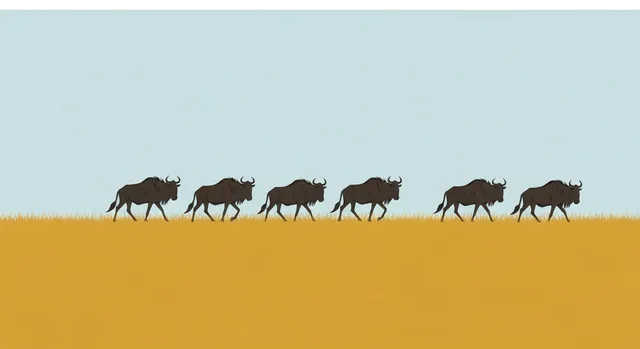
A Mara River crossing is one of the most dramatic events in nature, and also one of the most fraught. The wildebeest are weighing genuine peril — steep banks, fast water, waiting crocodiles — against the pull to follow the grass. They hesitate, mass on the bank, and then commit in a churning rush. Anything that adds confusion or pressure at that moment can scatter the herd, separate calves from mothers, or push animals into a more dangerous crossing point. Your behaviour genuinely affects the outcome.
Good etiquette is therefore not just politeness — it is the difference between witnessing a wild event and interfering with it. The aim is to be a quiet, invisible spectator: present enough to see the spectacle, absent enough that the herds behave exactly as they would if you were not there.
Where should the vehicle be positioned?
The single most important rule is to keep back from the banks and clear of the herds' approach lines. Wildebeest gather and study a crossing point for a long time before they commit; if vehicles crowd the bank or block the natural funnel down to the water, the animals may baulk, turn back, or divert to a steeper, deadlier spot. Give them open ground and an unobstructed line to the river.
A good guide positions side-on to the likely crossing point at a respectful distance, leaving the approach corridor entirely free, and switches off the engine to keep noise down. Resist the urge to ask your guide to creep closer for a better frame — a longer lens solves the photography problem without putting pressure on the herd. The best crossing photographs are almost always taken from vehicles that stayed back.
What are the TANAPA rules I need to follow?
The Serengeti is managed by Tanzania National Parks (TANAPA), and its general rules apply with extra force at a crossing. Stay inside the vehicle at all times — getting out is both against the rules and genuinely dangerous near a river full of crocodiles and skittish herds. Keep to designated tracks rather than driving onto the banks or off-road to chase a better angle. Do not block crossing points, do not surround the animals, and follow your guide's and any ranger's instructions without argument.
Speed limits, quiet conduct and a ban on feeding or disturbing wildlife all apply throughout the park. Because regulations and their enforcement can change over time, treat this as general guidance and verify the current park rules before you travel; a reputable operator will brief you on the latest and hold to them even when other vehicles do not.
How do I avoid pressuring the herds?
Never try to make a crossing happen. The herds cross when they cross, and any attempt to herd, encircle or startle them into the water is unethical and usually backfires — a spooked herd retreats and the moment is lost for everyone. Keep voices low, movements slow, and the engine off while the animals are deciding. Let the wildebeest set the pace entirely.
If a crowd of vehicles is building and starting to box the herd in, the responsible choice is sometimes to pull back or wait elsewhere rather than add to the pressure. This is also why several unhurried nights in the north beat a single rushed day: with time on your side, you are not tempted to force a sighting, and you can let a crossing unfold naturally over patient hours of watching.
How should I handle other vehicles and the crowds?
Crossings draw crowds, especially at the peak of the dry season, and the collective behaviour of the vehicles matters as much as any one driver. Be patient and courteous: do not jostle for position, do not edge forward to block another car's view or the herd's path, and give later arrivals room rather than racing to claim the bank. A line of well-behaved vehicles holding a respectful distance is what lets a crossing happen at all.
Choose your operator with this in mind. The best guides have the discipline to hold back when others push in, and the patience to wait for the herds rather than chase them. If solitude matters to you, base yourself in the north for several nights and let your guide pick quieter moments and less-crowded crossing points. The reward for restraint is the same spectacle, witnessed cleanly — and the knowledge that you watched the migration without ever becoming part of its danger.

Related guides

Mara River Crossings in the Serengeti
How to plan a Northern Serengeti river-crossing safari without false promises — when the Mara crossings happen at Kogatende, why timing is luck, where to stay, and how to watch with good wildlife etiquette.
Read guide
Responsible Safari in the Serengeti
How to travel the Serengeti responsibly — choosing ethical operators and guides, viewing wildlife without disturbing it, reducing your footprint, supporting conservation and communities, and understanding the pressures this ecosystem faces. Honest, evergreen guidance to verify before you go.
Read guide
Serengeti Park Rules: How to Travel the Plains Responsibly
The rules that govern a Serengeti safari — staying on the roads, off-road restrictions, keeping your distance from wildlife, speed limits, gate hours, drones, litter and quiet, ethical viewing — and why they protect both the animals and the magic of the place.
Read guideMore in When to Go
6
Best Months for Serengeti Photography
Which Serengeti months deliver the photographs you want — dramatic light and dust, emerald plains, newborns, river crossings, big cats and fewer vehicles in your frame.
Read guide
Calving Season in the Serengeti
Calving season on the southern Serengeti plains around Ndutu — when roughly half a million wildebeest are born in about three weeks, why it draws the densest predator action of the year, and how to plan a green-season safari around it.
Read guide
Calving Season in the Serengeti (Ndutu)
Calving season on the southern Serengeti plains around Ndutu — when roughly half a million wildebeest are born in about three weeks, why it draws the densest predator action of the year, and how to plan a green-season safari around it.
Read guide
Calving Season vs River Crossings
Two faces of the Great Migration: the southern Ndutu calving in the green months, and the northern Mara crossings in the dry. Decide between them by wildlife, budget, crowds, predictability and the kind of drama you want.
Read guide
Christmas & New Year in the Serengeti
How to plan a Christmas or New Year safari in the Serengeti — green December plains, gathering herds, premium festive camps, family-friendly logistics and the flights that make a holiday trip work. Romantic, festive and worth booking early.
Read guide
Great Migration Planning Mistakes
The planning mistakes that make travellers miss the herds, overspend, or book the wrong Serengeti sector — and how to avoid each one so your dates, your camp and the migration actually line up.
Read guide