
The Great Migration, Month by Month
Where the wildebeest herds usually are in the Serengeti for each month of the year — calving in the south, the Grumeti in the west, the Mara crossings in the north — with the realistic odds of a river crossing and the right sector and camp to aim for.

Photo: Helena Pfisterer / Unsplash
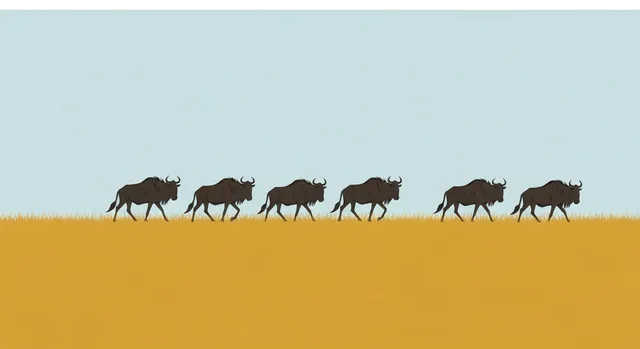
- ✓The roughly 1.5 million wildebeest move clockwise through the ecosystem all year, following the rains rather than a calendar.
- ✓Calving peaks around February on the southern Ndutu plains; the Mara crossings peak around August at Kogatende in the north.
- ✓Treat every month here as a 30-year average — a two-week swing in either direction is entirely normal.
- ✓The herd is huge and strung out, so its front and tail can sit in different sectors in the same week.
- ✓Always verify the live picture for your exact dates before booking a camp — the right lodge in the wrong month misses the action.
How to read this month-by-month guide
This is the migration's year laid out one month at a time, so you can match your travel dates to a likely sector. Before the calendar, three caveats that matter more than any single month. First, these are long-run averages, not a timetable: the herds move with rainfall, and rainfall varies, so a late or early wet season can shift everything by a fortnight or more. Second, the herd is vast and strung across the landscape — its leading edge and its tail can be in different sectors at once, so 'where the migration is' is always a centre of gravity rather than a pin. Third, nothing here is a guarantee; river crossings in particular happen when the herds decide, not when a brochure says.
Use the calendar below to choose your sector and your camp, then verify the live picture close to travel. The golden rule runs through every month: a camp that is perfectly placed in August can be hours from the action in February, so always cross-check where the herds usually are for your specific dates before you commit a deposit.
January — southern plains, herds gathering
The new year usually finds the herds spread across the southern Serengeti and the Ndutu plains, drawn down by the rains onto the short, mineral-rich grass. Numbers build through the month as the columns concentrate ahead of calving, and the first early calves often start to appear toward month's end. The plains are green, the skies are dramatic, and predators are already shadowing the gathering herds.
This is green-season travel: warm days, the chance of an afternoon storm, fewer vehicles than the dry-season peak, and softer rates. Base yourself in the south around Ndutu or use a mobile camp positioned for calving. A river crossing is not on the agenda this month — the action here is about density, newborns to come, and big cats.
- Likely sector: southern Serengeti and Ndutu plains.
- River crossing odds: none — wrong season and wrong sector.
- Best for: green scenery, gathering herds, early calves, big cats.
- Where to stay: southern / Ndutu camps and mobile camps.
February — peak calving in the south
February is, on a long-run average, the heart of calving season. Across a window of roughly three weeks the herds carpet the short-grass plains near Ndutu and give birth in extraordinary numbers — on the order of half a million calves in a matter of weeks. A newborn is on its feet within minutes, but the sheer concentration of vulnerable young draws lions, cheetahs, hyenas and jackals in for the most intense predator action of the entire year. The open, treeless ground makes this the best window anywhere to watch a cheetah hunt in the clear.
It is the standout month for the southern chapter of the migration, and it sits in the cheaper, quieter green season. Camps near Ndutu and on the calving plains are the place to be, and they book up well ahead for these weeks despite being green-season dates.
- Likely sector: southern Ndutu and Salei plains.
- River crossing odds: none.
- Best for: peak calving, newborns and the year's densest predator viewing.
- Where to stay: Ndutu and southern-plains camps; book early.
March — late calving, then the first drift north
Early March often carries the tail of calving, with late-born young still on the plains and predators still busy. As the month goes on and the southern grazing starts to thin, the herds begin their slow drift north and west, the very first stirrings of the long loop toward the rivers. The landscape stays lush and the birdlife is superb, with migrants still present and resident species in breeding plumage.
This is a strong value month: green-season prices, good predator action early on, and fewer crowds. The long rains begin to build toward month's end in many years, so expect some heavier afternoons. Stay flexible on sector — south early in the month, transitional central-south later.
- Likely sector: southern plains, drifting toward the central Serengeti.
- River crossing odds: none.
- Best for: late calves, predators, birding and green-season value.
- Where to stay: southern and south-central camps.
April — long rains, herds moving through the centre
April is typically the wettest month, the heart of the long rains. The plains are emerald, the light is cinematic between storms, and visitor numbers are at their lowest. The herds are generally on the move through the central Serengeti, heading north and west, more scattered than in the concentrated calving weeks. Roads can be heavy going and a few seasonal camps close, so logistics need care.
For travellers who prize solitude, dramatic skies and the best value of the year — and who do not mind rain and the odd stuck-in-the-mud detour — April is an underrated month. It is not the month for a guaranteed headline spectacle, but the resident wildlife of central Seronera remains excellent throughout.
- Likely sector: central Serengeti, herds dispersed and moving.
- River crossing odds: none.
- Best for: green scenery, solitude, photography and value.
- Where to stay: central camps; check seasonal closures.
May — transition west toward the Grumeti
By May the long rains usually begin tapering and the migration's centre of gravity shifts west and north, with the columns forming up and pushing toward the Western Corridor. This is one of the great spectacles of motion — long ribbons of wildebeest and zebra strung across the plains — even though the headline crossings are still ahead. The famous wildebeest 'rut' often kicks off now, the air full of grunting as males establish territories.
Camps in the central and western Serengeti are well placed. Roads improve as the rains ease, crowds remain modest, and prices have not yet climbed to peak. A flexible, migration-aware itinerary pays off this month as the herds can be strung over a wide area.
- Likely sector: central Serengeti moving into the Western Corridor.
- River crossing odds: low; the Grumeti window is just ahead.
- Best for: herds on the move, the rut, easing rains and value.
- Where to stay: central and western-corridor camps.

June — the Western Corridor and the Grumeti River
June marks the start of the dry season and, usually, the herds' arrival in the Western Corridor along the Grumeti River — the migration's first serious water obstacle. Grumeti crossings are smaller, more scattered and less predictable than the Mara's, but they can be dramatic, with large resident crocodiles waiting in the river's pools. The bush is drying, the roads are firming up, and the peak-season build is beginning.
This is a good month to be in the west, away from the busier crowds that gather in the north later in the year. Demand and prices start to rise but have not yet hit their height. As ever, Grumeti crossings cannot be scheduled — base near the river and give yourself time.
- Likely sector: Western Corridor and the Grumeti River.
- River crossing odds: moderate at the Grumeti, but unpredictable.
- Best for: western crossings, crocodile drama, fewer crowds than the north.
- Where to stay: Western Corridor and Grumeti-area camps.
July — pushing north toward the Mara
July is when the leading herds typically press into the Northern Serengeti, working toward the Mara River around Kogatende. Early-month crossings are possible as the front of the migration reaches the water, and anticipation builds fast. This is high season: demand surges, the limited northern camps fill, and prices climb to their peak. The landscape is classic dry-season Serengeti — golden grass, clear skies, cool mornings and dust on the afternoon drives.
If crossings are your goal, July is the start of the prime window, but timing within the month is luck. Base in the north around Kogatende, plan several nights, and travel with a patient guide. Book far ahead — northern camps for these weeks go early.
- Likely sector: Northern Serengeti, herds nearing the Mara River.
- River crossing odds: building; early crossings possible.
- Best for: the start of the crossing window, dry-season game viewing.
- Where to stay: Kogatende and northern camps; book well ahead.
August — peak Mara crossings in the north
August is the classic peak of the river-crossing season. Large numbers of wildebeest are usually concentrated in the Northern Serengeti, crossing the Mara River back and forth, often shuttling across the Kenyan border as they chase the best grazing. This is the scene most people picture when they imagine the migration: columns piling up on the bank, hesitating, then pouring across in a churning, crocodile-haunted rush.
It is also the busiest and most expensive stretch of the Serengeti year, concentrated in a handful of remote camps that sell out far ahead. Crossings remain a matter of luck on any given day — patience and several nights near the river are how you weight the odds. Fly-in to Kogatende is the practical way to reach this remote corner without losing days on the road.
- Likely sector: Northern Serengeti and the Mara River at Kogatende.
- River crossing odds: highest of the year — but never guaranteed on a given day.
- Best for: the signature crossings and dry-season big game.
- Where to stay: limited northern / Kogatende camps; book very early.
September — crossings continue, slightly quieter
September keeps the herds in the north, with crossings continuing as they move between the Serengeti and the Mara. Conditions stay firmly dry-season — golden light, easy game viewing, cool mornings — and crowd pressure eases just a little from the August high while crossing odds remain strong. For many, it is the sweet spot of the northern season: nearly the same spectacle with marginally more breathing room.
The same rules apply: base in the north, allow several nights, and accept that the river writes its own schedule. Northern camps still book out early for these weeks, so plan ahead rather than hoping for late availability.
- Likely sector: Northern Serengeti and the Mara River.
- River crossing odds: still strong; a touch quieter than August.
- Best for: crossings with slightly fewer vehicles than peak.
- Where to stay: northern / Kogatende camps.
October — the late north and the turn south
October usually sees the last of the major crossings as the herds linger in the north and around Lobo, and then begin contemplating the return south as the short rains approach. Late-month movement can be patchy and harder to predict, with the leading herds starting to drift back down the eastern side of the park. The dry-season landscape is at its most stark, the heat building before the rains.
It can be a rewarding, quieter month for late-season crossings and the Lobo woodlands, with crowds thinning from the peak. Flexibility helps, as the herd's position is more variable now than in the settled August window.
- Likely sector: Northern Serengeti and Lobo, beginning to turn south.
- River crossing odds: late crossings possible, tapering through the month.
- Best for: quieter late-season north, Lobo, the start of the return.
- Where to stay: northern and Lobo-area camps.
November — short rains and the return south
November typically brings the short rains, and with them the great turn of the loop. As fresh grass reappears on the southern and eastern plains, the herds stream back down through Lobo and the central Serengeti toward the calving grounds. It is a month of motion and renewal — the bush greening, migrant birds arriving, and the columns flowing south again.
Crowds and prices ease from the dry-season peak, making it a good-value window with the bonus of herds on the move. The rains are usually short, dramatic afternoon storms rather than all-day grey. Central and south-central camps are well placed to catch the southbound movement.
- Likely sector: central Serengeti and Lobo, moving south.
- River crossing odds: none — the crossing season has closed.
- Best for: the return migration, green renewal, value and birding.
- Where to stay: central and south-central camps.
December — back on the southern plains
By December the herds are usually back on the southern Serengeti and Ndutu plains, feeding on the fresh short grass and setting up for the calving cycle to begin again. The festive weeks bring a spike in demand and holiday pricing, but the wildlife is excellent: green plains, gathering herds and predators already in position. Early calves sometimes appear toward the very end of the month.
This closes the loop. December's south is the prelude to January's gathering and February's peak calving — the same plains, the same volcanic soils, the same endless wheel turning over again. Southern and Ndutu camps are the place to be, and festive dates book up early.
- Likely sector: southern Serengeti and Ndutu plains.
- River crossing odds: none.
- Best for: returning herds, green plains, the calving prelude, festive safaris.
- Where to stay: southern / Ndutu camps; book holiday dates early.
Frequently asked questions
Which month is best for the migration? It depends on the chapter you want. For the Mara River crossings, aim for roughly July to October in the north, with August the classic peak. For calving and the densest predator action, aim for around February on the southern plains. Both are long-run averages — verify your dates.
Can the timing be wrong by a lot? It can shift by a couple of weeks or more in either direction because the herds follow rainfall, not a calendar. An unusually early or late wet season moves everything. That is exactly why you should cross-check the live picture before booking and again before you travel.
If I can only travel mid-year, where should I be? June leans to the Western Corridor and the Grumeti; July to October leans to the Northern Serengeti and the Mara crossings. Match your camp to the month, not to a single fixed location.
Is there a 'bad' month for a Serengeti safari? No. Even in the wettest, quietest months the resident wildlife of central Seronera — lions, leopards, cheetahs and plains game — remains excellent. The migration's headline acts are seasonal, but the park is rewarding all year.
How far ahead should I book? For peak crossing months (July–September) in the limited northern camps, and for festive and peak calving dates, book many months ahead. Green-season and shoulder months allow more flexibility.
Related guides

The Great Migration in the Serengeti
How the Great Migration actually works — the year-round clockwise loop through the Serengeti–Mara ecosystem, why the rains run the show, where the herds usually move month to month, and how to plan a safari around it without pretending nature is on a timetable.
Read guide
Calving Season in the Serengeti (Ndutu)
Calving season on the southern Serengeti plains around Ndutu — when roughly half a million wildebeest are born in about three weeks, why it draws the densest predator action of the year, and how to plan a green-season safari around it.
Read guide
Mara River Crossings in the Serengeti
How to plan a Northern Serengeti river-crossing safari without false promises — when the Mara crossings happen at Kogatende, why timing is luck, where to stay, and how to watch with good wildlife etiquette.
Read guideMore in When to Go
6
Best Months for Serengeti Photography
Which Serengeti months deliver the photographs you want — dramatic light and dust, emerald plains, newborns, river crossings, big cats and fewer vehicles in your frame.
Read guide
Calving Season in the Serengeti
Calving season on the southern Serengeti plains around Ndutu — when roughly half a million wildebeest are born in about three weeks, why it draws the densest predator action of the year, and how to plan a green-season safari around it.
Read guide
Calving Season vs River Crossings
Two faces of the Great Migration: the southern Ndutu calving in the green months, and the northern Mara crossings in the dry. Decide between them by wildlife, budget, crowds, predictability and the kind of drama you want.
Read guide
Christmas & New Year in the Serengeti
How to plan a Christmas or New Year safari in the Serengeti — green December plains, gathering herds, premium festive camps, family-friendly logistics and the flights that make a holiday trip work. Romantic, festive and worth booking early.
Read guide
Great Migration Planning Mistakes
The planning mistakes that make travellers miss the herds, overspend, or book the wrong Serengeti sector — and how to avoid each one so your dates, your camp and the migration actually line up.
Read guide
How to Choose a Migration Camp
Match a Serengeti camp to your month, the migration phase, the nearest airstrip, your budget and your wildlife goal — so you sleep where the herds will be, not where the brochure photo was taken.
Read guide