
 Park Areas
Serengeti Areas & Sectors Guide
A guide to the Serengeti's sectors — central Seronera, the southern Ndutu plains, the Western Corridor and Grumeti, the far north at Kogatende, plus Lobo and the Moru Kopjes — and how to choose the right one for your season and style.

Photo: Catherine Merlin / Unsplash
- ✓The Serengeti is vast — roughly 14,750 km² — and each sector is effectively its own country of grass with its own season.
- ✓Central Seronera holds the densest resident lion and leopard population and rewards visitors in every month.
- ✓The far north (Kogatende) is the Mara crossing country; the south (Ndutu) is calving country; the Western Corridor (Grumeti) is the migration's first river test.
- ✓Choosing a sector is mostly a function of your month — the herds move, so the 'best' area changes through the year.
- ✓Treat all migration timing as a 30-year average and verify the live picture before booking a camp in any sector.
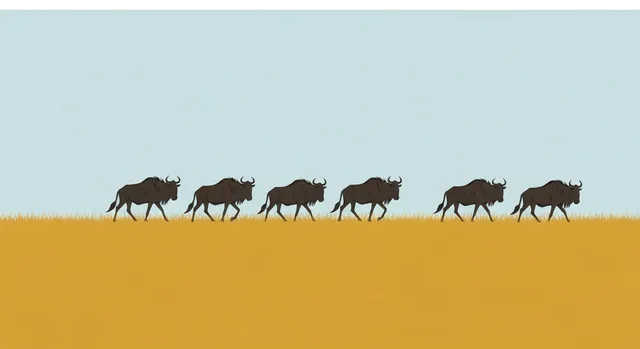
Many countries of grass
It helps to think of the Serengeti not as one uniform plain but as a set of distinct neighbourhoods, each with its own landscape, wildlife and best season. The park spans roughly 14,750 square kilometres — and the wider ecosystem, including the Ngorongoro Conservation Area and Kenya's Maasai Mara, is larger still — so the experience changes profoundly depending on which corner you stand in. The single most useful planning insight is that, because the migration moves through the year, the right sector for your trip is largely set by your dates.
This guide breaks the park into its working sectors and gives each one its character, its wildlife and the months it comes into its own. Use it alongside the migration calendar: pick the chapter of the story you want to witness, find the sector that holds it for your month, and then choose where to stay within that area. The sector decision shapes everything else — your camp, your transport, your route — so it is worth getting right first.
Central Serengeti — Seronera
Seronera, the central core, is the beating heart of the park and the most reliable sector in any month. Stitched together by rivers and studded with ancient granite kopjes, it holds the densest resident populations of big cats in the Serengeti — famous for lions on the rocks and leopards draped in the riverine fig trees along the Seronera River valley. Because its wildlife is resident rather than migratory, the central sector rewards visitors year-round and makes the natural base for a first safari or any trip that does not need to chase the herds.
Seronera is also the most accessible sector, with its own busy airstrip and good road links, which keeps it convenient but busier than the remote corners. For travellers who want dependable big-game viewing, easy logistics and a strong chance of all the cats, the centre is the safe and superb choice. When the migration passes through on its way south, Seronera adds the herds to its already rich resident cast.
- Best for: reliable big cats year-round, first safaris, easy logistics.
- Signature wildlife: lions on the kopjes, leopards in the river figs, cheetahs on open ground.
- Season: rewarding in every month; busiest of the sectors.
Southern plains & Ndutu
The southern short-grass plains, reaching down toward Ndutu on the Ngorongoro edge, are calving country. Fed by volcanic ash from the highlands, this open, treeless grassland is some of the richest grazing in Africa, and it is where the herds gather to give birth — around half a million wildebeest calves arrive in a window of roughly three weeks, peaking in February. The concentration of newborns draws the densest predator action of the year, and the open ground makes this the best sector for watching cheetahs hunt in the clear.
On the long-run average the south comes alive from about December, as the short rains green the plains and the herds settle in, through the calving peak of late January and February. Outside that window it quietens as the migration moves on. For travellers timing a green-season or calving trip, the southern plains and Ndutu are the place to be — raw, open and unforgettable.
- Best for: calving season, predator action, cheetahs on open plains.
- Peak window: roughly December to March, with calving peaking in February.
- Landscape: open short-grass plains, ideal for spotting cats and crossings of fortune.
Western Corridor & the Grumeti
The Western Corridor follows the Grumeti River as it reaches toward Lake Victoria, and it is the migration's first major water test of the year. On the long-run average the herds push west and northwest through here around May and June, when crossings of the Grumeti — guarded by some of the largest crocodiles in Africa — can occur. It is a less-visited, riverine and wooded sector with its own resident wildlife and a quieter feel than the central plains.
The Grumeti crossings are smaller and less famous than the Mara crossings of the far north, and like all crossings they cannot be scheduled. But for travellers in the right window who want river drama without the crowds, the Western Corridor offers an early, intimate version of the spectacle. Outside the migration window it is a peaceful, characterful sector for resident game.
- Best for: the migration's first river crossings, away from the crowds.
- Window: roughly May to June on the long-run average — never schedulable.
- Landscape: riverine forest and woodland along the Grumeti toward Lake Victoria.
Northern Serengeti — Kogatende & the Mara
The far north, around Kogatende and the Mara River, is the crossing country everyone pictures. It is the most remote part of the park — rolling hills and open savanna stitched by the Mara — which is exactly its appeal: in the dry season, when the herds are here, you can watch a river crossing with only a handful of other vehicles. On the long-run average the herds reach the river from about July, with crossings most likely in August and continuing into September and October as they move back and forth across the Kenyan border.
Getting to the north usually means a light-aircraft flight to the Kogatende airstrip rather than a long drive, so northern trips lean toward fly-in itineraries. Camps are limited and book out far ahead for the crossing window. The reward is the chapter of the migration most travellers cross the world to see — though, as ever, no crossing can be scheduled, and the waiting is part of the experience.
- Best for: the Mara River crossings, remote and uncrowded.
- Window: roughly July to October on the long-run average; peak drama in August.
- Access: usually a fly-in to the Kogatende airstrip; camps limited and booked early.
Lobo, the northeast & the Moru Kopjes
Beyond the headline sectors, two quieter areas reward travellers who want space. Lobo, in the rolling northeast, is a transitional corridor the herds often drift through on their southward return around October and November — kopje-studded, scenic and far less trafficked than the central plains. It makes a strong base in the late dry season and the green turn, with good resident wildlife year-round.
The Moru Kopjes, in the south-central part of the park, are among its most beautiful landscapes — dramatic granite outcrops rising from the plains, rich in lions and one of the better places to look for the park's small, protected rhino population. They reward a detour for scenery and big cats, especially when the herds are gathering on the nearby southern plains. Both areas show how much the Serengeti rewards travellers willing to look beyond the famous sectors.
- Lobo: northeast corridor, strong in the late dry season and the southward return.
- Moru Kopjes: dramatic granite scenery, lions and protected rhino in the south-centre.
- Both: quieter alternatives to the busy central and northern hotspots.
Everything in Park Areas

More
25
Best Serengeti Area for a First Safari
A first-timer's decision guide to the Serengeti's sectors — central Seronera, the southern plains, the Western Corridor and the far north — chosen by month, budget and what you most want to see, with the honest trade-offs.
Read guide
Eastern Serengeti Guide
A guide to the eastern Serengeti — the wide-open, kopje-dotted plains east of Seronera, why they are some of the best cheetah country in the park, the low vehicle density that defines them, and when the eastern side is worth it.
Read guide
Grumeti: The Western Serengeti's River Country
A guide to Grumeti — the river, the wildlife and the exclusive private concessions on the Serengeti's western edge. Migration timing in the western ecosystem, giant crocodiles, and the luxury camps that draw travellers to this quiet corner.
Read guide
Ikoma & Fort Ikoma: Edge-of-Park Value in the Western Serengeti
A guide to the Ikoma area and Fort Ikoma on the western edge of the Serengeti — gateway to the Western Corridor, with drive-in access, budget-friendly stays in the Ikoma Wildlife Management Area, night-drive options and honest caveats.
Read guide
Klein's Gate: The Serengeti's Far-Northern Entrance
A full guide to Klein's Gate, the Serengeti's remote north-eastern entry toward Loliondo — the road routes in, the private concession context that gives it special significance, how it serves the Lobo and Kogatende country, and when this specialist gate matters.
Read guide
Kogatende: Gateway to the Mara Crossings
A guide to Kogatende — the airstrip, the camps and the Mara River access that make it the key base for crossing-season safaris in the Northern Serengeti. Why this is where most northern trips begin, and how to plan around it.
Read guide
Lamai Serengeti Guide
A guide to the Lamai wedge in the far northern Serengeti — the triangle of rock-strewn hills between the Mara River and the Kenyan border, its remote crossing-season camps, and how to plan a trip to the quietest corner of the park.
Read guide
Lobo Serengeti Guide
A guide to the Lobo area of the northern-central Serengeti — its hills, woodlands and granite kopjes, the return-migration possibilities that make it a strategic October–November base, and how Lobo fits a northern itinerary.
Read guide
Moru Kopjes Guide
A guide to the Moru Kopjes in the central-southern Serengeti — the dramatic granite outcrops famous for lions and rock art, one of the park's last rhino strongholds, and how Moru fits a central-southern game drive.
Read guide
Naabi Hill Gate: The Serengeti's Southern Gateway
A full guide to Naabi Hill Gate, the Serengeti's busy southern entrance — the route in from Ngorongoro and Arusha, drive timing, the famous viewpoint, fee and payment checks, and how the gate fits a Northern Circuit road safari.
Read guide
Namiri Plains Guide
A guide to Namiri Plains in the eastern Serengeti — the open, kopje-dotted cheetah country east of Seronera, why it is one of Africa's great predator landscapes, how camps are positioned, and who should go east.
Read guide
Ndabaka Gate: The Serengeti's Western Entrance
A full guide to Ndabaka Gate, the Serengeti's western entry near Lake Victoria — the route in from Mwanza, when this gate saves serious driving, how it opens onto the Western Corridor, and the practical fee and timing checks.
Read guide
Ndutu Safari Guide
Everything to know before a Ndutu safari — the calving heartland on the southern Serengeti edge, why it sits in the Ngorongoro Conservation Area rather than the national park, its off-road and fee implications, the best season, where to stay and how it fits a wider itinerary.
Read guide
Retima Hippo Pool: The Serengeti's Famous Hippo Gathering
A practical guide to Retima Hippo Pool in the central Serengeti — where dozens of hippos crowd a river bend you can watch from a safe viewpoint. Timing, safety, smells and how it pairs with a Seronera game drive.
Read guide
Serengeti Gates: A Guide to Every Entry Point
A practical guide to the Serengeti's entry gates — Naabi Hill in the south, Ndabaka in the west, Klein's in the north and the lesser-used gates — with route logic, fee-check advice and how each gate fits drive-in safaris and self-drivers.
Read guide
Serengeti Kopjes: Islands of Rock on the Endless Plain
Why the Serengeti's granite kopjes matter — ancient rock islands that shelter lions, leopards and cheetahs, store water and shade, and give the plains their most photogenic structure. Where to find them and how to watch them.
Read guide
Serengeti Map & Regions: How to Read the Park
A map-led guide to the Serengeti's regions — the central Seronera core, southern Ndutu plains, Western Corridor, far-north Kogatende and the Lobo corridor — with gates, airstrips, rivers and how to plan a trip around the migration.
Read guide
Serengeti or Maasai Mara?
Serengeti or Maasai Mara? They are two halves of one ecosystem split by the Tanzania–Kenya border. How to choose by migration timing, river crossings, budget, flights, crowds and trip length — with honest, evergreen guidance and no guarantees.
Read guide
Seronera & Central Serengeti
Seronera is the year-round big-cat heart of the Serengeti — a valley of rivers, granite kopjes and riverine figs where lions, leopards and cheetahs hold ground in every season. A full guide to what central Serengeti offers, its lodge and airstrip access, the crowd trade-off and how to plan a stay.
Read guide
Seronera Valley Guide
The Seronera Valley is the leopard-and-lion heart of the central Serengeti — a network of rivers, marshes and riverine figs that holds water, cover and resident predators all year. A guide to the valley itself: its wildlife, its kopjes and rivers, and why the game viewing here barely slows whatever the season.
Read guide
Southern Serengeti Migration Guide
When the southern Serengeti plains and Ndutu make sense for the Great Migration — the green-season calving window, the predators it draws, and how to plan a mobile-camp safari around the herds. An honest, evergreen guide to migration timing in the south.
Read guide
Southern Serengeti Plains Guide
The southern Serengeti plains are the open, treeless short-grass country on the Ngorongoro edge — the migration's calving grounds and the park's most cinematic emptiness. A guide to planning the southern plains: the seasonal herds, calving, the predators that follow, mobile camps and Ndutu-adjacent safari days.
Read guide
The Mara River in the Serengeti
The Mara River in the far north of the Serengeti — the great obstacle of the Great Migration, home to large crocodiles, reached via Kogatende. What it is, how to watch it within TANAPA rules, and honest expectations.
Read guide
The Migration in the Northern Serengeti
How the Great Migration plays out in the Northern Serengeti — dry-season timing, Mara River strategy, the Kogatende camps, and why staying close to the river for several nights matters more than anything else.
Read guide
Western Corridor of the Serengeti
The Western Corridor is the Serengeti's long western arm reaching toward Lake Victoria — Grumeti River country, the migration's first water test, giant crocodiles and quieter, lower-crowd camps. When the west is worth the detour, and when it is not.
Read guide