
The Mara River in the Serengeti
The Mara River in the far north of the Serengeti — the great obstacle of the Great Migration, home to large crocodiles, reached via Kogatende. What it is, how to watch it within TANAPA rules, and honest expectations.

Photo: Lisette Verwoerd / Unsplash
- ✓The Mara River runs through the Kogatende sector of the far Northern Serengeti before flowing on into Kenya's Masai Mara.
- ✓It is the great obstacle of the Great Migration — the river the herds must cross, and the stage for the famous crossings from roughly July to October.
- ✓Its waters hold some of Africa's largest Nile crocodiles, alongside hippos and the predators that shadow the herds.
- ✓It is reached by light aircraft to the Kogatende airstrip or a long overland drive; the north is remote and camps are few.
- ✓A crossing can never be scheduled or guaranteed — the river is a place to watch with patience and good etiquette, not a show on a timetable.
The river that defines the north
Most of the Serengeti is a story about grass. The far north is a story about water. The Mara River rises in the Kenyan highlands, winds south into the top of the Serengeti through the Kogatende sector, loops through the rolling hills and open savanna there, and then turns back north into Kenya's Masai Mara, the ecosystem's other half. It is a muddy, slow-curling, life-giving artery — and for a few months each year it becomes the most dramatic stage on the African continent.
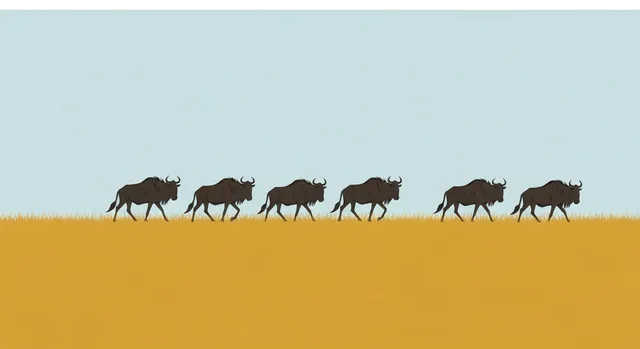
What makes the Mara matter is its place in the Great Migration. As the southern and central plains dry out, the roughly 1.5 million wildebeest, along with hundreds of thousands of zebra, push north chasing greener grazing — and the river lies square across their path. To reach the far bank they must cross, and crossing means steep drops, fast brown current, and the long shapes of crocodiles waiting in the water. The Mara is, quite literally, the line the herds gamble their lives to cross.
Crocodiles, hippos and the river's residents
The Mara holds a permanent cast quite apart from the migration. Its pools are home to some of the largest Nile crocodiles in Africa — old, heavy animals that have learned the rhythm of the herds and wait, almost motionless, for the crossing season that feeds them for the year. Watching a crocodile slide off a sandbar into the current is a reminder that this is genuinely wild water, not a backdrop. Hippos crowd the deeper, slower pools, surfacing and grunting through the day and grazing the banks at night.
The river country also draws the land predators that shadow the herds: resident lions patrol the crossing approaches, leopards work the riverine cover, and hyenas and vultures gather wherever the crossings exact their toll. Along the banks, fish eagles, herons and kingfishers work the water. Even outside the crossing window, the Mara's permanent residents make the northern river one of the richer corners of the park — though, as everywhere in the Serengeti, sightings are a matter of odds, not promises.
- Nile crocodiles: among Africa's largest, concentrated at known crossing pools.
- Hippos: resident in the deeper, slower stretches of the river.
- Predators: resident lions, leopards and hyenas drawn to the herds and the crossings.
- Birds: fish eagles, herons, kingfishers and storks along the banks year-round.
Watching the river: TANAPA rules and good etiquette
The Mara is managed by Tanzania National Parks (TANAPA), and watching it responsibly is both a rule and a matter of basic respect for the spectacle. The standard park rules apply on the banks and everywhere else: stay inside your vehicle at all times near the river, keep to the established tracks and viewing areas, do not litter or feed any animal, and follow your guide's and the rangers' instructions. The river's crocodiles and hippos are dangerous wild animals, and the banks are no place to step out.
The crossings add a second layer of etiquette that visitors must take seriously, because vehicles can directly cause a crossing to fail. Wildebeest commit to specific lines down to the water; if vehicles park across those lines or crowd the bank, the herd balks and turns away — spoiling the moment for every other vehicle that has waited hours. Good practice is to keep well back from the bank, never position between the herd and the water, switch off engines, stay quiet and seated, and let the animals choose their moment. A patient, experienced northern guide who knows these principles is half the experience.
Reaching the Mara: Kogatende and the far north
The Mara River sits in the most remote part of the park, and getting there is part of why it stays relatively uncrowded. The cleanest route is a light-aircraft flight to the Kogatende airstrip from Arusha or Kilimanjaro, which turns a long overland slog into a short hop and leaves more time at the river. Drive-in is possible for travellers with the days and a taste for the road, but most river-focused trips fly at least one leg. Either way, the north has far fewer camps than the central park, and the good ones — mobile camps that relocate north for the season, and permanent and semi-permanent camps near Kogatende — book out a year or more ahead for the peak crossing window.
Plan honestly. The crossing season runs roughly July to October, usually peaking in August and September, but every one of those months is a long-term average rather than a promise — the migration follows the rain, so verify the likely position of the herds for your exact dates close to travel. Give yourself several nights in the north rather than a single rushed day, choose an operator who puts the herds first, and treat a crossing as a magnificent bonus on top of the wild beauty of the river country itself. Get those fundamentals right and the Mara will reward you whether or not the water runs with wildebeest on your particular morning.

Related guides

Mara River Crossings in the Serengeti
How to plan a Northern Serengeti river-crossing safari without false promises — when the Mara crossings happen at Kogatende, why timing is luck, where to stay, and how to watch with good wildlife etiquette.
Read guide
Mara River Crossing Etiquette
How to watch a Mara River crossing responsibly — keeping back from the banks, following TANAPA vehicle rules, and never pressuring the herds into or out of the water.
Read guide
Kogatende: Gateway to the Mara Crossings
A guide to Kogatende — the airstrip, the camps and the Mara River access that make it the key base for crossing-season safaris in the Northern Serengeti. Why this is where most northern trips begin, and how to plan around it.
Read guideMore in Park Areas
6
Best Serengeti Area for a First Safari
A first-timer's decision guide to the Serengeti's sectors — central Seronera, the southern plains, the Western Corridor and the far north — chosen by month, budget and what you most want to see, with the honest trade-offs.
Read guide
Eastern Serengeti Guide
A guide to the eastern Serengeti — the wide-open, kopje-dotted plains east of Seronera, why they are some of the best cheetah country in the park, the low vehicle density that defines them, and when the eastern side is worth it.
Read guide
Grumeti: The Western Serengeti's River Country
A guide to Grumeti — the river, the wildlife and the exclusive private concessions on the Serengeti's western edge. Migration timing in the western ecosystem, giant crocodiles, and the luxury camps that draw travellers to this quiet corner.
Read guide
Ikoma & Fort Ikoma: Edge-of-Park Value in the Western Serengeti
A guide to the Ikoma area and Fort Ikoma on the western edge of the Serengeti — gateway to the Western Corridor, with drive-in access, budget-friendly stays in the Ikoma Wildlife Management Area, night-drive options and honest caveats.
Read guide
Moru Kopjes Guide
A guide to the Moru Kopjes in the central-southern Serengeti — the dramatic granite outcrops famous for lions and rock art, one of the park's last rhino strongholds, and how Moru fits a central-southern game drive.
Read guide
Namiri Plains Guide
A guide to Namiri Plains in the eastern Serengeti — the open, kopje-dotted cheetah country east of Seronera, why it is one of Africa's great predator landscapes, how camps are positioned, and who should go east.
Read guide