
Namiri Plains Guide
A guide to Namiri Plains in the eastern Serengeti — the open, kopje-dotted cheetah country east of Seronera, why it is one of Africa's great predator landscapes, how camps are positioned, and who should go east.

Photo: Wolf Schram / Unsplash
- ✓Namiri Plains lies in the remote eastern Serengeti, east of Seronera — open short-grass plains broken by granite kopjes, and one of the park's great cheetah and predator landscapes.
- ✓The area was closed to tourism for about two decades as a cheetah conservation zone, and reopened only relatively recently, which is part of why its cat populations are so strong and its vehicle traffic so low.
- ✓It is prized for big cats — exceptional cheetah, plus lion and leopard — in open terrain that suits unobstructed sightings and photography.
- ✓Camps here are few and high-end, reached by light aircraft, drawing photographers and repeat-safari travellers who want predators and space over crowds.
- ✓Sightings are never guaranteed — Namiri offers some of the best predator odds in the Serengeti, but it trades in probabilities, not promises.
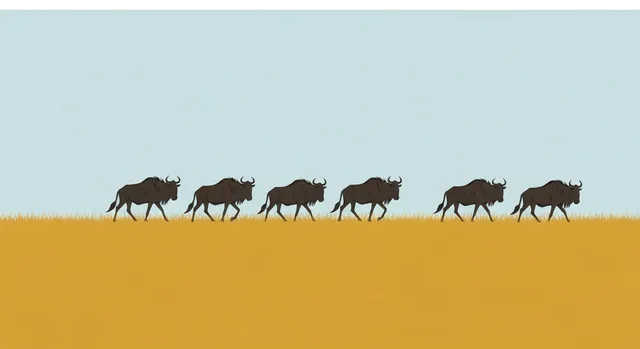
The plains where the cats came back
Namiri Plains is a name that makes safari guides go quiet with respect. Out in the remote eastern Serengeti, east of the central Seronera valley, it is a sweep of open short-grass plains broken only by ancient granite kopjes — and it is one of the finest predator landscapes left in Africa. 'Namiri' nods to the big cats that define it, and the place earns the billing: this is cheetah country at its purest, with lion and leopard woven through it.
Part of what makes Namiri so special is its recent history. The area was set aside as a cheetah conservation zone and kept closed to tourism for roughly two decades, left to the cats with no vehicles at all. When it reopened to a tightly limited number of camps, it did so with predator populations that had thrived in solitude and a landscape that had never been crowded. The result is a corner of the Serengeti where you can watch a cheetah hunt across open ground in the early light with not another vehicle in sight — an increasingly rare luxury anywhere on the continent.
This guide covers what defines the eastern Namiri country, why it is such exceptional cat territory, how the handful of camps are positioned, what the photography is like, and — honestly — who should make the effort to go east, because Namiri rewards a particular kind of traveller above all others.
Where Namiri sits, and what makes it cat country
Namiri lies in the eastern Serengeti, a region that sees a tiny fraction of the traffic of the central park. The drive east from Seronera takes you out of the busy river-and-woodland heart and into wide, open plains that feel like the Serengeti distilled: grass to the horizon, broken by the rounded granite kopjes that punctuate this part of the park. Those two ingredients — open ground and scattered rock — are exactly what makes it such productive predator territory.
Cheetahs are built for the open plain. They hunt by sight and speed, accelerating across flat, uncluttered ground after gazelle, so the wide short-grass country around Namiri is close to ideal habitat. The same openness that suits the cheetah suits the watcher: there is little to obscure a sighting, and a hunt can unfold in full view from a long way off. Meanwhile the kopjes give lions their lookout and den sites and leopards their cover, so the eastern plains carry an unusually complete cast of cats in a single landscape.
The low vehicle density is not incidental — it is structural. Camps here are deliberately few, and the area's conservation history means it was never developed for mass tourism. That scarcity is the whole appeal: predator action in open country, watched in something close to solitude. It is the antithesis of a crowded crossing point, and for many seasoned safari-goers it is the Serengeti they came back for.
- Position: eastern Serengeti, east of Seronera — open short-grass plains and granite kopjes.
- Why cats thrive: open ground suits cheetah hunting; kopjes give lion and leopard cover and lookouts.
- History: a long-closed cheetah conservation zone, reopened to a small number of camps.
- Feel: very low vehicle traffic, big skies, predator-led game viewing in near-solitude.
The predators: cheetah, lion and leopard
Namiri's reputation rests above all on cheetah. The combination of open hunting ground and decades of low disturbance has made it one of the most reliable places in the Serengeti to find them — solitary males on territory, coalitions patrolling, and mothers shepherding cubs across the grass. To watch a cheetah rise onto a termite mound, scan the plain, select a target and explode into a chase across open country is one of the great spectacles of the safari world, and Namiri offers it with better odds and fewer onlookers than almost anywhere.
But it is not a one-cat show. The kopjes hold lion prides that use the rocks as fortress and lookout, and the eastern plains support strong lion numbers feeding on the resident plains game. Leopard are here too, harder to find as ever, favouring the cover around the outcrops and watercourses. Add hyena, jackal and a full supporting cast of plains game and raptors, and Namiri delivers a remarkably complete predator landscape in a compact, drivable area.
It must be said plainly, because Namiri sells itself on its cats: nothing is guaranteed. Cheetahs range widely and a quiet morning is always possible. What Namiri offers is exceptional odds and exceptional conditions — open viewing, few vehicles, healthy populations — not a promise. Go for the whole experience of the wild eastern plains, travel with a guide who knows the cats' territories, and let the predators surprise you.

Namiri Plains at a glance
A quick orientation card for planning. Treat seasonal notes as long-term averages and confirm specifics — airstrip transfers, camp opening months, current park and concession fees — with your operator and official sources close to travel, since these shift and we deliberately avoid quoting figures that go stale.
- Location: eastern Serengeti, east of Seronera — remote open plains and kopjes.
- Best for: cheetah and predator viewing, big skies, low vehicle density, and serious wildlife photography.
- Best season: rewarding year-round for resident cats; the open plains are especially good for cheetah sightings, with the southern calving months adding predator density to the wider south-east.
- Getting there: fly-in by light aircraft to a nearby airstrip; the area is remote from the central gates.
- Stay: a small number of high-end camps, deliberately limited to protect the cat populations.
- Verify before booking: camp position and opening season, transfer logistics, and current fees.
Photography on the open plains
Namiri is, quite simply, a photographer's plain. Three things conspire in its favour: open ground that gives clean, uncluttered backgrounds and unobstructed sightlines; very few vehicles, so you are rarely jostling for position or framing out other cars; and predators that hunt in the open, where the most dramatic action is visible rather than hidden in thicket. Add the low, raking light of dawn and dusk across the grass and the granite, and the eastern plains become one of the most rewarding places in the Serengeti to make pictures.
Serious wildlife photographers gravitate here for exactly these reasons, and several of the camps cater to them — vehicles set up for low-angle shooting, guides who understand the patience a predator sequence demands, and the freedom that comes from not sharing a sighting with a dozen other vehicles. A cheetah chase in clean morning light, framed against open plain with a kopje behind, is the kind of image Namiri makes possible.
If photography is central to your trip, build the time in. The best predator images come from staying with a cat long enough to read its behaviour and be in place when it acts — something Namiri's solitude makes feasible in a way busier sectors do not. Pair it with a dedicated photographic mindset, and budget patience as much as kit.

Getting there, where to stay, and who should go east
Namiri is remote, and that remoteness is reached by air. The practical way in is a light-aircraft hop to a nearby airstrip, followed by a transfer to camp — a fly-in trip that saves the long overland hours from the central gates and suits the focused, predator-led nature of an eastern visit. Light aircraft connect the area with Arusha, Kilimanjaro and the other Serengeti airstrips; pack soft bags within their strict weight limits.
Accommodation is deliberately scarce. Only a small number of high-end camps serve the eastern plains, a limit set to protect the cat populations that make the area what it is. Expect intimate, fine-guided camps with big views over the grass, and book well ahead — few beds in a sought-after place sell out early. As always, ask where a camp sits relative to the best cat country and confirm its opening season for your dates.
So who should go east? Namiri is not the obvious choice for a first, see-everything safari — that role suits Seronera or a migration-led trip. It rewards a particular traveller: the predator enthusiast, the serious photographer, the repeat visitor who has done the headline circuit and now wants cats, space and solitude over crowds and crossings. If that is you, the eastern plains are among the most special places the Serengeti can offer. Many fold Namiri into a wider itinerary — a few nights in the centre for variety, then east for the cats — to get the best of both.
Common questions about Namiri Plains
Why is Namiri so good for cheetah? Open short-grass plains suit a cat that hunts by sight and speed, and the area spent roughly two decades closed as a cheetah conservation zone with no vehicles, letting the population thrive. Reopened to only a few camps, it now offers strong cheetah odds in near-solitude.
Will I definitely see cheetah or other cats? No — sightings are never guaranteed anywhere in the Serengeti. Namiri offers some of the best predator odds and conditions in the park, but cheetahs range widely and quiet mornings happen. Go for the whole wild experience, with a guide who knows the cats' territories.
When should I visit? The resident cats make Namiri rewarding year-round, and the open plains favour cheetah viewing in any season. Confirm camp opening months for your dates, as some eastern camps are seasonal.
How do I get there? By light aircraft to a nearby airstrip, then a transfer — Namiri is a fly-in destination, remote from the central gates.
Is it good for photography? Exceptionally. Open ground, clean backgrounds, low vehicle traffic and predators hunting in the open make it one of the best photographic sectors in the Serengeti, and several camps cater specifically to photographers.

Related guides

Eastern Serengeti Guide
A guide to the eastern Serengeti — the wide-open, kopje-dotted plains east of Seronera, why they are some of the best cheetah country in the park, the low vehicle density that defines them, and when the eastern side is worth it.
Read guide
Cheetahs in the Serengeti
A guide to Serengeti cheetahs — the open-plains specialists built for daylight speed — where to find them, how they hunt, raising cubs against the odds, photographing them and why the southern and eastern grasslands shine.
Read guide
Luxury Camps in the Serengeti
How to choose a luxury camp in the Serengeti — high-end tented camps and lodges compared by sector, migration season, guiding quality, privacy and fly-in logistics, with honest, no-guarantee guidance.
Read guideMore in Park Areas
6
Best Serengeti Area for a First Safari
A first-timer's decision guide to the Serengeti's sectors — central Seronera, the southern plains, the Western Corridor and the far north — chosen by month, budget and what you most want to see, with the honest trade-offs.
Read guide
Grumeti: The Western Serengeti's River Country
A guide to Grumeti — the river, the wildlife and the exclusive private concessions on the Serengeti's western edge. Migration timing in the western ecosystem, giant crocodiles, and the luxury camps that draw travellers to this quiet corner.
Read guide
Ikoma & Fort Ikoma: Edge-of-Park Value in the Western Serengeti
A guide to the Ikoma area and Fort Ikoma on the western edge of the Serengeti — gateway to the Western Corridor, with drive-in access, budget-friendly stays in the Ikoma Wildlife Management Area, night-drive options and honest caveats.
Read guide
Moru Kopjes Guide
A guide to the Moru Kopjes in the central-southern Serengeti — the dramatic granite outcrops famous for lions and rock art, one of the park's last rhino strongholds, and how Moru fits a central-southern game drive.
Read guide
Ndutu Safari Guide
Everything to know before a Ndutu safari — the calving heartland on the southern Serengeti edge, why it sits in the Ngorongoro Conservation Area rather than the national park, its off-road and fee implications, the best season, where to stay and how it fits a wider itinerary.
Read guide
Northern Serengeti & Kogatende Guide
The complete guide to the Northern Serengeti — the Mara River, Kogatende, Lamai and the remote crossing country worth the flight. Dry-season migration timing, quieter game drives, where to stay, and how to plan a trip around the river.
Read guide