
Lamai Serengeti Guide
A guide to the Lamai wedge in the far northern Serengeti — the triangle of rock-strewn hills between the Mara River and the Kenyan border, its remote crossing-season camps, and how to plan a trip to the quietest corner of the park.

Photo: Catherine Merlin / Unsplash
- ✓Lamai — sometimes called the Lamai Wedge — is the triangle of land in the far north of the Serengeti, between the Mara River and the Kenyan border, just across the water from the Kogatende crossing country.
- ✓It is one of the most remote, least-crowded sectors in the whole park: rolling hills, riverine forest and granite kopjes rather than flat open plain.
- ✓The Mara River runs along its southern edge, so Lamai is prime river-crossing country from roughly July to October — though, as everywhere, a crossing can never be promised.
- ✓Camps here are few and lean luxury; the wedge is reached almost entirely by light aircraft to the Kogatende airstrip, making it a fly-in destination.
- ✓Because it borders Kenya's Masai Mara, Lamai sits at the very top of the migration's clockwise loop — the herds spill back and forth across the international line through the dry season.
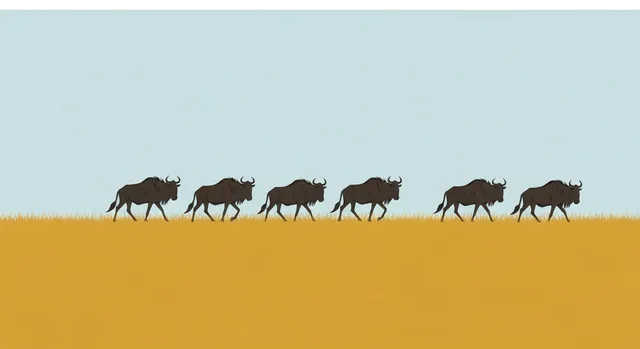
The wedge at the top of the world
If you trace the Great Migration's clockwise loop all the way to its northern apex, you arrive at Lamai — a wedge of land in the far north of the Serengeti, pinched between the Mara River below it and the Kenyan border above. It is about as far from the park gates as you can travel and still be in Tanzania, and that remoteness is the whole point. Where central Seronera hums with vehicles in high season, Lamai stays hushed: a landscape of rolling, grass-gold hills, dark ribbons of riverine forest, and granite outcrops shouldering up out of the slopes.
The Lamai Wedge has a particular romance to it. Stand on one of its kopjes at dusk and you look down across the Mara to the Kogatende sector on the far bank, out to the hills of Kenya's Masai Mara beyond — a single ecosystem stitched together by a river and split only by a line on a map the wildlife has never read. In the crossing months the herds pour back and forth across that water, grazing the northern grass before the short rains pull them south again.
This guide covers what makes Lamai distinct from the rest of the northern Serengeti, when the wedge comes into its own, how to reach it, where the handful of camps sit, and the honest expectations to pack — because the things that make Lamai magical, its remoteness and its wildness, are exactly the things that make it a place to plan carefully.
Where Lamai sits, and how it differs from Kogatende
It is easy to blur Lamai and Kogatende together, because they share the same river and the same crossing season. The simplest way to hold them apart: the Mara River is the dividing line. Kogatende is the busier, better-known sector on the southern bank, with the main northern airstrip and the larger cluster of camps. Lamai is the quieter triangle on the northern bank — the wedge — running up to the Kenyan frontier. Both watch the same crossings, often at the same points, but Lamai approaches them from the north side and sees markedly fewer vehicles.
The terrain sets Lamai apart from the Serengeti most first-timers imagine. This is not the endless flat plain of the brochures. It is hill country: long grassy ridges, valleys threaded with woodland, and the rounded granite kopjes that give the north its texture. Those outcrops are superb for resident lions, who use them as lookout and den sites, and the broken ground holds leopard, elephant and good general game year-round, independent of the migration.
Because Lamai is a wedge hard against the border, it functions as the migration's turnaround point. As the herds move north chasing grazing in the dry season, they reach this top edge of the ecosystem, drift across into the Masai Mara, and wash back again. That back-and-forth is why the northern crossing window stretches across several months rather than a single neat event — and why Lamai, perched right at the apex, sits in the thick of it.
- Lamai = the northern-bank wedge between the Mara River and Kenya; Kogatende = the southern bank with the main airstrip and most camps.
- Terrain is hilly and rock-studded, not flat plain — riverine forest, ridges and granite kopjes.
- Resident lions, leopard, elephant and plains game are here all year, not only during the migration.
- As the ecosystem's northern apex, Lamai is where the herds pivot back and forth across the Kenyan border.
When to go: the crossing window and beyond
Lamai's headline season is the dry-season crossing window, roughly July to October, when the migration is at the northern end of the loop and the Mara River becomes the great obstacle in the herds' path. This is when the wedge earns its reputation: columns of wildebeest gathering on the banks below, the long churning plunges into crocodile-dark water, the relief on the far side. Peak drama usually falls around August into September, but every one of those months should be treated as a 30-year average rather than a promise — the migration follows rain, not a calendar, and timing can swing two weeks either way. Verify the likely position of the herds for your exact dates close to travel.
It bears repeating, because the north sells itself on the spectacle: no honest operator can guarantee a crossing. The herds cross when they cross, governed by river level, grazing, sheer pressure of numbers and a collective nerve no one fully understands. You can sit above a known crossing point for hours and watch them mill, drink and wander off. The way to weight the odds is to give yourself several nights in the wedge during the window, travel with a patient guide, and treat a crossing as a magnificent bonus rather than the entire trip.
Outside the crossing season, Lamai becomes something else: profoundly quiet, green after rain, and rich in resident wildlife even with the migration gone south. Some camps here are seasonal and close in the low months, so the practical window is shaped as much by what is open as by what the herds are doing. If solitude and resident lions on the kopjes appeal more than the crossing crowds, the shoulders of the season can be the wedge at its most romantic.
Lamai at a glance
A quick orientation card for planning. Treat every seasonal note as a long-term average and confirm specifics — airstrip transfers, camp opening months, current park and concession fees — with your operator and official sources close to travel, since these shift and we deliberately avoid quoting figures that go stale.
- Location: far northern Serengeti, the wedge of land between the Mara River and the Kenyan border, north of Kogatende.
- Landscape: rolling hills, riverine forest and granite kopjes — not flat plains.
- Best for: river crossings (≈ July–October), resident lions and leopard year-round, and genuine remoteness with few vehicles.
- Getting there: light aircraft to the Kogatende airstrip, then a short transfer — effectively a fly-in sector.
- Stay: a small number of remote, lean-luxury camps; book far ahead for crossing dates.
- Verify before booking: herd position for your exact dates, camp opening season, and current fees.

Getting to Lamai: a fly-in sector
Geography makes Lamai a fly-in destination almost by default. It is at the far northern edge of an enormous park, hours of rough driving from the central gates, so the overwhelmingly practical way in is a light-aircraft hop to the Kogatende airstrip, followed by a short game-drive transfer across or along the river to your camp. Light aircraft connect the north with Arusha and Kilimanjaro, and the flight itself — low over the plains, the river uncoiling below — is part of the experience.
Flying buys you something precious in a sector this remote: time. A drive-in trip to the far north burns days on the road that a flight reduces to a couple of hours, leaving more mornings and evenings at the river when it matters most. The trade-off is the strict baggage regime of small planes — soft duffel bags only, and firm weight limits — so pack light and leave the hard suitcase behind.
Most travellers fold Lamai into a wider itinerary rather than visiting it in isolation. A common shape is a few nights in central Seronera for reliable resident big cats, then a flight north to the wedge for the crossings, sometimes bookended with the Ngorongoro Crater on the overland leg in or out. If the crossings are the whole reason for your trip, weight your nights heavily toward the north and keep the rest of the circuit light.
Where to stay: remote, lean luxury
Lamai keeps its beds few on purpose, and that scarcity is part of the deal. The wedge holds only a small number of camps, ranging from intimate permanent lodges tucked among the kopjes to seasonal tented camps that lean into the wild. The common thread is a high-touch, low-footprint style of luxury: a handful of tents, big views down to the river, fine guiding, and the rare feeling of having a corner of the Serengeti almost to yourself. None of this comes cheap, and the crossing window is the priciest, most heavily booked stretch of the northern year — good camps sell out a year or more ahead for peak dates.
When you choose a camp here, position matters as much as comfort. Ask exactly where it sits relative to the river and the known crossing points, and whether it is permanent or moves with the season. A camp set high on the wedge with quick access down to the water gives you the best shot at being in place when the river breaks at dawn. Resist booking on photographs alone — verify the location against where the herds are expected for your exact dates.
If your heart is set on the north but the wedge itself is full, the camps across the river in the Kogatende sector watch the same crossings and are part of the same northern decision. The two banks are best thought of together: one ecosystem, one crossing season, with Lamai offering the quieter, more remote northern-bank vantage.
Wildlife and watching well in the wedge
Beyond the migration, Lamai is excellent resident-wildlife country, and that is its insurance policy on a quiet crossing day. The granite kopjes hold lion prides that den and survey from the rocks; the riverine forest and broken ground favour leopard; elephant move through the valleys, and the river itself draws hippo and large crocodiles, the same crocodiles that wait in the crossing chutes. As ever in the Serengeti, the honest framing is probabilities, not promises — go for the whole wild north, and let the sightings come.
Watching a crossing well is not just etiquette, it is the price of the spectacle existing at all. Wildebeest commit to crossing along specific lines down to the water; vehicles parked across those lines, or sudden noise and movement, can make the leaders balk and turn the whole herd away — ruining the moment for every vehicle that has waited hours. The principles are simple and your guide should know them cold: keep well back from the bank, never park between the herd and the water, switch off engines, stay quiet and seated, and let the animals choose their moment. Lamai's low vehicle numbers make good etiquette easier to keep here than almost anywhere on the migration.
If you are weighing operators for a Lamai trip, ask directly how they handle crossings and how they position around the herds. The right answer puts the wildebeest first — and the same ethic is why no reputable guide will ever promise you a crossing in the first place.

Common questions about Lamai
Is Lamai the same as Kogatende? Not quite. They share the Mara River and the crossing season, but Lamai is the wedge on the northern bank toward Kenya, while Kogatende is the busier southern bank with the main airstrip and most camps. Lamai is the quieter, more remote of the two.
When is the best time to visit? The dry-season crossing window, roughly July to October, with peak drama usually around August into September. Treat these as long-term averages and verify the likely herd position for your exact dates close to travel. Outside the window the wedge is quiet, green and rich in resident wildlife, though some camps are seasonal.
Can I guarantee seeing a river crossing? No — and be wary of anyone who says you can. Crossings hinge on weather, river level, grazing and the herd's nerve. Give yourself several nights, travel with a patient guide, and treat a crossing as a glorious bonus.
How do I get there? Almost always by light aircraft to the Kogatende airstrip, then a short transfer — Lamai is effectively a fly-in sector. Pack soft bags within the strict light-aircraft weight limits.
Is it crowded? It is one of the least-crowded sectors in the park. The crossing window is peak season and the better-known crossing points can still draw vehicles, but Lamai sees far fewer than the central plains.

Related guides

Northern Serengeti & Kogatende Guide
The complete guide to the Northern Serengeti — the Mara River, Kogatende, Lamai and the remote crossing country worth the flight. Dry-season migration timing, quieter game drives, where to stay, and how to plan a trip around the river.
Read guide
Mara River Crossings in the Serengeti
How to plan a Northern Serengeti river-crossing safari without false promises — when the Mara crossings happen at Kogatende, why timing is luck, where to stay, and how to watch with good wildlife etiquette.
Read guide
Serengeti Kopjes: Islands of Rock on the Endless Plain
Why the Serengeti's granite kopjes matter — ancient rock islands that shelter lions, leopards and cheetahs, store water and shade, and give the plains their most photogenic structure. Where to find them and how to watch them.
Read guideMore in Northern Serengeti
3
Kogatende: Gateway to the Mara Crossings
A guide to Kogatende — the airstrip, the camps and the Mara River access that make it the key base for crossing-season safaris in the Northern Serengeti. Why this is where most northern trips begin, and how to plan around it.
Read guide
Lobo Serengeti Guide
A guide to the Lobo area of the northern-central Serengeti — its hills, woodlands and granite kopjes, the return-migration possibilities that make it a strategic October–November base, and how Lobo fits a northern itinerary.
Read guide
The Migration in the Northern Serengeti
How the Great Migration plays out in the Northern Serengeti — dry-season timing, Mara River strategy, the Kogatende camps, and why staying close to the river for several nights matters more than anything else.
Read guide