
Ndabaka Gate: The Serengeti's Western Entrance
A full guide to Ndabaka Gate, the Serengeti's western entry near Lake Victoria — the route in from Mwanza, when this gate saves serious driving, how it opens onto the Western Corridor, and the practical fee and timing checks.

Photo: Tanzania Safari Experience / Unsplash
- ✓Ndabaka is the Serengeti's western gate, near the shore of Lake Victoria — the natural entry for anyone approaching from Mwanza.
- ✓It opens directly onto the Western Corridor, the park's long western arm threaded by the Grumeti and Mbalageti rivers.
- ✓For a western or fly-into-Mwanza trip, Ndabaka saves an enormous amount of driving compared with looping round through the southern gate.
- ✓It is far quieter than Naabi Hill, serving a small share of visitors, because fewer itineraries approach from the west.
- ✓Park fees, opening hours and cashless payment systems change — always verify current Tanzania National Parks (TANAPA) details before you travel.
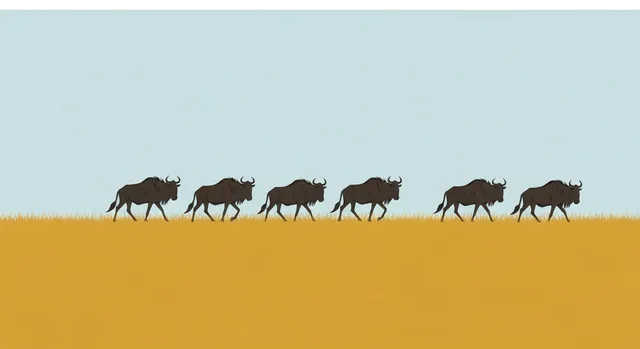
The quiet western door
Most visitors picture the Serengeti as something you reach from the east — up from Arusha, through Ngorongoro, in through the busy southern gate. But the park has another front door entirely, on the far side near the largest lake in Africa, and it leads into one of the Serengeti's most distinctive and least crowded corners. Ndabaka Gate sits on the western boundary, close to the shore of Lake Victoria, and it is the natural threshold for anyone approaching the park from Mwanza, Tanzania's bustling lakeside city. Where Naabi Hill opens onto dry golden plains, Ndabaka opens onto greener, wetter country — the riverine, almost tropical world of the Western Corridor.
Ndabaka is a quiet gate by Serengeti standards, and that is much of its character. Because relatively few itineraries approach from the west, you will not find the queues or the volume of the southern entrance here. For the right trip, though, it is a hugely useful gate: it is the shortest way into the Western Corridor, it serves travellers flying into Mwanza, and it is the logical entry or exit for journeys that combine the Serengeti with Lake Victoria. This guide explains exactly when the western route makes sense, how it saves driving, what the corridor offers when you arrive, and the practical checks that apply at any Serengeti gate.
At a glance: Ndabaka Gate
Use this quick read to decide whether the western route belongs in your plan, then read the detail below. Everything here is evergreen — verify current park fees, opening hours and payment methods with official TANAPA sources and your operator close to travel.
- Where: the western boundary of the Serengeti, near the shore of Lake Victoria.
- Serves: the Western Corridor — the park's long western arm and its Grumeti River country.
- Best for: trips approaching from Mwanza, fly-into-Mwanza safaris, and journeys combining the Serengeti with Lake Victoria.
- Route advantage: dramatically shorter than looping round to the southern gate when you are coming from the west.
- Traffic: quiet — a small share of the park's visitors, far less than Naabi Hill.
- Payment: the Serengeti uses cashless payment at its gates; your operator handles this on a guided trip.
- Watch out for: heavy black-cotton tracks in the corridor after rain, and gate opening hours that limit late arrivals.
The route in: Mwanza and the western approach
The whole logic of Ndabaka begins with Mwanza. Tanzania's second city sits on the southern shore of Lake Victoria and has its own airport with domestic flight connections, which makes it a viable alternative gateway to the eastern hubs of Arusha and Kilimanjaro. For a traveller flying into Mwanza — whether for business, for a Lake Victoria leg, or simply to come at the Serengeti from a less-travelled direction — Ndabaka is the obvious gate. The drive from Mwanza to the western boundary is comparatively short, and it delivers you straight into the Western Corridor rather than at the far southern edge of the park.
This western approach is a genuinely different journey from the classic Northern Circuit. There is no Ngorongoro crossing, no long highland climb, no Tarangire on the way. Instead it is a lakeside-and-savanna route that suits travellers who want to skip the busy eastern corridor of safari traffic, or who are building an itinerary around the western migration and the lake. It is also the natural exit gate for a trip that wants to finish on Lake Victoria rather than backtrack east. For many, the appeal is precisely that it is the road less travelled into the park.
When Ndabaka saves serious time — and when it does not
The single most practical reason to know about Ndabaka is the driving it can save. The Serengeti is enormous, and reaching the Western Corridor from the eastern gateways means crossing most of the park: up from Arusha, through Ngorongoro, in via the southern gate, then all the way west to the corridor — a very long haul. If your destination is the Western Corridor and you are already near the lake, entering through Ndabaka cuts out that entire traverse. For a western-focused trip, the time and comfort saved can be the difference between a relaxed arrival and a punishing all-day drive.
But the saving only works if the western route fits the rest of your trip. If your itinerary is built around the classic Northern Circuit — Tarangire, Ngorongoro, the southern plains, central Seronera — then approaching from Mwanza in the west means a major detour to reach all of that, and the southern gate is the right choice instead. The honest rule is this: Ndabaka saves serious time when the Western Corridor (or Lake Victoria) is your focus and you are coming from the west; it costs you time if your trip's centre of gravity is the eastern and central park. Let your operator weigh the geography for your specific route rather than assuming the western gate is always shorter.
- Saves time: when the Western Corridor or Lake Victoria is your focus and you arrive via Mwanza.
- Saves time: as an exit gate for a trip that wants to finish on the lake rather than backtrack east.
- Costs time: when your itinerary centres on Ngorongoro, the southern plains and central Seronera.
- Rule of thumb: match the gate to your trip's centre of gravity, not to a fixed assumption.

What Ndabaka opens onto: the Western Corridor
Pass through Ndabaka and you are immediately in the Western Corridor, one of the Serengeti's most distinctive sectors. This is the park's long western arm, a tapering strip of protected land reaching from the central plains toward Lake Victoria, hemmed by two rivers — the Grumeti to the north and the Mbalageti to the south — and threaded with a dark ribbon of riverine forest that feels almost tropical against the surrounding grassland. It is greener, wetter and far quieter than the central or southern park, a place of wooded valleys, hippo pools, and some of the largest crocodiles on the continent lying up in the Grumeti's deeper pools.
The corridor is also a chapter of the Great Migration in its own right. In a typical year the herds reach the western corridor and the Grumeti around May to July, before the leading edge pushes on toward the Mara River in the far north — making this the migration's first major water test of the season. A Grumeti crossing is a different, more scattered creature than the famous Mara crossing: the river is narrower and forest-lined, and the herds cross in smaller groups at many points rather than one great churning event. It can be intensely rewarding for travellers positioned right, but it is harder to catch, and no honest operator can promise it. Treat all migration timing here as a 30-year average and verify the likely picture for your exact dates.
Timing, the rains and the road condition
The Western Corridor's weather and ground conditions deserve particular attention if you are entering via Ndabaka, because the sector's black-cotton soil turns notoriously heavy after rain. In the wet months the tracks around the corridor can become slow, slippery and demanding, and a route that is straightforward in the dry season can be a genuine slog when the ground is sodden. This is not a reason to avoid the gate, but it is a reason to plan with the season in mind and to let an experienced operator route you according to the conditions on the ground rather than the map alone.
As at every Serengeti gate, opening and closing hours also shape your travel day. You cannot enter or move through the park outside the gate's hours, so a drive in from Mwanza needs to be timed to reach Ndabaka with comfortable margin. The good news is that the western approach is shorter than the eastern one, which makes the timing easier to manage. Plan to clear the gate well before closing, keep an eye on the forecast if you are travelling in the rains, and confirm current opening hours close to travel, as they can change.
Fees, payment and the practical checks
The practical realities at Ndabaka are the same as at any Serengeti gate. Park entry fees are charged per person for a set period and are separate from your accommodation — a fixed, unavoidable layer of cost. The Serengeti operates cashless payment at its gates, so fees are settled electronically rather than in cash; on a guided trip your operator handles this without you thinking about it, but self-drivers should confirm the current payment method and have it arranged in advance, because arriving expecting to pay cash can cause real difficulty. Permits are checked, visitor numbers logged, and then the corridor opens ahead of you.
Because fees, payment systems and opening hours all change over time, we deliberately avoid quoting fee amounts here — a number that is right this year will be wrong next year. The dependable rule is to verify current park fees, conservation levies, payment methods and gate hours with official Tanzania National Parks (TANAPA) sources and your operator close to travel. Plan around the principle that park fees are a real, separate cost, confirm the specifics shortly before you go, and let your guide handle the paperwork at the gate on the day.
Is the western route right for your trip?
Here is the honest verdict. Ndabaka is the right gate when the Western Corridor or Lake Victoria is genuinely central to your plan, when you are arriving via Mwanza, and when you value a quieter, less-travelled approach to the park over the busy classic circuit. For early-to-mid-year travellers chasing the migration's first river drama in the Grumeti, or for anyone weaving the largest lake in Africa into their journey, the western gate is not a curiosity but the logical front door, and it saves a great deal of driving in the bargain.
It is the wrong gate, though, for a trip whose heart is the eastern and central park — Ngorongoro, the southern calving plains, the big-cat density of Seronera. For those itineraries the southern gate at Naabi Hill is the natural entry, and approaching from the west would mean a long traverse to reach what you came for. As with every chapter of this ecosystem, the right answer follows your dates and your focus. Decide what you most want to see, work out where the herds are likely to be, and let that — not the map alone — choose your gate.
Common questions about Ndabaka Gate
Where is Ndabaka Gate? On the western boundary of the Serengeti, near the shore of Lake Victoria — the natural entry from Mwanza.
What does Ndabaka Gate serve? It opens directly onto the Western Corridor, the park's long western arm and its Grumeti River country.
When does Ndabaka save time? When the Western Corridor or Lake Victoria is your focus and you are arriving from the west — it cuts out the long traverse across the park that an eastern approach would require.
Is Ndabaka busy? No — it is a quiet gate serving a small share of the park's visitors, because relatively few itineraries approach from the west.
Can I combine the Serengeti with Lake Victoria via Ndabaka? Yes. The western gate is the logical entry or exit for a trip that begins or ends on the lake, via Mwanza.
How do I pay fees at Ndabaka? The Serengeti uses cashless payment at its gates. On a guided trip your operator handles it; self-drivers should confirm the current method with TANAPA in advance and verify fee amounts close to travel.

Related guides

Mwanza to the Serengeti: The Western Approach
How to reach the Serengeti from Mwanza — the western approach through Ndabaka Gate into the Western Corridor, the Lake Victoria add-ons, and the trips where flying or driving from Mwanza beats coming in from Arusha.
Read guide
Western Corridor of the Serengeti
The Western Corridor is the Serengeti's long western arm reaching toward Lake Victoria — Grumeti River country, the migration's first water test, giant crocodiles and quieter, lower-crowd camps. When the west is worth the detour, and when it is not.
Read guide
Lake Victoria after Serengeti
When and how to add Lake Victoria to the end of a Serengeti safari — the city of Mwanza, the western access through the park, the lake views and the slow, water-side change of pace. The routing, who it suits and when it actually works after the Western Corridor. Evergreen and honest about logistics.
Read guideMore in Serengeti Gates
2
Klein's Gate: The Serengeti's Far-Northern Entrance
A full guide to Klein's Gate, the Serengeti's remote north-eastern entry toward Loliondo — the road routes in, the private concession context that gives it special significance, how it serves the Lobo and Kogatende country, and when this specialist gate matters.
Read guide
Naabi Hill Gate: The Serengeti's Southern Gateway
A full guide to Naabi Hill Gate, the Serengeti's busy southern entrance — the route in from Ngorongoro and Arusha, drive timing, the famous viewpoint, fee and payment checks, and how the gate fits a Northern Circuit road safari.
Read guide