
Where to Stay in Ndutu
Camps and lodges for the Ndutu calving season — seasonal canvas among the acacia woodlands and short-grass plains, plus the permit logic of the Serengeti–Ngorongoro boundary that runs straight through the calving grounds.

Photo: Partha Narasimhan / Unsplash
- ✓Ndutu sits at the southern edge of the ecosystem, where acacia woodlands meet the short-grass plains — the heart of calving country, roughly December to March.
- ✓Most Ndutu accommodation is seasonal and mobile camps, opened for the calving months and struck once the herds move on.
- ✓Crucially, much of Ndutu lies in the Ngorongoro Conservation Area, not the national park — the boundary runs through the calving grounds and carries its own permit and access logic.
- ✓Ndutu's woodlands and soda lakes add shade, birdlife and leopard habitat to the open-plains calving spectacle and the year's most intense predator action.
- ✓Treat calving timing as a 30-year average and verify a camp's position and permits for your exact dates — a good camp is placed for the herds' likely whereabouts, not a guaranteed date.
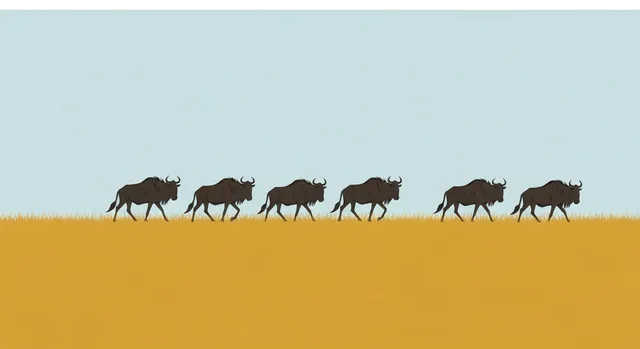
Ndutu: where the woodlands meet the calving plains
Ndutu is one of the most evocative corners of the whole ecosystem — a mosaic of flat-topped acacia woodlands, shimmering soda lakes and the great open short-grass plains, set right at the southern edge where the Serengeti gives way to the Ngorongoro highlands. For a few weeks each year, roughly December to March, it becomes the stage for the migration's most tender chapter: the herds gather here to calve, and something like half a million wildebeest are born on these plains in a window of only a few weeks. To sleep at Ndutu in that window is to be among the newborns at first light, with the predators that follow them never far behind.
What sets Ndutu apart from the bare southern plains further out is its texture. The woodlands and lakeshores add shade, exceptional birdlife and genuine leopard habitat to the open-plains drama, so a base here offers more variety than the treeless grassland alone — calving and cheetah on the plains, leopard in the acacias, flamingos and waterbirds on the soda lakes. It is a landscape that rewards lingering, and one of the most rewarding places in Africa to be during the green season.
This guide covers where to stay at Ndutu and, just as importantly, the permit logic that the boundary running through it imposes. The short version: a seasonal or mobile camp among the woodlands or near the plains, booked early, with your operator handling the Serengeti–Ngorongoro paperwork — and the honest reminder that calving is a process, not a scheduled show, with timing that is always a long-run average to verify against your dates.
At a glance: staying at Ndutu
A fast orientation before the detail. Ndutu is dominated by seasonal canvas and shaped by an administrative boundary that most visitors never notice on the ground but that matters greatly to your permits — verify a specific camp's position, dates and permits before you book.
- Best window: roughly December–March, with calving usually peaking around February.
- Landscape: acacia woodlands and soda lakes meeting the open short-grass plains — more variety than the bare plains.
- Camp style: mostly seasonal and mobile camps, opened for calving and struck afterwards.
- Boundary: much of Ndutu is in the Ngorongoro Conservation Area, not the national park — its own permit logic applies.
- Wildlife: calving and open-plains cheetah, leopard in the acacias, intense lion and hyena action, rich birdlife.
- Book early: well-sited Ndutu camps are limited and among the first in the south to sell out.

Seasonal and mobile camps among the trees
Accommodation at Ndutu is mostly lightweight and seasonal, in keeping with a place that comes alive only when the herds are calving. The classic Ndutu base is a serviced canvas camp — a seasonal camp that opens for the calving months, or a mobile camp that relocates here for its southern phase before moving north later in the year. The woodlands offer something the open plains cannot: shade and shelter, so camps can tuck among the acacias with a little more comfort and atmosphere than a tent pitched on bare grassland, while still sitting minutes from the plains where the herds calve.
Staying in one is the elemental safari at its best: proper beds under canvas, en-suite bush bathrooms, communal meals over a camp kitchen, and the sound of the plains and woodlands at night. You forgo the swimming pool and the reliable connectivity of a big lodge, but you gain proximity and intimacy — the shortest possible transfer to the newborns and the hunts at dawn. For travellers who want permanent-property comfort, the alternative is to base a little outside Ndutu, on the Ngorongoro side or in the southern-central transition, and drive in to the calving grounds each day; the trade is a longer transfer for a more solid base.
Because Ndutu's best sites are few and exist only for the season, they are among the first in the south to sell out — book early, and confirm in writing where the camp will be pitched for your exact dates. Pack soft duffel bags for any fly-in, since light aircraft enforce strict weight limits, and weigh placement and style before price. Confirm current rates and fees with the operator rather than relying on figures that go stale.
- Seasonal camps: comfortable canvas opened only for calving — strong for a calving-first trip.
- Mobile camps: relocate to Ndutu for the southern phase, then move north later in the year.
- Woodland setting: shade and shelter among the acacias, with the plains minutes away.
- Want permanent comfort: base on the Ngorongoro side and drive in daily — a longer transfer for a solid base.
The boundary and the permit logic
Here is the detail that trips up many first-time Ndutu travellers: although Ndutu is part of the same seamless ecosystem and the calving herds wander freely across it, an administrative boundary runs straight through the area. Much of the calving ground — and many of the camps — actually lie within the Ngorongoro Conservation Area rather than the Serengeti National Park proper. On the ground you would never know; the wildebeest and the predators certainly do not. But the two are run under different authorities, with different fees, rules and permit requirements, and your itinerary needs to account for both.
In practice this means a couple of things. Camps positioned in the Conservation Area operate under Ngorongoro's rules, and game drives that cross between the park and the Conservation Area touch two fee regimes in a single day. A few practical implications follow — for example, the Conservation Area applies its own access rules — so the simplest approach is to let a reputable operator handle the permits and confirm exactly what your itinerary covers. Because fees and rules change, we keep specific figures off this page and point you to your operator and the official authorities for current numbers — verify both before you commit.
None of this should put you off; it is simply part of planning an Ndutu trip well. The boundary affects the paperwork far more than the experience, and a good operator absorbs the complexity so you can focus on the calving. The one rule to hold onto is the familiar one: verify the permits, the camp's position and the calving timing for your exact dates, and treat the season as a 30-year average rather than a timetable.
Booking an Ndutu base well
Pulling it together: an Ndutu trip is mostly decided at the booking stage. Confirm in writing where your seasonal or mobile camp will be pitched for your exact dates, cross-check it against where the herds usually calve for that month, and let a reputable operator handle the Serengeti–Ngorongoro permits so your itinerary cleanly covers wherever the day's drives take you. Build in three or more nights so the births and the hunts have room to unfold, and book early, because the best Ndutu sites are few and the first in the south to sell out.
Then handle the rest around the lodging. Pack soft bags for any fly-in and respect the strict light-aircraft weight limits; weigh placement and style before price; and verify current rates and fees with the operator and the official authorities. Above all, keep the framing honest — calving is a process, not a performance, the timing is a long-run average, and the operators worth trusting promise to place you well and give the plains time, never to guarantee a spectacle.
Beyond the calving: leopard, birds and the soda lakes
Although calving is the headline, an Ndutu base rewards travellers who linger for what the place offers beyond the herds. The acacia woodlands that fringe the plains are genuine leopard country, so a slow morning working the trees here can deliver the cat that the open grassland never would — a leopard draped along an acacia branch in the early light is one of Ndutu's quieter gifts. The same woodlands shelter elephant, giraffe and a rich supporting cast of plains game, giving a southern safari more variety than the bare short-grass plains alone, where it is calving and cheetah but little else among the trees.
Then there are the soda lakes. Lake Ndutu and Lake Masek bring water, shade and an extraordinary concentration of birdlife to the area, from flamingos washing the shallows pink to the raptors that hunt the lake margins. For birders, the green season at Ndutu is a feast — migrant species swell the resident list, and the woodlands and lakeshores together hold a diversity that the open plains cannot match. Even for travellers who came only for the calving, the lakes add beauty and stillness to the trip, and a sundowner on a lakeshore as the flamingos settle is one of the loveliest ways to close a day on the plains.
All of this strengthens the case for giving Ndutu unhurried time rather than treating it as a single calving stop. With three or more nights you can let the plains deliver the births and the hunts, work the woodlands for leopard, and let the lakes and their birds slow the pace — the full, layered Ndutu that a rushed day never reveals. As ever, none of it is guaranteed; these are wild woodlands and wild plains, and the reward goes to those who travel patiently with a good guide.
- Woodlands: genuine leopard habitat, plus elephant, giraffe and plains game the bare plains lack.
- Soda lakes: Lake Ndutu and Lake Masek bring flamingos, waterbirds and raptors — a green-season feast for birders.
- Variety: a southern base with more texture than the open short-grass plains alone.
- Give it time: three or more nights reveal the layered Ndutu — calving, leopard, birds and lakeshore stillness.

Related guides

Ndutu Safari Guide
Everything to know before a Ndutu safari — the calving heartland on the southern Serengeti edge, why it sits in the Ngorongoro Conservation Area rather than the national park, its off-road and fee implications, the best season, where to stay and how it fits a wider itinerary.
Read guide
Calving Season in the Serengeti (Ndutu)
Calving season on the southern Serengeti plains around Ndutu — when roughly half a million wildebeest are born in about three weeks, why it draws the densest predator action of the year, and how to plan a green-season safari around it.
Read guide
Southern Serengeti & Ndutu Camps
Seasonal camps on the southern Serengeti and Ndutu plains — where to sleep for the calving spectacle, the open short-grass plains, green-season predator action and easy access to the cheetah country of the south.
Read guideMore in Where to Stay
6
Accessible Lodges in the Serengeti
Accessibility-aware planning for a Serengeti safari — how to read a lodge for steps, showers, paths and vehicle transfers, where fly-in helps, what medical support exists in a remote park, and the questions to ask before you book.
Read guide
All-Inclusive Serengeti Lodges
What 'all-inclusive' actually means at a Serengeti lodge or camp, what tends to be quietly excluded, and how to read two quotes side by side so you are comparing the same trip — not the same word.
Read guide
Best Serengeti Camps for Big Cats
Where to stay in the Serengeti for the best lion, cheetah and leopard viewing — from the kopjes and river valleys of Seronera to the eastern plains and the calving grounds — and how to read placement, season and guiding before you book.
Read guide
Best Serengeti Camps for Photographers
How to choose a Serengeti camp if photography is the point of the trip — placement near the action, the right vehicle and bean-bag set-up, guides who think like photographers, and the logic of a private vehicle and the golden hours.
Read guide
Best Serengeti Safari Lodges & Camps
How to choose the best Serengeti lodge or camp — what separates a permanent lodge, a classic tented camp and a mobile camp, and how to match each to your sector, your season, your migration goal and your budget from honest value to ultra-luxury. The right lodge is the one in the right place for your dates.
Read guide
Best Small Camps in the Serengeti
Why the Serengeti's smallest camps — often just a handful of tents — deliver quieter guiding, attentive hosting and a more immersive sense of wilderness, who they suit, and how to choose and book an intimate camp well.
Read guide