
Best Tented Camps in the Serengeti
How to choose the best tented camp in the Serengeti — classic, mobile, luxury and family-friendly canvas compared across the park's sectors, with honest, no-guarantee guidance on placement and season.

Photo: Peter Thomas / Unsplash
- ✓A tented camp is the classic, romantic way to sleep in the Serengeti — canvas walls, en-suite bush bathrooms and the sounds of the night close at hand.
- ✓Tented camps come in four broad flavours: classic permanent, seasonal mobile, luxury and family-friendly — and the 'best' one depends on your sector, season and group.
- ✓Location beats canvas: the best-appointed tent in the wrong sector for your dates will miss the migration, so choose by where the herds will be, then by style.
- ✓Treat all migration timing as a 30-year average; no tented camp can guarantee a river crossing, so verify the herds' likely position for your exact dates.
- ✓We keep prices and fees evergreen — tented camps span budget to ultra-luxury, and placement drives cost more than the canvas does, so verify current rates with the operator.
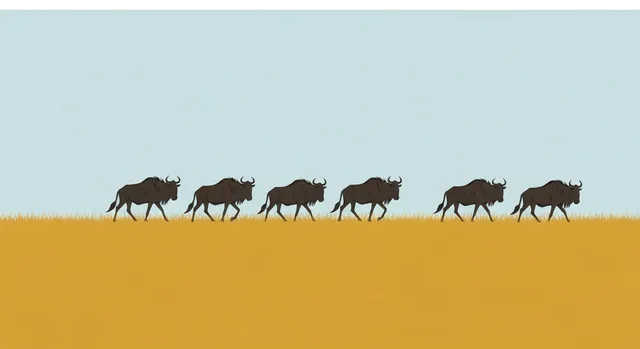
Why a tent, and what a Serengeti tented camp really is
There is a reason the canvas tent became the romantic symbol of the African safari. A tented camp puts only a wall of canvas between you and the bush, so you fall asleep to the whoop of hyena and the distant cough of a lion and wake to birdsong and the smell of the plains at dawn. Yet 'tent' undersells the reality: a Serengeti tented camp typically means a proper bed, an en-suite bush bathroom with a flushing or safari toilet and a hot bucket or solar shower, a private veranda looking onto the plains, and a mess tent where the day's sightings are retold around a fire. It is the closest a comfortable bed can get to sleeping in the wild, and for many travellers it is the whole point of coming.
Tented camps occupy the middle ground between a solid lodge and a fly camp, and that is exactly their appeal. They keep the comfort that makes a long safari sustainable — good food, a real bed, a hot shower — while shedding the walls and reliable mains power that separate you from the bush in a lodge. The texture varies enormously, from simple seasonal camps to ultra-luxury suites under canvas, but the common thread is atmosphere: the sense of being in the Serengeti rather than merely visiting it. This guide breaks down the styles, ties each to the sectors and seasons where it shines, and helps you choose the best one for your trip.
The four styles of tented camp
Most Serengeti tented camps fall into one of four broad styles, and knowing them is the first step to choosing well. Classic permanent tented camps stay in one place year-round, with comfortable, well-furnished tents on raised decks, reliable routines and a fixed address. They suit travellers who want canvas atmosphere with dependable comfort, and because they operate all year they are a strong choice for resident wildlife and for a first safari. Their trade-off is movement: a fixed camp cannot follow the herds, so its migration value depends on the season matching its sector.
Seasonal mobile camps take the opposite tack, packing up and re-pitching to shadow the migration — a southern site near Ndutu for the calving plains, then a northern site near Kogatende for the Mara crossings. They trade a fixed address for proximity, putting you within minutes of the action in the peak window. Luxury tented camps, whether permanent or mobile, layer on the comforts — larger suites, finer food, private guides, sometimes a plunge pool — and sell exclusivity and guiding as much as the canvas. And family-friendly tented camps focus on what makes canvas work with children: interconnecting or larger family tents, flexible meal times, often a pool, and a relaxed attitude to young guests. The right style is the one that matches your group and your season, not the one with the best photographs.
- Classic permanent: fixed, comfortable, year-round — best for resident wildlife and a first safari.
- Seasonal mobile: herd-shadowing proximity — best for migration purists and photographers in the peak window.
- Luxury tented: bigger suites, private guides, exclusivity — best for honeymooners and discerning travellers.
- Family-friendly: family tents, flexible routines, often a pool — best for travelling with children.
At a glance
A quick orientation before the detail — use this as a scorecard, then weight the rows that matter most for your trip.
- What it is: a serviced canvas camp with a real bed, en-suite bush bathroom and the sounds of the night close by.
- Four styles: classic permanent, seasonal mobile, luxury, and family-friendly — choose by group and season.
- Choose by: sector and season first, then style, then comfort and budget.
- Migration: mobile camps follow the herds; fixed camps depend on the season matching their sector.
- Comfort: real beds and bush bathrooms, but simpler power and connectivity than a lodge — canvas, not stone.
- Price band: budget to ultra-luxury — placement and exclusivity drive cost more than the canvas; verify current rates.
- Booking: the best-sited camps in the north and Ndutu sell out furthest ahead — plan peak weeks early.
Location first: matching a tented camp to the migration
The single most useful rule for choosing a tented camp is the one that runs through every accommodation decision in the Serengeti: pick the camp by where the herds will be, not by the photos of the tents. Because the migration is a moving loop — calving in the south, west through the Grumeti, north to the Mara crossings, then back south — a camp's value for the migration is set by its position when you arrive. A classic camp that is perfectly placed for an August crossing can be hours from the action in February, no matter how lovely its canvas, while a mobile camp that relocates with the seasons keeps you close to the herds when most guests are watching from far away.
The method is to decide what you most want to witness, choose the sector that delivers it for your month, and only then compare the tented camps within that sector. For calving and open-plains cheetah, look south to Ndutu in the roughly December-to-March window. For the Grumeti's first river test, the west in the rough May-to-July window. For the headline Mara crossings, the north — Kogatende and the Lamai wedge — in the roughly July-to-October window. For resident lion, leopard and cheetah all year, central Seronera. Whatever the camp's style or comfort, verify the herds' likely position for your exact dates before you commit, and treat any timing claim, including ours, as a long-run average rather than a promise.
- South (Ndutu): calving and open-plains cheetah, roughly December–March.
- West (Grumeti): the migration's first river test, roughly May–July.
- North (Kogatende, Lamai): the Mara River crossings, roughly July–October.
- Centre (Seronera): resident big cats all year — the surest base for a first safari.
- Always verify the herds' likely position for your dates before choosing a tented camp.
What staying in a tented camp is really like
Brochure photographs flatten the texture of a tented camp, so it helps to know what they leave out. The comforts are real but more elemental than a lodge's: a proper bed under canvas, a bucket or solar shower filled on request, lanterns or limited solar power rather than switches in every corner, and the unfiltered sounds of the bush at night — including, sometimes, animals moving through camp after dark, which is why staff escort you to your tent once the sun is down. Meals are usually communal and often surprisingly good, cooked over a camp kitchen and eaten under the stars or in a mess tent. There is rarely a television, the Wi-Fi where it exists is for emergencies rather than streaming, and the rhythm of the day follows the light: early game drives, a midday rest, and sundowners as the plains turn gold.
The intimacy is the point. Tented camps tend to be small — often a handful to a couple of dozen tents — with a low-key, owner-attentive feel that the bigger lodges struggle to match. For travellers who came to disconnect and to feel close to the wild, the absences are features rather than shortcomings. That said, the simpler comforts are not for everyone: if you need reliable air conditioning, a constant connection, or a pool to keep restless children occupied, a lodge will suit better. Within the tented category, the spread is wide — a simple seasonal camp and an ultra-luxury suite under canvas are very different experiences — so match the comfort level to your group's expectations as carefully as you match the location to the season.
Choosing the best camp for your group
Once the sector and season are right, the best tented camp for you depends on who is travelling. Migration purists and photographers should lean towards a well-sited seasonal mobile camp, which removes the long transfer that can eat the golden hour and puts you on the riverbank or among the newborns at first light. Honeymooners and couples after atmosphere and intimacy are well served by a small luxury tented camp, where the comforts and the seclusion turn the bush into something quietly romantic. First-timers who want canvas character without roughing it tend to be happiest in a comfortable classic permanent camp in central Seronera, which combines reliable comfort with the densest year-round big-cat viewing.
Families deserve a particular note. Tented camps can work beautifully with children, but not every camp is set up for them: some carry minimum-age policies, and the bush logistics — escorts after dark, simpler power, no fence — can be a stretch with very young children. Look for explicitly family-friendly camps with larger or interconnecting tents, flexible meal times, often a pool, and ideally a private vehicle so the guide can work around children's attention spans. The honest filter across every group is the same one this guide keeps returning to: if comfort and reliability rank above proximity and atmosphere, lean towards a lodge; if you came for the canvas and the closeness to the wild, a tented camp is hard to beat — just make sure its location matches your dates first.
- Migration-first or photographer: a well-sited seasonal mobile camp for proximity to the action.
- Honeymooners and couples: a small luxury tented camp for intimacy and seclusion.
- First-timers: a comfortable classic permanent camp in central Seronera for reliable year-round game.
- Families: an explicitly family-friendly camp — larger tents, flexible routines, often a pool and a private vehicle.
Cost, logistics and how to book a tented camp well
It is tempting to assume canvas means cheap, but that is not reliably true. Tented camps span the full range, from simple, no-frills seasonal camps to ultra-luxury suites under canvas that sit at the very top of the price ladder. The bigger cost levers are the same as for any Serengeti safari — whether your vehicle is private or shared, whether you fly or drive between sectors, and the fixed park, concession and conservation fees that fall on every itinerary regardless of where you sleep. A small, perfectly sited mobile camp in peak crossing season can cost as much as a grand lodge, because what you are really buying is a front-row seat, not the canvas itself. Rather than quote figures that go stale, we keep this evergreen and point you to the operator and official sources for current rates and fees.
Booking a tented camp well comes down to a short discipline. Confirm, in writing, exactly where the camp will be pitched for your exact dates — especially for mobile camps, whose position is the whole proposition — and cross-check that against where the herds usually are for your month. Treat any promise of a guaranteed crossing as a warning sign. Book early, because the best-sited camps in the north and at Ndutu are limited in number and the first to sell out, often a year or more ahead for peak weeks. If you are flying in, pack a soft duffel rather than a hard case, since light aircraft enforce strict soft-bag and weight limits. And consider pairing styles: a couple of nights in a comfortable central camp for resident big cats, then a well-placed mobile camp for the headline migration moment, gives you both an easy introduction and front-row proximity in the right order.
Mobile camps and the migration: the canvas advantage
The single greatest reason a tented camp can beat a fixed lodge is mobility, and it is worth understanding properly because it is the canvas advantage that no permanent building can match. A mobile, or seasonal, tented camp is designed to be struck and re-pitched, so the operator moves it through the year to stay close to the herds — south to the Ndutu plains for the calving early in the year, north toward Kogatende and the Mara for the dry-season crossings. Because the camp follows the migration, you can wake within a short drive of the action rather than facing a long transfer to it, which during the brief, unpredictable crossing window can be the difference between catching a crossing and missing it. For a trip built around the migration, a well-positioned mobile camp is often the smartest accommodation choice on the whole map.
There is an important distinction within mobile camps that affects what you should book. Some are genuinely mobile, packing down and relocating two or three times a year to follow the herds, and these put you closest to the season's spectacle. Others are 'semi-permanent' seasonal camps that stand in one place for a few months of the year and then close — comfortable and well-sited for their season, but fixed for the duration of your stay. Both can be excellent; the key is to confirm exactly which you are booking and precisely where it will be standing for your dates, because the marketing language is loose and a camp's name tells you nothing about its position. A genuinely mobile camp's whole value is its placement, so that confirmation in writing matters more than any photograph of the tent interior.
The trade-offs of going mobile are real but modest for what you gain. Seasonal camps are simpler in their infrastructure than grand lodges — often running on solar power, with bucket showers heated on request and limited connectivity — and they are remote, so you commit to the wilderness rather than the spa. In return you get atmosphere, proximity and a far lighter footprint on the land, since the camp leaves little trace when it moves. For migration-focused travellers the calculation is usually easy: the slightly simpler comforts are a small price for waking beside the herds. Decide whether your trip is built around the migration or around a base, choose a genuinely mobile camp if it is the former, confirm its dated position in writing, and verify current rates with the operator. Match the canvas to the herds, and the camp becomes part of the spectacle rather than just a place to sleep.
- A mobile camp moves through the year to stay close to the herds — south for calving, north for crossings.
- Following the migration means waking near the action rather than facing a long transfer to it.
- Distinguish genuinely mobile camps from 'semi-permanent' seasonal ones — confirm which you book.
- A mobile camp's whole value is placement, so confirm its dated position in writing.
- The trade is simpler comforts and remoteness, usually a small price for waking beside the herds.

Related guides

Mobile Camps in the Serengeti
How seasonal mobile camps follow the migration around the Serengeti, what staying in one is really like, and who should choose canvas-that-moves over a permanent lodge.
Read guide
Mid-Range Serengeti Safari
A practical guide to the mid-range Serengeti safari — comfortable lodges and classic tented camps, the option of a private vehicle, and smart sector and season choices that buy comfort and location without a luxury premium.
Read guide
Best Serengeti Safari Lodges & Camps
How to choose the best Serengeti lodge or camp — what separates a permanent lodge, a classic tented camp and a mobile camp, and how to match each to your sector, your season, your migration goal and your budget from honest value to ultra-luxury. The right lodge is the one in the right place for your dates.
Read guideMore in Where to Stay
6
Accessible Lodges in the Serengeti
Accessibility-aware planning for a Serengeti safari — how to read a lodge for steps, showers, paths and vehicle transfers, where fly-in helps, what medical support exists in a remote park, and the questions to ask before you book.
Read guide
All-Inclusive Serengeti Lodges
What 'all-inclusive' actually means at a Serengeti lodge or camp, what tends to be quietly excluded, and how to read two quotes side by side so you are comparing the same trip — not the same word.
Read guide
Best Serengeti Camps for Big Cats
Where to stay in the Serengeti for the best lion, cheetah and leopard viewing — from the kopjes and river valleys of Seronera to the eastern plains and the calving grounds — and how to read placement, season and guiding before you book.
Read guide
Best Serengeti Camps for Photographers
How to choose a Serengeti camp if photography is the point of the trip — placement near the action, the right vehicle and bean-bag set-up, guides who think like photographers, and the logic of a private vehicle and the golden hours.
Read guide
Best Small Camps in the Serengeti
Why the Serengeti's smallest camps — often just a handful of tents — deliver quieter guiding, attentive hosting and a more immersive sense of wilderness, who they suit, and how to choose and book an intimate camp well.
Read guideBudget Camping in the Serengeti
How budget camping in the Serengeti really works — public campsites, basic tented options and group safaris — what it costs you in comfort, and the few things budget travellers should never compromise on.
Read guide