
Serengeti in January
January in the Serengeti: the herds gather on the green southern plains around Ndutu, the first calves drop, predators move in, and a quieter, lush park rewards travellers who don't mind a passing storm.

Photo: Twende Africa Tours / Unsplash
- ✓January usually finds the migration spread across the southern short-grass plains around Ndutu, on the Ngorongoro edge — the prelude to peak calving.
- ✓The first wave of wildebeest calves typically arrives late in the month, drawing lions, cheetahs and hyenas onto open ground.
- ✓This is green-season Serengeti: emerald plains, dramatic skies and short, mostly afternoon rains rather than all-day washouts.
- ✓Fewer vehicles and softer shoulder-season rates than the July–October peak, though the festive turn of the year is busier than February or March.
- ✓Treat all migration timing as a 30-year average — a two-week swing either way is normal, so verify where the herds are for your exact dates before booking.
Where the herds are in January
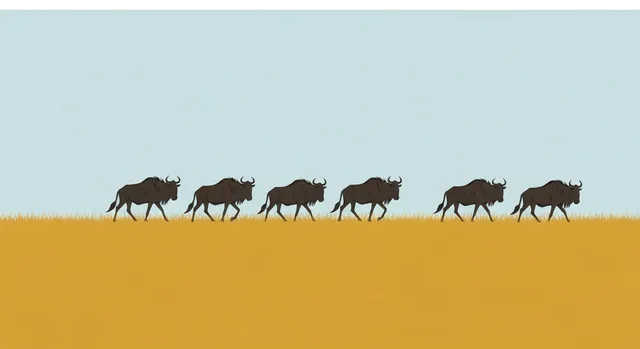
By January the great wheel of the migration has turned south. After the short rains of November and December green the plains, the wildebeest, zebra and gazelle pour down onto the southern Serengeti and the adjoining Ndutu area on the Ngorongoro Conservation Area boundary. This is some of the richest grazing in Africa, fertilised by ash from the old volcanoes of the highlands, and it is where the herds come to give birth.
Early in the month the animals are still settling and spreading, following whichever storms have laid down the freshest grass. By the last week or two, the first calves usually begin to drop — the opening notes of the calving spectacle that peaks in February. The exact rhythm depends entirely on the rains, so think of January as the build-up: the herds are gathering, the plains are full, and the air carries the sense of something about to happen.
Because this is moving wildlife on a moving stage, never assume a camp is well placed without checking. The southern plains are vast, and the difference between a camp on the right grass and one an hour away is the difference your whole trip turns on.
January at a glance
A quick orientation card for planning. Use it as a starting frame, then confirm the live picture for your travel window before you commit to a camp or a sector.
- Migration: southern plains and Ndutu — herds gathering, early calving begins late month (30-year average; verify).
- Weather: green season, warm days, short afternoon storms; mornings often clear and bright.
- Wildlife: huge plains-game concentrations, returning predators, the first newborn calves.
- Crowds & value: quieter than peak dry season; festive period busier, then it eases into the new year.
- Best for: photographers, plains and cheetah lovers, and travellers wanting green-season drama over guaranteed crossings.
- Best sector to base in: south / Ndutu, with central Seronera as a reliable all-rounder.
Weather, light and what to pack
January falls within the green season, between the short rains and the long rains. In practice that usually means warm, bright mornings, building cloud through the day and the chance of a short, theatrical downpour in the afternoon — rather than the steadier, heavier rain of April and May. Storms tend to pass quickly and leave the plains glowing.
For photographers this is one of the most rewarding months of the year. The grass is green, the light is soft and dramatic between showers, skies stack with cloud, and newborn calves on open ground give endless action. Pack layers for cool dawns on game drives, a light waterproof, and dust-and-rain protection for cameras. Binoculars earn their place out here, where the action can unfold a long way off across the open plains.
None of this is a guarantee of dry days or perfect skies — weather is weather. But the trade-off of an occasional soaking for emerald plains, fewer vehicles and the start of calving is one many seasoned safari-goers make happily.
What you'll see, and where to base yourself
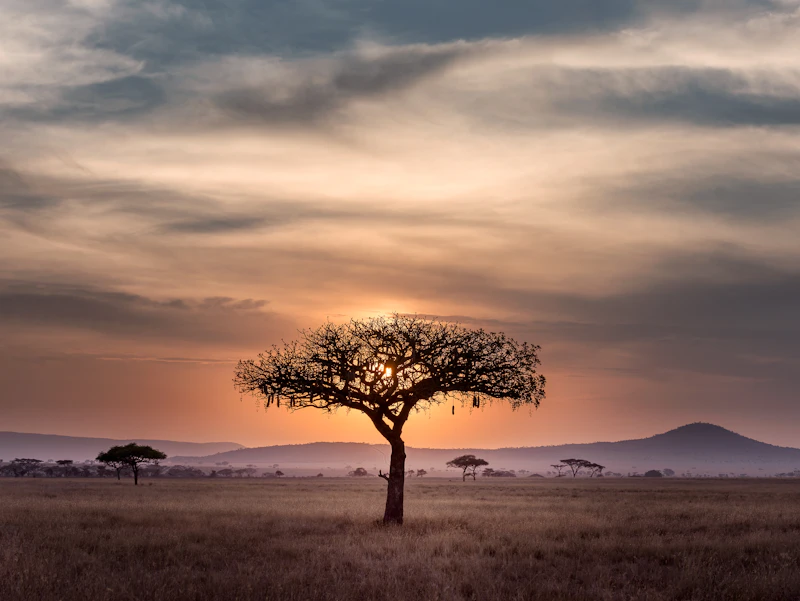
The headline of a January safari is sheer numbers. With the herds concentrated in the south, the plains can carry vast aggregations of wildebeest and zebra, and where the prey gathers, the predators follow. The open, treeless ground around Ndutu is famously good for cheetah, which hunt in the clear here, and resident lions work the edges of the herds. As calving begins, the predator action sharpens by the day.
All of the Big Five live in the wider ecosystem, though rhino are scarce and hard to find — the central Seronera valley, with its rivers and granite kopjes, remains the most reliable year-round bet for leopard and resident lion if your dates leave you between the migration's moves. Many January itineraries pair a few nights in the south with a night or two in Seronera to cover both bases.
For accommodation, the smart move is to base yourself near the herds: southern or Ndutu-area camps, several of which are seasonal or mobile precisely so they can sit on the calving grounds. Confirm a camp's January position against the migration for your exact dates rather than trusting last year's location — and book early, since the well-placed southern camps are limited and popular.
Combining January with the rest of the circuit
January's southern focus dovetails neatly with the classic Northern Circuit. Because the herds are down on the Ngorongoro side of the park, it is easy to fold in the Ngorongoro Crater — a short drive away and one of the densest wildlife arenas in Africa — and Tarangire, whose elephants and baobabs make a fine first or last stop on the road in from Arusha.
Most trips begin at Kilimanjaro International Airport and Arusha. From there you can drive in through the gates, taking the Crater and Tarangire en route, or fly straight to a southern airstrip near Ndutu to maximise time on the calving grounds. Many travellers finish with a flight to Zanzibar to swap dust for white sand. Note that park fees, conservation levies and camp rates all change over time, so check official and operator sources for current figures rather than relying on quoted numbers.
Related guides

Calving Season in the Serengeti (Ndutu)
Calving season on the southern Serengeti plains around Ndutu — when roughly half a million wildebeest are born in about three weeks, why it draws the densest predator action of the year, and how to plan a green-season safari around it.
Read guide
Ndutu Safari Guide
Everything to know before a Ndutu safari — the calving heartland on the southern Serengeti edge, why it sits in the Ngorongoro Conservation Area rather than the national park, its off-road and fee implications, the best season, where to stay and how it fits a wider itinerary.
Read guide
Serengeti Green Season Safari
Why the Serengeti's green season can be the best-value, most beautiful time to go — calving on the southern plains, dramatic light and storm skies, superb birding, lush landscapes, fewer vehicles and gentler rates.
Read guideMore in When to Go
6
Best Months for Serengeti Photography
Which Serengeti months deliver the photographs you want — dramatic light and dust, emerald plains, newborns, river crossings, big cats and fewer vehicles in your frame.
Read guide
Calving Season in the Serengeti
Calving season on the southern Serengeti plains around Ndutu — when roughly half a million wildebeest are born in about three weeks, why it draws the densest predator action of the year, and how to plan a green-season safari around it.
Read guide
Calving Season vs River Crossings
Two faces of the Great Migration: the southern Ndutu calving in the green months, and the northern Mara crossings in the dry. Decide between them by wildlife, budget, crowds, predictability and the kind of drama you want.
Read guide
Christmas & New Year in the Serengeti
How to plan a Christmas or New Year safari in the Serengeti — green December plains, gathering herds, premium festive camps, family-friendly logistics and the flights that make a holiday trip work. Romantic, festive and worth booking early.
Read guide
Great Migration Planning Mistakes
The planning mistakes that make travellers miss the herds, overspend, or book the wrong Serengeti sector — and how to avoid each one so your dates, your camp and the migration actually line up.
Read guide
How to Choose a Migration Camp
Match a Serengeti camp to your month, the migration phase, the nearest airstrip, your budget and your wildlife goal — so you sleep where the herds will be, not where the brochure photo was taken.
Read guide