
First-Time Serengeti Itinerary
The safest, most rewarding route for a first Serengeti safari — how to choose between central Seronera, the migration sectors, the Ngorongoro Crater and flying versus driving, without the rookie mistakes that ruin a first trip.

Photo: >>> niedblog.de / Unsplash
- ✓For a first safari, reliable wildlife beats chasing the migration — central Seronera delivers big cats year-round and is the safest base to build a first trip around.
- ✓The most common rookie mistake is booking a camp for the migration without checking where the herds actually are for your dates — the herds move, and a camp can be hours from the action.
- ✓Pair the Serengeti with the Ngorongoro Crater: it sits on the road in, adds a completely different landscape, and packs astonishing wildlife into a single morning.
- ✓Choosing between flying and driving is the other big first-timer decision — flying saves long road hours, driving costs less and shows you the country.
- ✓Treat migration timing as a 30-year average, keep expectations honest, and verify the live herd picture and all rates for your dates.
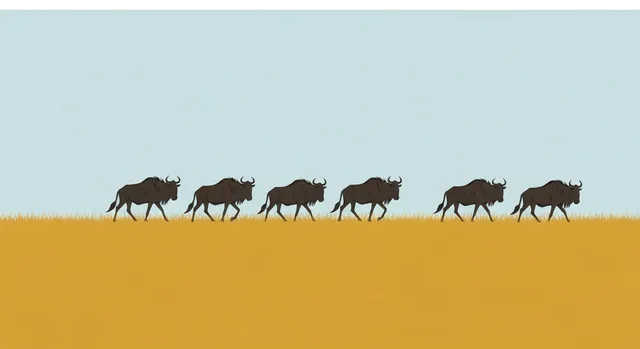
Your first Serengeti, without the rookie mistakes
A first safari is one of travel's great thresholds, and the Serengeti is the place many people dream of crossing it. But the Serengeti is vast — about 14,750 square kilometres — and the choices that face a first-timer can be paralysing: which sector, which season, fly or drive, lodge or camp, chase the migration or not. The good news is that there is a safe, well-trodden route through all of it, and the first-time travellers who come home glowing are almost always the ones who kept it simple, prioritised reliable wildlife, and avoided a handful of classic mistakes. This page is that route.
The single most important principle for a first trip is this: prioritise reliable wildlife over chasing a spectacle. It is tempting to build a first safari around the famous river crossings or the calving stampede, but both are wild events that follow the rains rather than a calendar, and both can disappoint a trip that bet everything on them. A first safari is better built around resident wildlife you can count on — and then, if the migration aligns with your dates, you treat it as a bonus rather than the foundation. Set up that way, a first trip almost never disappoints.
A word on honesty that every first-timer should hear: no ethical operator can promise you a river crossing, a calving stampede, or even a specific animal. Wildlife is wild. Treat every migration timing as a 30-year average, verify the live picture and all rates with your operator, and arrive with expectations set on probabilities rather than guarantees. Do that, and the Serengeti will almost certainly exceed them.
A first-time trip at a glance
Before the details, here is the safe shape of a first Serengeti safari: a central Seronera base for reliable wildlife, paired with the Ngorongoro Crater, over about five days, with the fly-or-drive decision made on your time and budget.
- Base: central Seronera — the most reliable big-cat country and the safest first-trip choice.
- Pair with: the Ngorongoro Crater, which sits on the road in and adds huge value.
- Length: about 4–6 days is the comfortable first-timer range; five is a popular sweet spot.
- Fly or drive: flying saves long road hours; driving costs less and shows the country.
- Sleeping: a mid-range or comfortable camp or lodge — you do not need ultra-luxury for a first trip.
- Migration: a bonus if it aligns with your dates, not the foundation of the trip.
- Combine further: a Zanzibar beach finish or a Tarangire day, if you have time.
- Verify: migration timing, camp positions and all rates change — confirm before booking.
Choosing your sector: why Seronera wins for a first trip
The Serengeti is really a set of distinct neighbourhoods, and for a first trip the central core — Seronera — is the clear choice. It holds the densest resident populations of lion and leopard in the entire ecosystem, with leopards famously draped in the riverine fig trees and cheetahs out on the open ground. Crucially, this wildlife is here all year, so your safari does not depend on the migration's timing or luck. Seronera also has good infrastructure, the central airstrip, and the shortest transfers, which makes the logistics of a first trip simple. It is, in short, the place that most reliably delivers the safari a first-timer is dreaming of.
The migration sectors are more specialised, and that is exactly why they are riskier for a first trip. The far north at Kogatende holds the Mara River crossings, but only in the dry-season window, and reaching it usually means a flight; if you base there outside the window, the herds — and much of the drama — are simply elsewhere. The southern Ndutu plains hold the calving herds, but only in the southern summer. These are spectacular when the timing is right, but they ask you to gamble a whole trip on a wild event. For a first safari, base in Seronera for the reliable wildlife, and only add a migration sector if your dates genuinely align and you understand it is a bonus, not a guarantee.
The deeper point is the most important advice on this whole page: the herds move, so a camp that is perfectly placed in one month can be hours from the action in another. The classic rookie mistake is booking a camp 'for the migration' without checking where the herds usually are for your exact dates. Always verify the live picture before you commit, and let a good operator steer you to the right sector. Get this right and the rest of the trip falls into place.
- Seronera: reliable big cats year-round, easy logistics, the safest first-trip base.
- North (Kogatende): the Mara crossings, but only in the dry-season window, and a flight away.
- South (Ndutu): the calving herds, but only in the southern summer.
- Golden rule: verify where the herds are for your exact dates before booking any camp.
Adding the Ngorongoro Crater, and fly versus drive
The single best addition to a first Serengeti trip is the Ngorongoro Crater. It lies directly on the road in from Arusha, so it slots naturally into a drive-in itinerary, and it offers a completely different landscape — a high-walled volcanic caldera rather than open plains — with one of the densest concentrations of wildlife in Africa packed onto its floor, including a genuine chance of black rhino. A single morning game drive on the crater floor is enough to see an extraordinary range of animals, which makes it superb value for a first-timer. Most first trips spend a night on the crater rim and descend at dawn, either on the way to the Serengeti or on the way back.
The other big first-timer decision is whether to fly or drive into the park. Driving from Arusha is cheaper, lets you see the country roll past, and combines effortlessly with the Ngorongoro Crater and Tarangire — but it is a long day on rough roads. Flying in by light aircraft turns that long drive into a short hop, saves precious hours, and is what makes the remote north practical, at a higher cost and with strict baggage limits (soft bags only, firm weight caps). For a first trip focused on Seronera and the crater, many people drive in for the scenery and the crater, then fly out to save time; others fly both ways for comfort. There is no wrong answer — it is a trade of money against time.
If you have extra days, the easy first-timer extensions are a Tarangire day on the drive in — famous for its elephants and ancient baobabs — or a Zanzibar beach finish, a single short flight away, to decompress after the early safari mornings. But none of these are necessary for a wonderful first trip. The core route — Seronera for reliable wildlife, the Ngorongoro Crater for variety, over about five days — is the safe, proven foundation. Keep it simple, keep your expectations honest, verify your dates and rates, and a first Serengeti safari delivers exactly the wonder you crossed the world for.
The classic five-day route, day by day
Here is the route described above turned into an actual day-by-day plan — the one most first-timers and most reputable operators settle on. It is a drive-in, fly-out shape that gets the scenery and the Ngorongoro Crater on the way in, gives you full days in central Seronera, and then flies you back to save the long return drive. Treat it as a template to adjust rather than a fixed script: the exact lodges, the order of the crater, and whether you fly or drive will all flex with your dates, budget and operator.
Day one is the transfer from Arusha up onto the highlands, usually with a stop in Karatu and a first night on the Ngorongoro Crater rim, where the air is cool and the views down into the caldera are extraordinary. Day two starts before dawn with the descent to the crater floor for a half-day game drive — this is where a first-timer often sees lion, elephant, buffalo, flamingo and, with luck, the black rhino that the crater is famous for — before climbing out and driving across the Serengeti gate at Naabi Hill into the central plains, reaching a Seronera-area camp by late afternoon. Days three and four are pure Serengeti: full days of morning and late-afternoon game drives around the Seronera Valley, the rivers and the kopjes, with a midday break back at camp through the harsh light. Day five is a final dawn drive, then a transfer to Seronera airstrip for the light-aircraft flight back to Arusha or Kilimanjaro.
That shape gives you two genuinely full days of Serengeti game viewing, which is the comfortable minimum for a first trip, plus the crater as a contrasting headline. If you have a sixth or seventh day, the easiest additions are a second Serengeti sector or an extra Seronera day rather than a rushed dash north; if the migration is in the south during your dates, an operator may swing the whole route down to Ndutu instead of Seronera. Always have your operator confirm the live herd picture, the airstrip schedule and every rate before you lock the plan.
- Day 1: Arusha up to the Ngorongoro Crater rim — transfer day, cool highland first night.
- Day 2: dawn descent to the crater floor, then drive into central Serengeti by late afternoon.
- Day 3–4: full days of morning and late-afternoon game drives around Seronera.
- Day 5: final dawn drive, then fly-out from Seronera airstrip to save the long return road.
- Extra days: add a Seronera day or a second sector rather than a rushed northern dash.
What a first-timer should pack and expect
A first safari has a rhythm that surprises people, and knowing it in advance makes the trip far better. Days start in the dark: a pre-dawn wake-up, coffee at camp, and out on the first drive as the light comes up, because the cool early hours are when predators are most active. You return for a late breakfast, rest through the harsh midday light, and head out again in the late afternoon for the golden hour, often back to camp after dark. It is early mornings rather than lie-ins, and the reward is the best wildlife of the day. Distances inside the park are large and the tracks are rough, so expect dusty, bumpy hours between sightings — part of the experience, not a flaw in it.
Packing for a first safari is mostly about neutral, layered clothing and a few specifics. Mornings and evenings are genuinely cold, especially on the crater rim and on open game-drive vehicles, so warm layers matter as much as sun protection. Stick to muted earth tones — avoid bright white, which shows dust, and dark blue and black, which can attract tsetse flies in some areas. Light-aircraft flights enforce strict soft-bag-only baggage limits with firm weight caps, so pack light in a duffel, not a hard suitcase. Bring binoculars (one pair per person transforms the experience), more camera storage than you think you need, sun cream, a hat, a buff for dust, and any personal medication, since you are a long way from a pharmacy.
Finally, set your expectations like a seasoned traveller rather than a tourist. Sightings are never guaranteed, the migration follows the rains rather than a calendar, and the magic of a first safari is as much in the quiet plains, the birdlife and the night sounds as in the headline predators. Speak to your guide, ask questions, and let them read the bush for you. Confirm your park fees, transfers, flight weights and the live wildlife picture with your operator before you travel, arrive curious rather than ticking off a checklist, and a first Serengeti safari will give you far more than you came for.
- Expect pre-dawn starts and cold mornings — warm layers matter as much as sun protection.
- Wear muted earth tones; avoid bright white (dust) and dark blue/black (tsetse flies in some areas).
- Pack a soft duffel only for light-aircraft flights, with firm weight limits.
- Bring binoculars (one pair each), extra camera storage, sun cream, a hat and personal medication.
- Set expectations on probabilities, not guarantees — confirm fees, flights and the live picture first.
Related guides

Best Serengeti Area for a First Safari
A first-timer's decision guide to the Serengeti's sectors — central Seronera, the southern plains, the Western Corridor and the far north — chosen by month, budget and what you most want to see, with the honest trade-offs.
Read guide
Five-Day Serengeti Safari
A classic five-day Serengeti and Ngorongoro Crater route with better pacing, more wildlife diversity and sound camp logic — how to combine the central plains with the great caldera without rushing, by road or by air.
Read guide
Where to Stay in the Serengeti
Where to stay in the Serengeti — how to choose the right sector, lodge or camp by your month, your migration goal, your budget, whether you fly or drive, and the wildlife you most want to see. Camp placement matters as much as comfort, so match the bed to the herd.
Read guideMore in Itineraries
6
Budget Serengeti Itinerary
A realistic budget Serengeti itinerary built on group-joining safaris, camping and smart shoulder-season timing — where to save, where never to cut corners, and how to keep the magic without the luxury price tag.
Read guide
Family Serengeti Safari Itinerary
A family-paced Serengeti itinerary built around shorter drives, family-friendly camps with pools, easier logistics and real safety — the route that keeps both the children and the parents happy on an African safari.
Read guide
Fly-In Serengeti Itinerary: A Time-Efficient Plan by Airstrip and Season
A time-efficient fly-in Serengeti itinerary — how to pick the right airstrip for your month, pair it with a camp and a migration target, link light-aircraft hops, pack for the weight limits, and a sample route. Evergreen timing to verify.
Read guide
Four-Day Serengeti Safari
A balanced four-day Serengeti safari: an arrival day, two full game-drive days in the central plains and a relaxed departure, with realistic flight-and-road logistics, honest pacing and the camp logic that makes a short trip feel unhurried.
Read guide
Luxury Serengeti Itinerary: Fly-In Camps, Private Guiding and the Migration in Style
A high-end Serengeti itinerary — exclusive fly-in camps placed for the migration, a private guide and vehicle, a dawn balloon flight, seamless transfers and an effortless Zanzibar finish. Evergreen timing and no quoted prices — verify for your dates.
Read guide
Mara River Crossing Itinerary: Planning the Northern Serengeti for the Crossings
A Northern Serengeti itinerary built for the Mara River crossings — when to go, how many buffer nights to give yourself, Kogatende camps, fly-in strategy, the ethics of waiting, and why no operator can promise a crossing. Evergreen timing to verify.
Read guide