
Mara River Crossing Itinerary: Planning the Northern Serengeti for the Crossings
A Northern Serengeti itinerary built for the Mara River crossings — when to go, how many buffer nights to give yourself, Kogatende camps, fly-in strategy, the ethics of waiting, and why no operator can promise a crossing. Evergreen timing to verify.

Photo: Denice Alex / Unsplash
- ✓Crossings happen mainly July to October around Kogatende in the far north, where the herds gamble against crocodile-dark water — treat the peak (usually August) as a 30-year average and verify.
- ✓No ethical operator can schedule a crossing; they hinge on weather, grazing and the herds' collective nerve, and a given day may bring several or none.
- ✓Buffer nights are everything: three or more nights in the north dramatically improves your odds over a single rushed day.
- ✓Base in the Kogatende sector, on the right side of the river for where the herds are expected — verify which bank for your dates.
- ✓Flying to the Kogatende airstrip is the practical way in; the north is remote and the road from the central park is very long.
- ✓Crossing etiquette matters — patience, distance and a still vehicle protect the spectacle and the herds.
- ✓Verify park fees, camp booking windows and the herds' likely position with official sources and your operator before you commit.
What a crossing itinerary is really for
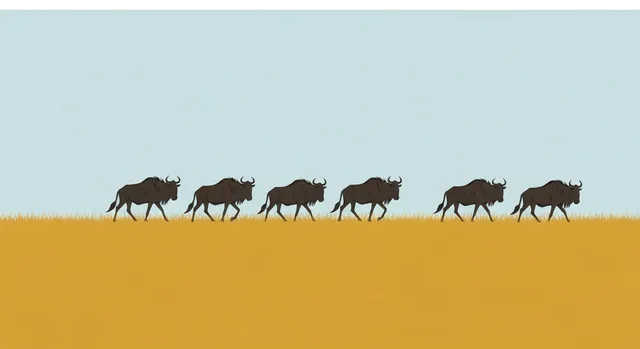
The Mara River crossing is the single most cinematic hour in the Serengeti and the hardest to time. From about July, the leading edge of the migration reaches the Mara River in the far north of the park. Columns of wildebeest pile up on the banks, hesitate, and then pour across in a churning rush past waiting crocodiles — and then, often, mill back and do it again days later. Peak drama is usually August, with crossings continuing through September and into October as the herds move back and forth across the Kenyan border. It is the scene most people picture when they imagine the Great Migration, and it is the reason the remote north exists on most travellers' maps at all.
The purpose of a crossing itinerary is not to deliver a crossing — nothing can — but to give you the best possible odds of standing in front of one, and a wonderful safari either way. The herds cross when they cross: at dawn, at noon, or not at all on a given day. A well-built plan does three things. It puts you in the Kogatende sector during the window. It gives you enough buffer nights that a quiet day or two does not sink the trip. And it pairs you with a patient guide who understands that the waiting is part of the experience, not a failure of it. Build the trip around those three principles and the river will do the rest.
At a glance: the crossing plan
A quick orientation before the detail. Everything here is evergreen — confirm current fees, camp availability, flight schedules and the herds' likely position and river bank for your exact dates with official sources and your operator close to departure.
- Best window: roughly July to October, with crossings usually peaking around August — verify for your dates.
- Where: the Kogatende sector of the Northern Serengeti, along the Mara River.
- Minimum nights: three or more in the north as buffer against quiet days.
- Headline draw: the herds crossing the river past crocodiles — never guaranteed on any given day.
- Access: fly to the Kogatende airstrip; the road from the central park is very long.
- Style: drier and cooler than the south, but the busiest and priciest Serengeti season — book early.
- Ethics: patience, distance and a quiet vehicle — never crowd or push the herds at the bank.
Step 1 — Choose your window inside July–October
Start by understanding that crossing timing is a long-run average, not a calendar. The herds reach the Mara River as the dry season pushes them north in search of grass and water; in a typical year the leading columns arrive from about July, crossings peak around August, and the back-and-forth continues through September into October. But the herds are responding to rain and grazing, not a schedule, so a swing of a couple of weeks in either direction is entirely normal, and within the window the herds may cross daily for a stretch and then go quiet for days.
August is the safest single bet for the densest crossing activity, but it is also the busiest and most expensive stretch of the entire Serengeti year, and the limited northern camps book out furthest ahead. July can catch the build-up with fewer vehicles; late September and October often hold good crossing action as the herds shuttle across the border, again with thinner crowds. Whatever you choose, verify the herds' likely position for your exact dates with your operator before you book, and accept that you are buying odds, not certainty. The honesty of that framing is what separates an ethical itinerary from an over-sold one.
- Treat August's peak as a 30-year average — verify the herds' likely position for your dates.
- July: the build-up arriving from the south, often with fewer vehicles.
- August: usually the peak of crossing activity — busiest and priciest of the year.
- September–October: continued back-and-forth crossings, thinner crowds, herds near the border.
- Confirm timing and which river bank to base on before locking in any northern camp.
Step 2 — Build in buffer nights
If there is one rule that defines a good crossing itinerary, it is this: give yourself buffer nights. A crossing is a roll of the dice on any single day, so the number of days you spend in the north is the most powerful lever you have over your odds. One day at Kogatende is a gamble that often loses; three or more nights turns the odds firmly in your favour, because you are no longer betting on a single sunrise but on several. The travellers who come home disappointed are almost always the ones who tried to bolt a half-day crossing visit onto a packed circuit and ran out of time when the herds happened to sit tight.
Three nights in the north is a sensible minimum; four or five is better still, and lets a quiet day pass without anxiety. Those extra mornings are not wasted even when no crossing comes — the Kogatende sector is superb general game country, with big cats, elephants and the gathering herds themselves, and the anticipation of the river is its own slow pleasure. Plan the rest of your trip around protecting those northern nights, not the other way round. If something has to give, cut a day elsewhere before you cut your buffer at the river.
- Buffer nights are your biggest lever on crossing odds — more nights, better chances.
- Three nights minimum at Kogatende; four or five removes the pressure of a quiet day.
- Never bolt a half-day crossing visit onto a rushed circuit — it is the classic mistake.
- Quiet days are still rich: the north is excellent general game country.
- Protect the northern nights first; cut days elsewhere if you must trim the trip.
Step 3 — Base in Kogatende, on the right bank
Where you sleep decides how much of the day you can spend at the river, and the answer is the Kogatende sector in the far north, hard by the Mara. Camps here are within striking distance of the crossing points, so you can be on the bank early and stay late, reading the herds as they build at the water. A camp anywhere south of the north — in central Seronera or the Western Corridor — leaves you with hours of driving each way, which is fatal for an event that may happen at any hour. For crossings, north or nothing.
There is a finer point that a good operator will help with: which side of the river to base on. The herds cross in both directions and gather on whichever bank the grazing pulls them to, so the most useful camps for your dates may be on the north or the south side of the Mara, and ferrying a vehicle across to chase a crossing on the far bank is not always quick. This is why mobile and seasonal camps, which set up in the north for these months and can be positioned for the expected pattern, are so popular for crossing trips. Verify your camp's exact location against where the herds are expected for your window before you book — and accept that the river is wide and the herds are free agents.
- Base in the Kogatende sector — within reach of the crossing points, north of everything else.
- Ask which side of the Mara your dates favour; crossing the river to chase a herd is slow.
- Mobile and seasonal camps positioned for the season often suit crossing trips best.
- Northern camps are few and book out furthest ahead for August — reserve early.
- Verify your camp's bank and position against the herds' expected location for your dates.
Step 4 — Fly in, don't drive the whole way
The far north is genuinely remote, and that remoteness shapes the logistics. Driving all the way from Arusha or the central park to Kogatende is a very long haul on rough roads that swallows a day at each end — time that would be far better spent at the river. For almost every crossing itinerary, the right move is to fly: light aircraft serve the Kogatende airstrip from Arusha, Kilimanjaro and Seronera, dropping you close to your camp and the crossing points with most of the day intact.
A common and effective pattern is to combine a flight north with time elsewhere. You might begin with a day or two in central Seronera for reliable big-cat viewing, then fly up to Kogatende for your buffer nights at the river, before flying back out to Arusha or onward to Zanzibar. The fly-in approach keeps the trip's energy for the plains and the river rather than the road. Remember the strict baggage rules of small planes — soft duffels only, with firm weight limits — and confirm flight schedules for your dates, as bush-airstrip timings shift with the season and the operator.
- Fly to the Kogatende airstrip — the road from the central park or Arusha is very long.
- Light aircraft serve the north from Arusha, Kilimanjaro and Seronera.
- A common pattern: a Seronera taste first, then fly north for the crossing buffer nights.
- Soft duffel bags only on light aircraft, within the weight cap.
- Confirm bush-airstrip flight schedules for your dates — they shift seasonally.
Step 5 — A sample five-night crossing route
Here is a worked route to adapt rather than copy. It pairs a short central-Serengeti taster with the all-important northern buffer, and uses light aircraft to protect your time. Re-point any detail to your dates and your operator's advice.
Day 1 — Fly into the Serengeti (via Arusha or Kilimanjaro) and settle into a central Seronera camp for the afternoon, with a first game drive among the resident big cats. Day 2 — A full day in Seronera's river-and-kopje country, then fly north to Kogatende for the evening so you are in position. Days 3, 4 and 5 — Three full days at the river: out early each morning to read the herds at the bank, patient hours waiting on the gathering columns, and the openness to follow a crossing wherever and whenever it comes. These are your buffer days, and they are the heart of the trip. Day 6 — A final early drive on the chance of a dawn crossing, then fly back to Arusha for onward travel or a Zanzibar finish. Add a fourth river day if you can — at the Mara, more time is the surest improvement you can buy.
- Day 1: fly in to central Seronera, afternoon game drive.
- Day 2: full day in Seronera, then fly north to Kogatende.
- Days 3–5: three full buffer days at the Mara River, reading the herds.
- Day 6: final dawn drive, then fly out to Arusha or onward to Zanzibar.
- Add a fourth river day if your trip allows — more time is the best upgrade.
Step 6 — Crossing ethics and the art of waiting
The crossings are a privilege to witness and a fragile one, so how you behave at the river is part of the itinerary, not an afterthought. The herds are skittish at the bank, and a wall of crowding vehicles or a sudden movement can spook a building crossing and turn it back, denying the spectacle to everyone and stressing the animals. The etiquette is simple and non-negotiable: keep your distance, stay quiet, switch off the engine, never block the herds' line to the water, and follow your guide's and the park's lead. A patient, respectful approach is also the one most likely to be rewarded with a crossing, because the herds need calm to commit.
The deeper skill of a crossing trip is the art of waiting. You may sit for hours watching a herd gather, drift away and gather again before anything happens — or before nothing does. This is not dead time; it is the experience. A good guide reads the herds' body language, positions the vehicle early and well, and keeps you in the right place rather than racing from rumour to rumour. Come with patience and an open mind, treat a quiet day as part of the wild's honesty rather than a letdown, and the moment the river finally goes — if it does for you — will land all the harder for the wait.
- Keep distance, stay quiet, kill the engine and never block the herds' line to the water.
- Crowding or startling a building crossing can turn it back — patience protects the spectacle.
- Follow your guide's and the park's lead at all times at the bank.
- Hours of waiting are the experience, not dead time — a good guide reads the herds.
- Treat a quiet day as the wild's honesty; the payoff, when it comes, is greater for it.
Step 7 — Verify before you book
The last step protects everything above: confirm the moving parts for your exact dates. Treat every timing note here as a long-run average and check the herds' likely position and the favoured river bank with your operator, because the crossing window can swing a fortnight either way and the herds choose their own moments. The entire logic of basing in the north rests on the herds being there for your dates, so this is the detail that matters most.
Beyond the migration, verify the practical layer that changes over time: park fees, gate hours, light-aircraft schedules and baggage limits, and the booking windows for the scarce northern camps, which fill furthest ahead for the August peak. Keep specific fee amounts and camp prices to official sources and your operator rather than relying on numbers that go stale. Build the trip on the evergreen logic here — go north, give it buffer nights, fly in, wait with patience and respect — and let current data and a good operator lock down the rest. Do that, and the Mara crossings reward you with the most electric hour the Serengeti has to offer.
Common questions about a Mara crossing itinerary
When do the Mara River crossings happen? Mainly July to October around Kogatende in the far north, usually peaking in August — treat that as a 30-year average and verify for your dates.
Can a crossing be guaranteed? No. The herds cross when they cross, at any hour or not at all on a given day; any operator promising a crossing is overselling.
How many nights do I need in the north? Three or more at Kogatende as a buffer; one day is a gamble that often loses. Four or five removes the pressure of a quiet day.
Should I fly or drive to the north? Fly — the road to Kogatende is very long. Light aircraft from Arusha, Kilimanjaro and Seronera save a day at each end.
Which side of the river should I stay on? It depends on where the herds are expected for your dates; your operator should position you on the favoured bank, as crossing the river to chase a herd is slow.
What is the etiquette at a crossing? Keep your distance, stay quiet, switch off the engine, never block the herds' line to the water, and follow your guide and the park — patience also improves your odds.

Related guides

Mara River Crossings in the Serengeti
How to plan a Northern Serengeti river-crossing safari without false promises — when the Mara crossings happen at Kogatende, why timing is luck, where to stay, and how to watch with good wildlife etiquette.
Read guide
Kogatende: Gateway to the Mara Crossings
A guide to Kogatende — the airstrip, the camps and the Mara River access that make it the key base for crossing-season safaris in the Northern Serengeti. Why this is where most northern trips begin, and how to plan around it.
Read guide
Mara River Crossing Etiquette
How to watch a Mara River crossing responsibly — keeping back from the banks, following TANAPA vehicle rules, and never pressuring the herds into or out of the water.
Read guideMore in Itineraries
6
Budget Serengeti Itinerary
A realistic budget Serengeti itinerary built on group-joining safaris, camping and smart shoulder-season timing — where to save, where never to cut corners, and how to keep the magic without the luxury price tag.
Read guide
Family Serengeti Safari Itinerary
A family-paced Serengeti itinerary built around shorter drives, family-friendly camps with pools, easier logistics and real safety — the route that keeps both the children and the parents happy on an African safari.
Read guide
First-Time Serengeti Itinerary
The safest, most rewarding route for a first Serengeti safari — how to choose between central Seronera, the migration sectors, the Ngorongoro Crater and flying versus driving, without the rookie mistakes that ruin a first trip.
Read guide
Five-Day Serengeti Safari
A classic five-day Serengeti and Ngorongoro Crater route with better pacing, more wildlife diversity and sound camp logic — how to combine the central plains with the great caldera without rushing, by road or by air.
Read guide
Fly-In Serengeti Itinerary: A Time-Efficient Plan by Airstrip and Season
A time-efficient fly-in Serengeti itinerary — how to pick the right airstrip for your month, pair it with a camp and a migration target, link light-aircraft hops, pack for the weight limits, and a sample route. Evergreen timing to verify.
Read guide
Four-Day Serengeti Safari
A balanced four-day Serengeti safari: an arrival day, two full game-drive days in the central plains and a relaxed departure, with realistic flight-and-road logistics, honest pacing and the camp logic that makes a short trip feel unhurried.
Read guide