
Crocodiles in the Serengeti
Where the Serengeti's Nile crocodiles live, the role they play in the Grumeti and Mara River crossings, and how to watch the drama responsibly — with honest, no-guarantee expectations.

Photo: Leon Pauleikhoff / Unsplash
- ✓The Serengeti's crocodiles are Nile crocodiles — among the largest reptiles on earth, some of the big river bulls reaching well over four metres.
- ✓They are the lurking villains of the migration crossings: in the Grumeti in the west and the Mara in the north, crocodiles wait in the deep water the herds must cross.
- ✓Crocodiles are ambush hunters that can fast for long stretches, so the river bulls effectively wait all year for the few frantic weeks the wildebeest arrive.
- ✓Crossings can't be scheduled and predation can't be promised — the drama is real but unpredictable, and chasing 'guaranteed' kills is neither possible nor ethical.
- ✓Outside the crossing season you'll still see crocodiles hauled out and basking along the permanent rivers — a reliable sighting in classic croc country.
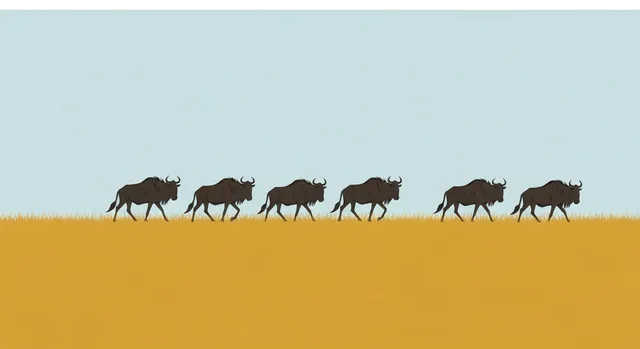
The ancient ambush predator of the rivers
If the lion is the Serengeti's celebrity, the Nile crocodile is its patient, prehistoric counterweight — a predator that has barely needed to change in tens of millions of years. The big river bulls here are genuinely huge, the largest among the heaviest reptiles alive, and they own the deep, permanent water that the rest of the ecosystem must come to. Where hippos crowd a pool, crocodiles spread along its margins and sandbars, hauled out to bask in the sun, sliding into the current at the first sign of opportunity. They are cold-blooded ambush hunters: still for hours, explosive for seconds.
What makes the Serengeti's crocodiles so compelling is the way their slow lives intersect with the migration's frantic one. A crocodile can go remarkably long between large meals, its metabolism geared to feast-and-fast. In the great crossing rivers, that means the resident bulls can effectively wait out the whole year for the brief window when over a million wildebeest are funnelled across their water. For a few weeks they live in abundance; for the rest, they wait. It is one of the great quiet dramas of the ecosystem, and it plays out on the Grumeti and the Mara.
The Grumeti and the Mara — crocodile country
Two rivers define the Serengeti's crocodile story. The Grumeti, threading the Western Corridor, is the migration's first major river test: as the herds push west and north through the middle of the year, they reach the Grumeti's deep, croc-heavy channels, where some of the largest crocodiles in Africa are said to live. The Grumeti's crossings tend to be more scattered and less concentrated than the Mara's, but the river holds a fearsome resident population, and basking crocodiles are a near-permanent feature of the corridor's deeper pools.
Further along the year and far to the north, the Mara River is the stage for the crossings most people picture — and the crocodiles there are central to the spectacle. Around the Kogatende sector in the dry-season window, columns of wildebeest pile up on the banks, hesitate, and then pour across water in which big crocodiles are waiting. The reptiles target stragglers, the injured and the panicked, but the sheer chaos of a mass crossing means most animals get across. Both rivers also hold hippos, so a single bend can show you the two great heavyweights of the African river side by side.
- Grumeti River, Western Corridor: the migration's first river test, with a formidable resident crocodile population.
- Mara River, far north (Kogatende): the famous dry-season crossing rivers, where crocodiles wait at the crossing points.
- Year-round: basking crocodiles along the deeper, permanent pools of both rivers, even outside crossing season.
- Shared water: crocodiles and hippos occupy the same rivers — often visible in the same frame.
Crocodiles and the crossings — drama, not a schedule
It is tempting to imagine a river crossing as a guaranteed bloodbath, but the honest picture is more complicated and more interesting. Crossings happen when the herds decide to cross — driven by grazing, weather and collective nerve — and no ethical operator can schedule one, let alone promise a crocodile attack. On many crossings the wildebeest pour over with the crocodiles barely engaging; on others a single large bull will take a straggler in a heartbeat of violence. The reptiles are opportunists picking off the vulnerable, not a wall of certain death, and the great majority of wildebeest cross safely. That uncertainty is exactly what makes a crossing so gripping to witness.
The practical lesson for travellers is the same one this site repeats about the migration generally: give yourself time and patience rather than chasing a guarantee. Basing yourself in the north for several nights during the crossing window — broadly the dry-season months, but always to be verified against the herds' position for your exact dates — dramatically improves your odds of seeing a crossing at all, with whatever crocodile drama it brings. Travel with a guide who reads the river and the herds' mood, accept that the waiting is part of it, and let the crocodiles be the lurking tension beneath the spectacle rather than a scene you demand.
- No schedule, no promises: crossings hinge on weather, grazing and herd nerve; predation is never guaranteed.
- Crocodiles take the vulnerable — stragglers, the injured, the panicked — but most wildebeest cross safely.
- Give yourself time: several nights in the north during the dry-season window weights the odds in your favour.
- Treat any timing as a 30-year average and verify against the herds' actual position for your dates.
Watching crossings responsibly
A river crossing is one of the most charged scenes in African wildlife, and how vehicles behave at the bank genuinely affects whether it happens at all. Wildebeest are skittish at the water's edge; a wall of badly parked vehicles, or one that pushes too close to a forming crossing point, can spook a herd into turning back and abandoning the crossing entirely — denying not just you but everyone, and stressing animals that are already at their most vulnerable. The crocodiles, meanwhile, need nothing from us; the ethic is entirely about not interfering with the herds' decision.
Good practice is straightforward and your guide will lead it: hang back from the crossing point, keep engines and voices down, never position a vehicle to block the herds' line to and from the water, and let the animals choose their moment. Crowding for a closer crocodile shot is exactly the behaviour that ruins crossings. The dedicated etiquette guide goes into the specifics, but the spirit is simple — you are a guest at something wild and fragile, and patience is both the ethical choice and, usually, the one that delivers the better sighting.
- Hang back: never crowd a forming crossing point or block the herds' line to the water.
- Keep quiet: low engines and voices reduce the chance of spooking the herd.
- Don't chase the kill: jostling for a crocodile shot can turn a whole herd back from the river.
- Follow your guide's lead — patience usually delivers the better, and the more ethical, sighting.
Safety and the crocodile's place in the ecosystem
Crocodiles rarely feature in safari-safety briefings the way hippos do, simply because you spend your time in a vehicle and the reptiles keep to the water. The rules are common sense: never approach a riverbank on foot, never let children near water at camps that border a river, and treat any still pool or river edge as potential crocodile habitat. The danger is to anything that comes to the water unwary, which is precisely why the migration crossings are so perilous for the herds and so safe to watch from a vehicle.
Ecologically, the Nile crocodile is a keystone of these rivers. As apex aquatic predators they shape the behaviour of everything that drinks and crosses; as scavengers they clean the rivers of carcasses, including the many wildebeest that drown in the crush of a crossing rather than fall to a croc. Their long lives, slow metabolism and feast-and-fast biology let them persist through the lean months and capitalise on the few weeks of plenty — a strategy as old as the dinosaurs. Watching a Serengeti crocodile is, in a real sense, watching deep time hold its breath at the edge of the water.

Crocodiles at a glance
Use this quick card to set expectations. Crocodiles are a reliable sighting along the permanent rivers in any season; the famous crossing drama, by contrast, is unpredictable and best approached with patience rather than demands.
- Species: Nile crocodile — among the largest reptiles alive, the big river bulls well over four metres.
- Where: the Grumeti River in the west and the Mara River in the north, plus deeper permanent pools.
- Reliable sighting: basking crocodiles along the rivers year-round, even outside crossing season.
- The drama: crossings and predation, broadly in the dry-season window in the north — unpredictable, never guaranteed.
- Etiquette: hang back at crossing points, keep quiet, never block the herds' line to the water.
- Safety: keep off riverbanks on foot; treat any still water as potential crocodile habitat.
- Verify: crossing timing varies — treat it as a 30-year average and confirm against the herds for your dates.

Related guides

Mara River Crossings in the Serengeti
How to plan a Northern Serengeti river-crossing safari without false promises — when the Mara crossings happen at Kogatende, why timing is luck, where to stay, and how to watch with good wildlife etiquette.
Read guide
The Grumeti River Migration
The migration's first water test: Western Corridor timing, the Grumeti River's giant crocodiles, where to base yourself, and why a Grumeti crossing is a quieter, less predictable affair than the famous Mara.
Read guide
Mara River Crossing Etiquette
How to watch a Mara River crossing responsibly — keeping back from the banks, following TANAPA vehicle rules, and never pressuring the herds into or out of the water.
Read guideMore in Wildlife
6
Big Cats in the Serengeti
A guide to the Serengeti's three great cats — lion, cheetah and leopard — where each is most likely, how their behaviour shapes a sighting, and why a patient vehicle and a good guide matter more than any guarantee.
Read guide
Birdwatching in the Serengeti
A traveller's guide to birding the Serengeti — the rollers, ostriches, raptors and wet-season migrants that fill the plains — and how to add birdwatching to a safari without losing the mammal focus.
Read guide
Black Rhino in the Serengeti
Honest expectations for seeing black rhino in the Serengeti — why sightings are rare, where the small protected population lives around the Moru Kopjes, and why the Ngorongoro Crater is often the better add-on for rhino.
Read guide
Buffalo in the Serengeti
Cape buffalo in the Serengeti — herd behaviour, the long rivalry with lions, why solitary old bulls demand respect, and why buffalo deserve more than a quick tick on the Big Five checklist.
Read guide
Camera Gear for a Serengeti Safari
A practical packing guide to camera gear for a Serengeti safari — lenses and bodies, batteries and cards, the all-important bean bag, dust protection, your phone, binoculars and how to pack it all for strict light-aircraft limits.
Read guide
Elephants in the Serengeti
Where elephants are most likely in the Serengeti and how sightings vary by sector and season — the woodlands of the north and centre, the rivers and Lobo — and when Tarangire is the stronger elephant add-on.
Read guide