
Serengeti Photography Itinerary
A photo-first Serengeti itinerary built around a private vehicle, the golden hours, predator action, the river crossings and camp position — the route that puts you in the right light, in the right sector, with the time to wait for the shot.

Photo: Sammy Wong / Unsplash
- ✓Photography is about time and position, not just gear — a private vehicle that lets you stay with a sighting and a camp placed for the light beat any lens upgrade.
- ✓A private vehicle and a photographer-aware guide are non-negotiable: you need to control the angle, wait out the action, and shoot through the golden hours without a group's schedule.
- ✓Camp position decides your light — you want to be close enough to the action to be on it at sunrise and sunset, the two hours that make the whole day's photography.
- ✓Match the sector to the season: south for calving and cheetahs on open ground, north for the dry-season Mara crossings, Seronera for leopards and reliable cats year-round.
- ✓Treat migration and crossing timing as a 30-year average — verify the live picture, and confirm camp positions and rates for your dates.
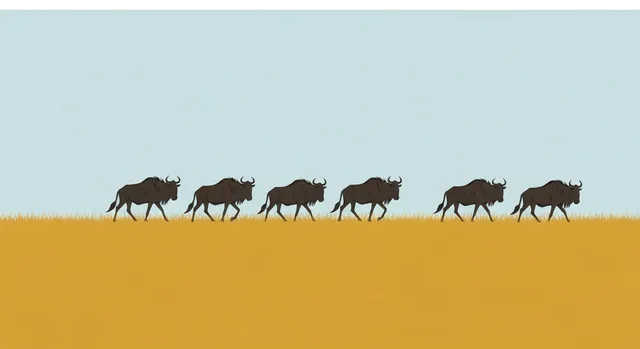
Photography is time and position, not just gear
Every serious wildlife photographer learns the same lesson on their first Serengeti trip: the camera matters far less than where you are and how long you can stay. The difference between a snapshot and a portfolio image is rarely a sharper lens — it is being at eye level with a cheetah in the first golden light, parked beside a leopard for the forty minutes it takes to descend the tree, or positioned on the right bank when the herds finally commit to the river. All of that is about time and position, and both are things you buy with the right itinerary, not the right gear.
That is why a photography itinerary is built differently from an ordinary safari. It prioritises a private vehicle so you can control your angle and stay with a sighting as long as the light holds; it places camps for proximity to the action and the golden hours; it chooses sectors by the season's photographic strengths; and it gives you enough days to wait, because the best images come to those who are still there when everyone else has driven back for lunch. This page lays out that route — the where, the when and the how of a photo-first Serengeti trip.
Set expectations honestly. The Great Migration follows the rains, not a calendar, and no operator can promise you a river crossing or a calving stampede on your dates. Treat every timing here as a 30-year average, verify the live picture, and confirm camp positions and rates with your operator. A photography itinerary cannot guarantee the decisive moment — but it can put you in the best possible place, with the best possible light and the time to be ready when it comes.
A photography trip at a glance
Before the day-by-day, here is the shape of a photo-first Serengeti safari: a private, flexible vehicle with a photographer-aware guide, camps placed for the golden hours, and a sector chosen for the season's strongest images.
- Vehicle: private 4x4 with open sides, bean-bag supports, and a guide who shoots — non-negotiable.
- Schedule: out before sunrise, back late, working both golden hours every day.
- Camp position: close enough to the action to be on it at first and last light.
- Sector by season: south (Ndutu) for calving and cheetahs, north (Kogatende) for crossings, Seronera for leopards.
- Length: more nights per sector than a standard trip — time is the photographer's currency.
- Gear logistics: light-aircraft baggage limits are strict, so plan camera weight carefully.
- Optional: a balloon flight for aerial plains shots; night drives in concessions for after-dark images.
- Verify: migration timing, crossing odds, camp positions and rates all change — confirm before booking.
The private vehicle and the golden hours
The first decision on a photography trip is the vehicle, and the answer is always a private one. A shared group vehicle moves on the group's schedule — it cannot wait an extra half hour for the light, cannot reposition for your angle, cannot stay through lunch on a developing sighting. A private vehicle and guide put all of that under your control. Specify a photographer-aware guide who understands shooting angles, the direction of the light, and the patience the work demands; many operators offer dedicated photographic vehicles with bean-bag supports along the window frames, charging ports and room to spread out gear. Ask for one.
The second discipline is the golden hours. The Serengeti's harsh midday light flattens everything; the magic happens in the hour after sunrise and the hour before sunset, when the low sun rakes across the plains, rims the animals in gold, and turns dust into atmosphere. A photography day is therefore front- and back-loaded: out of camp before first light, working hard through the morning, a long midday break to rest and back up cards while the light is useless, then out again for the late-afternoon and sunset window. This rhythm only works if your camp is close enough to the action to be on it when the light breaks — which is why camp position is the next decision.
Get low and get level. The strongest wildlife images are made at the subject's eye level, which is why open-sided vehicles and the freedom to position carefully matter so much. A private vehicle lets you drop the angle, wait for the head turn, and shoot into the light for the backlit, rim-lit frames that define great Serengeti photography. None of this is about an expensive body or lens — it is about the freedom to work the scene, which only a private, flexible vehicle gives you.
- Insist on a private vehicle and a photographer-aware guide.
- Request a dedicated photographic vehicle with bean-bag supports if available.
- Work both golden hours every day; rest and back up over the midday light.
- Shoot at eye level and into the light for the strongest, most atmospheric frames.
Matching the sector to the season's images
What you can photograph depends entirely on when you travel, so a photography itinerary chooses its sector by the season's strongest images. In calving season (roughly January–March) the herds gather on the southern Ndutu short-grass plains, and the open, treeless ground makes this the best window of the year for cheetahs hunting in the clear — newborn calves draw the densest predator action, and the low horizon and clean backgrounds are a portrait photographer's dream. Base south for the cats, the calves and the wide-open light.
The dry-season window (roughly July–October) is the time for the Mara River crossings in the far north at Kogatende — the most dramatic, hardest-to-time action in the Serengeti. For crossing photography, base in the north for several nights, because position on the river and patience are everything: you need to be set up before the herds commit, on the right bank, with the light behind you. The far north is remote and quiet, which is its photographic appeal — fewer vehicles cluttering your frame. Frame the crossings as odds, not a certainty; no operator can schedule one.
Year-round, central Seronera is the leopard and big-cat heartland — the riverine fig trees famously hold leopards, and the resident lion population is dense and reliable. It is the steady photographic base whatever the season, and many trips pair a seasonal sector (south or north) with a Seronera leg for the cats. Whichever sectors you choose, give each one more nights than a sightseeing trip would — the photographer's currency is time on the ground, and a portfolio is built by being there for the light again and again. Verify the herd position for your dates before you lock in.
- Calving season (Jan–Mar): south at Ndutu for cheetahs and predator action on open ground.
- Dry-season window (Jul–Oct): north at Kogatende for the Mara River crossings.
- Year-round: central Seronera for leopards and reliable big cats.
- Give each sector extra nights — time on the ground builds the portfolio.
Camp position, gear logistics and the extra shots
Camp position is a photographic decision, not just a comfort one. The best photography camps sit close to the action so you can be on a sighting the moment the light breaks, rather than burning the golden hour driving to it. For crossings, that means a camp near the Mara River; for calving, a camp out on the southern plains; for cats, a camp in the heart of Seronera. The best camps for photographers are positioned and equipped for the work — early breakfasts, late returns, flexible meal times, and staff used to dawn departures. Verify a camp's exact position against where you want to shoot for your dates.
Plan your gear around the logistics. If you fly between sectors — which is what makes a multi-sector photography trip practical — light-aircraft baggage limits are strict: soft duffels only, with firm weight caps that camera gear eats into fast. Decide in advance which bodies and lenses earn their place, and confirm the weight allowance with your operator, as excess camera weight sometimes needs a paid extra seat. A bean bag is worth more than another lens for stability on the vehicle; bring or request one. Carry plenty of cards and battery power — charging in remote camps can be limited, so check the power situation before you arrive.
Finally, build in the extra shots a standard safari skips. A dawn balloon flight gives you the aerial perspective of the plains and the herds that you simply cannot get from the ground. Night drives, available in some private concessions bordering the park, open up after-dark predator behaviour and the chance at images most visitors never make. These are bonuses on top of the core photographic route, not replacements for it. Get the vehicle, the light, the sector and the camp position right, give yourself the time, keep your expectations of the wild honest — and the Serengeti will hand you images you will print for the rest of your life.
The kit that actually earns its place
Serengeti photography is unforgiving on gear in two ways — distance and dust — and a kit built around those realities beats one built around a wish list. For wildlife, reach matters: a long zoom in the 100–400mm or 150–600mm class is the workhorse most photographers live on, long enough for distant cats and crossings yet flexible enough to frame a herd on the plains. A second body with a wider lens, somewhere around 24–70mm, saves you the dust-inviting lens change when the scene is the landscape, the light, or a sighting that fills the frame. A teleconverter extends your reach for the days the action stays far off, at the cost of a stop of light. Fast glass helps in the dawn and dusk gloom when the best behaviour happens, but stabilised zooms have closed much of that gap.
Stability is where amateurs lose sharp images and professionals quietly win them. Tripods are nearly useless in a game-drive vehicle; a good bean bag draped over the door or roof hatch is the single most valuable support you can carry, and many photography-minded camps will provide one if you ask. Set a high enough shutter speed to freeze a running wildebeest or a bird in flight, lean on your camera's stabilisation, and shoot in bursts to catch the peak of the action. Dust is constant and relentless, so seal your gear in zip bags between sightings, keep a blower and a microfibre cloth handy, and resist changing lenses in the open wind — the second body exists precisely so you do not have to.
Plan power and storage as carefully as glass, because a remote camp will not bail you out. Bring far more memory than you think you need — a single good morning on a crossing or a hunt can fill cards faster than any other photography you do — and back up daily to a second drive or device. Carry every battery you own plus spares, since charging in tented camps can be limited to certain hours or a shared solar supply, and the cold dawns drain cells quickly. A headtorch for pre-dawn packing, lens cloths, a rain cover for the green season, and a comfortable strap or harness round out a kit that lets you concentrate on the light rather than your equipment. Confirm your camp's power and charging arrangements before you arrive, and pack to be self-sufficient.
- A long zoom (100–400mm or 150–600mm) is the workhorse; a second body with a wider lens avoids dust-inviting changes.
- A bean bag, not a tripod, is the key support in a game-drive vehicle — ask if your camp provides one.
- Use high shutter speeds and burst mode to freeze running and flying subjects in dawn light.
- Seal gear against constant dust; carry a blower, cloths and a green-season rain cover.
- Bring excess memory and every battery you own — remote-camp charging is limited; back up daily.
Working the light through a photographic day
The Serengeti hands its best images to photographers who structure the day around light rather than around meals. The golden hours either side of sunrise and sunset are not just prettier — they are when predators are most active and when the low, warm sun rakes across the plains, rims a mane, backlights dust and breath, and turns an ordinary sighting into a portfolio frame. That means being on a sighting before the light arrives, not driving toward it as it fades. A photography-run camp will give you a pre-dawn coffee and an early departure so you are in position at first light, and a packed breakfast so you never have to leave a building scene to be back for a buffet.
Through the harsh middle of the day, the light goes flat and white and most photographers rest, back up cards, charge batteries and scout the next session — but the midday lull also suits certain subjects, like birds at a waterhole, sleeping cats in dappled shade, or high-key minimalist frames that lean into the brightness rather than fighting it. The late afternoon is the day's second act: head out early enough to find your subject before the golden hour, then work it patiently as the light drops, staying out as long as your camp and the park rules allow to catch the final, richest minutes and the afterglow. Patience is the real technique here — the best frames come to those who stay with a sighting and wait for behaviour rather than chasing the next one.
Compose with intent rather than just zooming in on animals. Use the vast Serengeti landscape — a lone acacia, a granite kopje, a storm sky, a horizon of marching herds — to give your wildlife scale and a sense of place, and get your eye to the animal's level by shooting low through the vehicle window for intimacy and a clean background. Watch for behaviour and interaction, which always beats a static portrait: a yawn, a stretch, a stare, a chase, a crossing's chaos. Read your guide, who can predict where the action will go, and position the vehicle for the light and the background before it happens. Structure the day around the golden hours, stay patient, compose for place and behaviour, and confirm your camp's flexibility on early starts and late returns so the light is always working for you.
- Shoot the golden hours either side of sunrise and sunset — best light and most active predators.
- Be in position before the light arrives; take a packed breakfast so you never leave a scene.
- Use the midday lull to rest, back up and scout — or for birds, shaded cats and high-key frames.
- Compose for place and behaviour: include landscape for scale, shoot low, wait for interaction.
- Confirm your camp allows early departures and late returns so the golden hours are yours.
Related guides

Serengeti Photography Safari
How to plan a photo-first Serengeti safari — the vehicle and private guide that make or break your images, the lenses and light to plan for, and the seasons that put predators and crossings in front of your lens.
Read guide
Best Serengeti Camps for Photographers
How to choose a Serengeti camp if photography is the point of the trip — placement near the action, the right vehicle and bean-bag set-up, guides who think like photographers, and the logic of a private vehicle and the golden hours.
Read guide
Best Months for Serengeti Photography
Which Serengeti months deliver the photographs you want — dramatic light and dust, emerald plains, newborns, river crossings, big cats and fewer vehicles in your frame.
Read guideMore in Itineraries
6
Budget Serengeti Itinerary
A realistic budget Serengeti itinerary built on group-joining safaris, camping and smart shoulder-season timing — where to save, where never to cut corners, and how to keep the magic without the luxury price tag.
Read guide
Family Serengeti Safari Itinerary
A family-paced Serengeti itinerary built around shorter drives, family-friendly camps with pools, easier logistics and real safety — the route that keeps both the children and the parents happy on an African safari.
Read guide
First-Time Serengeti Itinerary
The safest, most rewarding route for a first Serengeti safari — how to choose between central Seronera, the migration sectors, the Ngorongoro Crater and flying versus driving, without the rookie mistakes that ruin a first trip.
Read guide
Five-Day Serengeti Safari
A classic five-day Serengeti and Ngorongoro Crater route with better pacing, more wildlife diversity and sound camp logic — how to combine the central plains with the great caldera without rushing, by road or by air.
Read guide
Fly-In Serengeti Itinerary: A Time-Efficient Plan by Airstrip and Season
A time-efficient fly-in Serengeti itinerary — how to pick the right airstrip for your month, pair it with a camp and a migration target, link light-aircraft hops, pack for the weight limits, and a sample route. Evergreen timing to verify.
Read guide
Four-Day Serengeti Safari
A balanced four-day Serengeti safari: an arrival day, two full game-drive days in the central plains and a relaxed departure, with realistic flight-and-road logistics, honest pacing and the camp logic that makes a short trip feel unhurried.
Read guide