
Is the Serengeti Worth It Without the Migration?
Whether the Serengeti is worth visiting outside the peak migration — the short answer is yes. Resident big cats, vast landscapes, superb birding, lower rates and far fewer vehicles make the off-peak months their own kind of magic.

Photo: Estevao Gedraite / Unsplash
- ✓Yes — the Serengeti is absolutely worth it without the migration. The herds are one chapter of a much larger story, not the whole book.
- ✓Resident lions, leopards and cheetahs live in the park year-round, and the central Seronera valley offers some of Africa's most reliable big-cat viewing in any month.
- ✓Off-peak means fewer vehicles, lower rates and a more intimate, unhurried experience of one of the planet's great landscapes.
- ✓The green season turns the plains emerald and brings dramatic skies, superb birding and excellent value, with the trade-off of heavier tracks and afternoon rain.
- ✓Even 'without the migration' is relative — the herds are always somewhere in the ecosystem, so you may still see vast wildebeest concentrations depending on your dates.
- ✓Treat all migration timing as a 30-year average and verify likely herd position for your exact dates; the loop shifts with the rains.
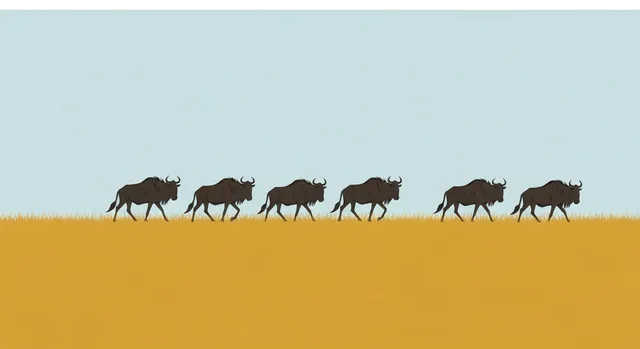
The short answer: yes, emphatically
It is the question that stops a lot of would-be travellers in their tracks: if I can't time my trip to the river crossings or the calving, is the Serengeti even worth it? The honest, enthusiastic answer is yes — and it is worth understanding why, because the worry rests on a misunderstanding. The Great Migration is the Serengeti's most famous spectacle, but it is one chapter of a far larger story. The park is not a stage that goes dark when the herds move on; it is one of the richest, most complete wild ecosystems on earth, and it puts on a show every single day of the year.
What you trade by skipping the peak is the headline drama of a crossing. What you gain in return is considerable: resident big cats that never leave, landscapes at their most beautiful, birding that comes into its own, far fewer vehicles around every sighting, and prices that can be a fraction of high-season rates. For many travellers — especially those who prize space, atmosphere and value over a single bucket-list moment — the off-peak Serengeti is not the consolation prize. It is the better trip.
At a glance
Why the Serengeti rewards a visit outside the peak migration, before the detail below. Treat migration timing as a long-term average and verify likely herd position for your exact dates.
- Big cats stay put: lions, leopards and cheetahs are resident year-round, best around central Seronera.
- Fewer crowds: off-peak means far fewer vehicles at each sighting and a more intimate experience.
- Better value: green-season and shoulder rates can be a fraction of peak dry-season prices.
- Landscapes at their best: the green season turns the plains emerald under dramatic skies.
- Birding peaks: migratory birds arrive in the green months, adding hundreds of species.
- Still herds about: the migration is always somewhere — you may see huge concentrations anyway.
- Trade-offs: greener months bring heavier tracks, scattered game and a chance of afternoon rain.
The big cats never leave
Here is the fact that reframes the whole question: the Serengeti's predators are residents, not travellers. While the wildebeest follow the rains around the ecosystem, the lions, leopards and cheetahs hold territories and stay put — which means the park's extraordinary big-cat viewing is available in every month of the year, migration or not. The central Seronera valley, with its rivers, granite kopjes and riverine woodland, is the beating heart of this: it holds one of the densest lion populations anywhere, is justly famous for leopards draped in its fig trees, and offers cheetahs on the surrounding plains. For sheer reliability of big-cat sightings, an off-peak week in Seronera is hard to beat.
There is even an argument that the cats are easier to enjoy without the crowds. In peak season a leopard sighting can draw a ring of vehicles; off-peak, you may share that same leopard with no one at all, watching it wake, stretch and hunt in unhurried quiet. Add the full supporting cast — elephant, giraffe, buffalo, hippo, hyena and a vast spread of plains game — and the everyday Serengeti, with no migration in sight, still delivers a wildlife experience that ranks among the finest on the continent.
- Lions, leopards and cheetahs are resident year-round — they do not follow the herds.
- Central Seronera holds dense lions, famous tree-draping leopards and cheetahs on the plains.
- Off-peak you may share a sighting with no other vehicles, watching cats in unhurried quiet.
- Elephant, giraffe, buffalo, hippo and plains game fill out a superb everyday safari.
Fewer vehicles, more Serengeti
Crowding is the quiet cost of peak season that nobody puts on the brochure. When the migration is at its most dramatic and everyone has timed their trip to it, popular sightings and the northern crossing points can gather a crowd of vehicles, and the sense of wilderness frays a little at the edges. The off-peak months flip that entirely. With far fewer travellers in the park, you get the landscape closer to how it should feel: empty, immense and yours. A sighting is something you stumble upon and savour alone, not a queue you join.
That solitude changes the texture of the whole trip. Camps are quieter and more personal, guides have time to linger and teach rather than rush to the next thing, and the simple, profound experience of being a tiny human presence under that enormous sky comes through undiluted. For travellers who came for the Serengeti itself — its scale, its silence, its wildness — rather than for a single event, fewer vehicles is not a compromise. It is much of the point.
- Off-peak means far fewer vehicles across the park and at every sighting.
- The landscape feels emptier, more immense and more genuinely wild.
- Camps are quieter and more personal, and guides have time to linger and teach.
- The solitude is much of the appeal for travellers who came for the place itself.
Landscapes, birds and the case for the green season
The off-peak months are often the most beautiful. In the green season — the short rains around November and the long rains of April and May — the plains transform: the dust of the dry months gives way to emerald grassland, the skies fill with towering clouds and theatrical light, and the whole ecosystem looks reborn. Photographers prize this period for exactly that drama, the saturated colour and the storm-lit skies that the harsh, dusty peak season cannot offer. The trade-off is real — wetter tracks, more scattered game and the genuine chance of an afternoon downpour — but the reward is a Serengeti at its most cinematic.
The green season is also when the birding comes alive. The Serengeti is a tremendous birding destination at any time, but the rains bring waves of migratory species and trigger the resident birds into breeding plumage and song, turning even the gaps between mammal sightings into a spectacle of colour. Add the value — green-season and shoulder rates can be a fraction of peak prices, freeing budget for a private vehicle, a better camp or simply more nights — and the case builds quickly. You are choosing beauty, birds, space and value over a single guaranteed event that, in truth, is never guaranteed anyway.
- The green season turns the plains emerald under dramatic, storm-lit skies — a photographer's window.
- The rains bring migratory birds and breeding plumage, peak time for the park's superb birding.
- Green-season and shoulder rates can be a fraction of peak prices, freeing budget for upgrades.
- The trade-offs are wetter tracks, more scattered game and a chance of afternoon rain.
Remember: there is always migration somewhere
One more reassurance worth holding onto: 'without the migration' is a slight misnomer. The Great Migration is a year-round clockwise loop through the Serengeti–Mara ecosystem, not a single dated event, which means the roughly one and a half million wildebeest are always somewhere in the system. Even if you are not timing your trip to the famous Mara crossings or the southern calving, you may well find yourself among vast herds anyway, simply because the loop happens to pass through a sector you are visiting. The herds are a constant feature of the landscape; what changes is which spectacle, if any, peaks during your dates.
So the practical move is not to give up on the herds, but to check where they usually are for your exact travel window and let that inform your sector choice. You might book an off-peak trip for the cats, the quiet and the value, and still drive into a river of wildebeest stretching to the horizon. Because the loop shifts with the rains, treat any month-by-month timing as a long-term average and a two-week swing in either direction as normal — and verify the likely position for your dates rather than relying on a fixed calendar.
Common questions
Honest, evergreen answers to the questions travellers ask most about visiting the Serengeti outside the peak migration.
- Is the Serengeti worth it without the migration? Yes, emphatically. Resident big cats, vast landscapes, superb birding, fewer crowds and lower rates make the off-peak park a wonderful — for some travellers, better — trip.
- Will I still see big cats? Very likely. Lions, leopards and cheetahs are resident year-round, and central Seronera offers some of Africa's most reliable big-cat viewing in any month.
- Which months are 'without the migration'? It varies year to year as the herds follow the rains, but you may still encounter huge herds whenever you go. Check the likely position for your exact dates rather than a fixed calendar.
- Is the green season a good time to visit? Yes, if you accept the trade-offs. It brings emerald plains, dramatic skies, peak birding and excellent value, against wetter tracks and a chance of afternoon rain.
- Will it be cheaper? Often substantially. Green-season and shoulder rates can be a fraction of peak prices, which can fund a private vehicle, a better camp or more nights.
- Are there really fewer crowds? Yes. Off-peak you may share sightings with no other vehicles, and the landscape feels emptier and more genuinely wild.
Related guides

Seronera & Central Serengeti
Seronera is the year-round big-cat heart of the Serengeti — a valley of rivers, granite kopjes and riverine figs where lions, leopards and cheetahs hold ground in every season. A full guide to what central Serengeti offers, its lodge and airstrip access, the crowd trade-off and how to plan a stay.
Read guide
Big Cats in the Serengeti
A guide to the Serengeti's three great cats — lion, cheetah and leopard — where each is most likely, how their behaviour shapes a sighting, and why a patient vehicle and a good guide matter more than any guarantee.
Read guide
Serengeti Green Season Safari
Why the Serengeti's green season can be the best-value, most beautiful time to go — calving on the southern plains, dramatic light and storm skies, superb birding, lush landscapes, fewer vehicles and gentler rates.
Read guideMore in Wildlife
6
Birdwatching in the Serengeti
A traveller's guide to birding the Serengeti — the rollers, ostriches, raptors and wet-season migrants that fill the plains — and how to add birdwatching to a safari without losing the mammal focus.
Read guide
Black Rhino in the Serengeti
Honest expectations for seeing black rhino in the Serengeti — why sightings are rare, where the small protected population lives around the Moru Kopjes, and why the Ngorongoro Crater is often the better add-on for rhino.
Read guide
Buffalo in the Serengeti
Cape buffalo in the Serengeti — herd behaviour, the long rivalry with lions, why solitary old bulls demand respect, and why buffalo deserve more than a quick tick on the Big Five checklist.
Read guide
Camera Gear for a Serengeti Safari
A practical packing guide to camera gear for a Serengeti safari — lenses and bodies, batteries and cards, the all-important bean bag, dust protection, your phone, binoculars and how to pack it all for strict light-aircraft limits.
Read guide
Crocodiles in the Serengeti
Where the Serengeti's Nile crocodiles live, the role they play in the Grumeti and Mara River crossings, and how to watch the drama responsibly — with honest, no-guarantee expectations.
Read guide
Elephants in the Serengeti
Where elephants are most likely in the Serengeti and how sightings vary by sector and season — the woodlands of the north and centre, the rivers and Lobo — and when Tarangire is the stronger elephant add-on.
Read guide