
Serengeti vs Ngorongoro: How to Choose (and Why Most People Do Both)
A clear comparison of the Serengeti and the Ngorongoro Crater — wildlife, scenery, crowds, fees, black-rhino odds, time needed and safari style — to help you decide where to spend your days, or why most travellers visit both.

- ✓The Serengeti is vast, open and migratory — endless plains where what you see depends on where the herds are; the Ngorongoro Crater is compact, dense and resident — an enclosed bowl teeming with wildlife year-round.
- ✓For sheer scale, the migration and big-cat country, the Serengeti wins; for guaranteed density in a single morning and a realistic black-rhino chance, the crater wins.
- ✓The Serengeti needs several days to do justice; the crater rewards a single intense half-day.
- ✓The two are charged by different authorities, so a combined trip pays both — budget accordingly and verify the current amounts.
- ✓The honest answer to 'which one?' is usually 'both' — they sit on the same road and complement rather than compete.
- ✓Keep fee amounts and migration timing evergreen — verify current figures and the herds' likely position for your dates.
Two very different ways to see Africa
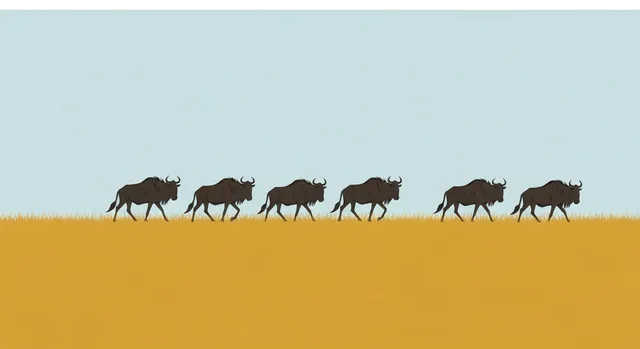
The Serengeti and the Ngorongoro Crater are often spoken of in the same breath, but they offer almost opposite experiences, and understanding the difference is the key to planning your time. The Serengeti is immensity itself — roughly fifteen thousand square kilometres of open plain, woodland and river, across which around 1.5 million wildebeest move in a year-round migration. It is a place of scale and patience and luck, where the day's drama depends on which chapter of the migration you have arrived for and where the herds happen to be. The Ngorongoro Crater is its mirror image: a single, intact volcanic caldera barely twenty kilometres across, its high walls enclosing a floor so rich in wildlife that you can see lions, elephants, buffalo, flamingos and black rhino in one compact morning.
So the comparison is less about which is 'better' and more about what each is for. The Serengeti is the great open stage of the migration and big-cat country, demanding time and rewarding it with a sense of wilderness few places on earth can match. The crater is the concentrated wildlife spectacle — reliable, dense and dramatic, delivered in a single descent. Most travellers, on discovering they sit on the same road, choose not to choose: they do both, and let each play to its strength. This page lays out the comparison point by point so you can decide how to weight your days, with all timing and fees kept evergreen — verify the current details before you travel.
At a glance: the head-to-head
A quick side-by-side before the detail. Everything here is evergreen — confirm current fees and the herds' likely position with official sources and your operator close to travel.
- Scenery: Serengeti — vast open plains, kopjes and rivers; Ngorongoro — an enclosed, green-walled volcanic bowl.
- Wildlife model: Serengeti — migratory, what you see depends on the season; Ngorongoro — largely resident, dense year-round.
- Signature draw: Serengeti — the Great Migration and exceptional big cats; Ngorongoro — density and a realistic black-rhino chance.
- Black rhino: hard to find in the Serengeti; one of the best chances in the region on the crater floor.
- Time needed: Serengeti — several days to a week; Ngorongoro — a single intense half-day.
- Crowds: Serengeti — vehicles spread across a huge area; Ngorongoro — concentrated, busier on the compact floor.
- Fees: separate authorities (TANAPA vs NCAA) — a combined trip pays both; verify current amounts.
- Safari style: Serengeti — drive-in or fly-in, multiple sectors; Ngorongoro — a rim base and a floor descent.
Wildlife, scenery and crowds
On wildlife, both are world-class but in different currencies. The Serengeti is unmatched for the migration and for big cats — it holds exceptional populations of lion, leopard and cheetah, with the central Seronera valley famous for leopards in riverine fig trees and the southern plains for cheetahs hunting in the open. It carries all of the Big Five, though rhino and sometimes elephant take more searching. The crater trades the migration for density: its floor packs a remarkable concentration of resident animals into a small space, and it is one of the few places where black rhino are a realistic sighting rather than a long shot. If your heart is set on the migration or on leopards and cheetahs, lean Serengeti; if you want guaranteed volume and a rhino chance in one drive, lean crater.
Scenery and crowds follow the same logic. The Serengeti's appeal is space — huge skies, golden grass to the horizon, the sense of being a speck in something endless — and because the park is so vast, vehicles disperse and even busy areas rarely feel crowded. The crater's appeal is spectacle: the drama of descending six hundred metres into a self-contained world, walls of forest rising on every side. But that compactness concentrates the visitors too, so the crater floor can feel busier than the open plains, particularly in peak season. Neither is a flaw — they are simply different sensations, and many travellers treasure the contrast of standing in both within a few days.
- Serengeti: the migration, exceptional big cats, all the Big Five, and a sense of endless space.
- Ngorongoro: dense resident wildlife in a compact floor, and the region's best black-rhino odds.
- Crowds: the Serengeti disperses vehicles across a huge area; the crater concentrates them on the floor.
- Scenery: open golden plains versus the dramatic enclosed bowl of the caldera.
Time, fees and how to weight your days
Practically, the two ask for very different amounts of your time. The crater is happy with a single decisive visit — one night on the rim and a half-day descent usually delivers a complete experience, because the floor is small and astonishingly productive. The Serengeti is the opposite: it is so large and the wildlife so spread, and so dependent on the migration, that three to four nights is a sensible minimum to do one sector justice, with a week letting you combine sectors or follow the herds. That asymmetry is the single most useful planning fact here — it tells you the natural shape of a combined trip is several Serengeti nights bookended by a single crater night, not an even split.
On cost, the key point is that they are run by separate authorities — the Serengeti by TANAPA, the Ngorongoro Conservation Area by the NCAA — each with its own fees, including a crater-service fee for descending the floor. A combined trip therefore pays both, and those crater fees sit on top of your Serengeti park fees rather than replacing them. None of this should deter you; it simply means budgeting for two sets of fees and checking your quote accounts for both. Because the figures are reviewed periodically and change, keep them evergreen and verify the current TANAPA and NCAA amounts for your dates. Weight your days toward the Serengeti for depth and the migration, give the crater its single intense morning, and you will have the best of both.
- Serengeti: three to four nights minimum for one sector; a week to combine sectors or follow the herds.
- Ngorongoro: a single night and a half-day floor drive is usually complete.
- Natural shape of a combined trip: several Serengeti nights bookended by one crater night.
- Separate authorities (TANAPA and NCAA) mean separate fees — a combined trip pays both.
- Verify current Serengeti and Ngorongoro fees on official sources before you travel.
Common questions: Serengeti vs Ngorongoro
The questions travellers ask most when weighing the two — with honest, evergreen answers and the standing reminder to confirm fees and migration timing officially before you travel.
- Which is better, the Serengeti or Ngorongoro? Neither — they're different. The Serengeti wins on scale, the migration and big cats; the crater wins on density and black-rhino odds. Most people do both.
- If I can only visit one, which should it be? For the migration, big-cat country and a true wilderness feel, choose the Serengeti. For guaranteed density and a rhino chance in a single morning, choose the crater.
- Where am I more likely to see black rhino? The Ngorongoro Crater — it's one of the best places in the region. They're far harder to find out on the Serengeti plains. Sightings are never guaranteed.
- How long do I need for each? The crater is complete in a half-day; the Serengeti wants three to four nights minimum for one sector, more to follow the herds.
- Which is more crowded? The crater can feel busier because its wildlife is concentrated on a compact floor; the Serengeti disperses vehicles across a vast area.
- Are the fees the same? No. The Serengeti (TANAPA) and Ngorongoro (NCAA) are separate authorities with separate fees — a combined trip pays both. Verify the current amounts before you go.
- Can I do both in one trip? Yes, easily — they sit on the same road between Arusha and the park, so combining them adds variety with little detour.

Related guides

Ngorongoro Crater with the Serengeti: How to Combine Them
How to combine the Ngorongoro Crater with a Serengeti safari — the route, how many nights to give each, how the fees stack up, the wildlife you'll see including black rhino, and how to time it around the migration and permits.
Read guide
The Big Five in the Serengeti
What to know about the Serengeti's Big Five — lion, leopard, elephant, buffalo and the elusive rhino — where and when to find each, the honest odds on a full sweep, and why the chase is the wrong way to do a safari.
Read guide
Black Rhino in the Serengeti
Honest expectations for seeing black rhino in the Serengeti — why sightings are rare, where the small protected population lives around the Moru Kopjes, and why the Ngorongoro Crater is often the better add-on for rhino.
Read guideMore in Combine With
6
Arusha before Serengeti
How to use Arusha well before a Serengeti safari — as the place to land and recover from a long flight, sort gear and last-minute shopping, sleep an overnight if your timings demand it, and meet your operator and brief your guide. The gateway town's practical role, and why a night here often pays for itself. Evergreen and honest about logistics.
Read guide
Kilimanjaro and Serengeti
How to combine Kilimanjaro — a full summit climb or simply its views — with Serengeti safari days: which order to do them, how much recovery time to build in, the flights and transfers that link them, and the seasonal choices that make or break the trip. Evergreen and honest about timings.
Read guide
Lake Manyara with Serengeti
When Lake Manyara is worth adding to a Serengeti safari — its groundwater forest, flamingo-fringed soda lake and birdlife — and how it slots into a shorter or richer Northern Circuit route.
Read guide
Lake Natron and Serengeti
How to add Lake Natron — its flamingos, its blood-red soda flats, the great Rift Valley scenery and the volcanic backdrop of Ol Doinyo Lengai — to a Serengeti itinerary. The routing, the timing, what the detour actually offers and who it suits. Evergreen and honest about logistics.
Read guide
Lake Victoria after Serengeti
When and how to add Lake Victoria to the end of a Serengeti safari — the city of Mwanza, the western access through the park, the lake views and the slow, water-side change of pace. The routing, who it suits and when it actually works after the Western Corridor. Evergreen and honest about logistics.
Read guide
Maasai Mara & Serengeti safari
How to combine Kenya's Maasai Mara with Tanzania's Serengeti on one safari — the two halves of a single ecosystem and the same migration. The border logistics, the flights, the visas and the seasonal timing that decides which side to watch the crossings from. Evergreen and honest about timings.
Read guide