
Maasai Mara & Serengeti safari
How to combine Kenya's Maasai Mara with Tanzania's Serengeti on one safari — the two halves of a single ecosystem and the same migration. The border logistics, the flights, the visas and the seasonal timing that decides which side to watch the crossings from. Evergreen and honest about timings.

Photo: sutirta budiman / Unsplash
- ✓The Maasai Mara and the Serengeti are not rivals but two halves of one connected ecosystem — the same plains, the same migration, split only by an international border.
- ✓The herds move clockwise through the whole system, spending most of the year in the Tanzanian Serengeti and crossing into the Kenyan Mara for the dry-season months in the north.
- ✓Combining the two is a flight-and-border exercise, not a single drive: you cannot simply motor across the frontier inside a park, so trips connect by air through the gateway cities of each country.
- ✓Two countries means two sets of paperwork — separate entry requirements and a park-fee regime on each side — so visas and fees are the first thing to get right.
- ✓The crossings are the draw, and which side you watch them from depends on the season and a measure of luck; verify routings, border procedure, visas and fees with your operator, as these change.
One ecosystem, two countries
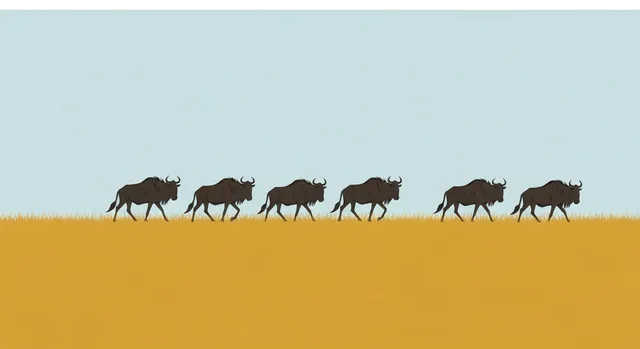
It helps to start with the truth the map hides: the Maasai Mara and the Serengeti are the same place. The Mara is, in effect, the northern tip of the Serengeti ecosystem, lying just across the international border in Kenya, and the wildebeest that pour across the Mara River in the famous photographs are the very same herds that calve on the Serengeti's southern plains months earlier. The animals do not recognise the frontier; they follow the rains and the grass on a great clockwise loop that ignores the line on the map entirely.
What this means for a traveller is that combining the two is less about seeing two different destinations and more about following one story across a political boundary. You spend most of the migration's year on the Tanzanian side, where the herds are for the majority of the calendar, and you cross into Kenya for the dry-season window when the leading edge reaches the Mara. The reward for the extra paperwork is the chance to watch the same migration from both banks of the river, and to experience two countries' distinct safari cultures on a single trip. This page is about doing that cleanly.
At a glance
A quick orientation before the detail. Keep visa rules, park fees, fares and exact schedules to the official sources and your operator — two countries means two regimes, and both change, so this page stays evergreen and tells you what to verify.
- Relationship: one connected ecosystem — the Mara is the Kenyan extension of the Serengeti plains.
- Link: air and border crossings, not a single in-park drive — you cannot motor across the frontier inside the parks.
- Paperwork: separate entry requirements for Tanzania and Kenya, plus a park-fee regime on each side.
- Crossings: most likely in the dry-season months in the north; which bank you watch from depends on season and luck.
- Time: give each side enough nights to settle — rushing across the border for a single day wastes the effort.
- Verify: visas, border procedure, routings, fees and connection times with your operator close to travel.
Step 1 — Decide which side to watch the crossings from
Before any logistics, settle the question that shapes the whole trip: where do you most want to stand when the herds cross the river? The Mara River runs through both the far northern Serengeti (the Kogatende sector) and the Kenyan Maasai Mara, and crossings happen on both sides during the dry-season window, broadly the middle months of the year through to autumn. The Tanzanian north is the more remote and less crowded vantage; the Kenyan Mara is more famous and busier, with its own classic river-crossing points. Neither side can guarantee a crossing on a given day — the herds cross when they cross — so the honest aim is to weight the odds, not to buy a ticket.
The practical move is to base yourself near the river on whichever side your dates and budget favour, give it several nights rather than one, and travel with a patient guide. Many travellers who want the fullest experience split the difference: a few nights in the northern Serengeti and a few in the Mara during the overlap window, watching the same migration from both banks. Treat the timing of the crossings as a long-run average rather than a schedule — a swing of a couple of weeks is normal — and verify the likely position of the herds for your exact dates.
Step 2 — Sort the visas and entry for two countries
Because you are entering two sovereign countries, you need to satisfy two sets of entry requirements — one for Tanzania and one for Kenya. Each country runs its own visa regime, and the rules, application routes and validity windows differ between them and change over time, so this is the first piece of admin to lock down rather than leave to chance. Some travellers find a regional arrangement convenient for visiting both East African countries on one trip; whether that applies to you depends on your nationality and the current rules, which is exactly why you confirm it well ahead rather than assume.
The order of crossing matters for paperwork too. If you start in Tanzania and finish in Kenya, you will exit Tanzania and enter Kenya at the appropriate point; reverse the order and the sequence flips. Carry the documentation each country requires, allow for the possibility of yellow-fever and other health requirements that can apply when moving between East African countries, and let your operator confirm the precise procedure for your route. The golden rule is simple: do not treat a two-country safari as a single-country trip with a detour — it is two entries, and the paperwork deserves its own attention.
Step 3 — Connect the two by air, not by a single drive
Here is the logistical reality that surprises people: you cannot simply drive across the border from one park into the other in a game-drive vehicle. The frontier between the northern Serengeti and the Maasai Mara is an international boundary, not an internal park road, and the practical way to link the two is by air, connecting through each country's gateway. In broad terms that means flying out of the Serengeti's northern airstrips to a Tanzanian hub, crossing into Kenya, and connecting onward into the Mara's airstrips — or the reverse — with the border formalities handled along the way.
There is an overland border crossing between the two countries used by some itineraries, but it is a longer, more involved undertaking than the seamless in-park transfer travellers sometimes picture, and most combined safaris lean on flights to save time and hassle. Because this is a multi-leg journey across a border, build comfortable buffers between connections rather than tight dashes, and confirm the exact routing, the airstrips used and the border procedure with your operator. As with any fly-in leg, light-aircraft baggage rules apply — soft bags only, with firm weight limits — so pack to the smallest plane on your itinerary.
Step 4 — Give each side enough time to settle
The temptation on a two-country trip is to tick both parks in as few days as possible, racing across the border for a single night in the Mara to say you have been. Resist it. A border crossing eats a travel day at each end, and a single night on the far side mostly buys you logistics rather than wildlife. Give each side enough nights to actually settle into the rhythm of game drives — a sensible minimum of three to four nights per park, more if the crossings are your priority and you want the patience that good odds require.
Think of the combined trip as one unhurried journey rather than two rushed visits. A common and satisfying shape is several nights in the Serengeti — folding in its other sectors and resident wildlife — then the border crossing into the Mara for several more nights during the crossing window, before flying out of Kenya. That arc lets you watch the same migration from both countries without ever feeling like you are chasing a connection. Decide the length of each half by what you want to witness, not by the desire to collect both stamps in a week.

Two safari cultures, one migration
Beyond the logistics, part of the pleasure of combining the two is experiencing how differently each country does safari. The Maasai Mara and the conservancies around it have their own traditions — a long Kenyan safari heritage, distinctive guiding, and in the private conservancies the option of activities such as walking and night drives that are restricted inside the Serengeti's national-park boundaries. The Serengeti, for its part, offers a vastness and a sense of remoteness in its northern reaches that the busier Mara cannot quite match. Doing both is a study in two approaches to the same wild.
The animals, of course, do not care about any of this. The lions you watch on the kopjes of the Serengeti belong to the same gene pool as those in the Mara; the great river that the herds cross is the same river. That continuity is the quiet thrill of the combined trip: you are not visiting two destinations so much as following one immense, ancient circuit of life across a line that means everything to people and nothing at all to wildebeest.

Common questions about combining the Maasai Mara and the Serengeti
Are the Maasai Mara and the Serengeti the same ecosystem? Effectively, yes. The Mara is the Kenyan northern extension of the Serengeti plains, and the same migrating herds move between them across the international border.
Can I drive directly from the Serengeti into the Maasai Mara? Not in the simple, in-park sense people imagine. The two are separated by an international border, and most combined trips connect by air through each country's gateway; an overland crossing exists but is longer and more involved.
Do I need separate visas for both? Yes — Tanzania and Kenya each have their own entry requirements, which differ and change. Confirm the current rules for your nationality and route well ahead, and check any health requirements for moving between the two.
Which side is better for the river crossings? Both offer crossings during the dry-season window; the Tanzanian north is more remote and quieter, the Kenyan Mara more famous and busier. Neither can guarantee a crossing on a given day, so base yourself near the river for several nights to improve the odds.
How long should a combined trip be? Allow at least three to four nights per side, more if crossings are your priority. Rushing across the border for a single night largely buys travel time rather than wildlife.

Related guides

Serengeti or Maasai Mara?
Serengeti or Maasai Mara? They are two halves of one ecosystem split by the Tanzania–Kenya border. How to choose by migration timing, river crossings, budget, flights, crowds and trip length — with honest, evergreen guidance and no guarantees.
Read guide
Mara River Crossings in the Serengeti
How to plan a Northern Serengeti river-crossing safari without false promises — when the Mara crossings happen at Kogatende, why timing is luck, where to stay, and how to watch with good wildlife etiquette.
Read guide
Tanzania Visa for a Serengeti Safari: Entry, eVisa and Planning
What international travellers need to know about entering Tanzania for a Serengeti safari — visas and the eVisa, passport validity, where you arrive, health and entry requirements, and the planning that smooths the journey from airport to plains.
Read guideMore in Combine With
6
Arusha before Serengeti
How to use Arusha well before a Serengeti safari — as the place to land and recover from a long flight, sort gear and last-minute shopping, sleep an overnight if your timings demand it, and meet your operator and brief your guide. The gateway town's practical role, and why a night here often pays for itself. Evergreen and honest about logistics.
Read guide
Kilimanjaro and Serengeti
How to combine Kilimanjaro — a full summit climb or simply its views — with Serengeti safari days: which order to do them, how much recovery time to build in, the flights and transfers that link them, and the seasonal choices that make or break the trip. Evergreen and honest about timings.
Read guide
Lake Manyara with Serengeti
When Lake Manyara is worth adding to a Serengeti safari — its groundwater forest, flamingo-fringed soda lake and birdlife — and how it slots into a shorter or richer Northern Circuit route.
Read guide
Lake Natron and Serengeti
How to add Lake Natron — its flamingos, its blood-red soda flats, the great Rift Valley scenery and the volcanic backdrop of Ol Doinyo Lengai — to a Serengeti itinerary. The routing, the timing, what the detour actually offers and who it suits. Evergreen and honest about logistics.
Read guide
Lake Victoria after Serengeti
When and how to add Lake Victoria to the end of a Serengeti safari — the city of Mwanza, the western access through the park, the lake views and the slow, water-side change of pace. The routing, who it suits and when it actually works after the Western Corridor. Evergreen and honest about logistics.
Read guide
Ngorongoro Crater Guide
A full guide to the Ngorongoro Crater on the Northern Circuit — the world's largest intact caldera, what its floor holds, how a descent day runs, how the fees compare with the Serengeti, and when to give it a night.
Read guide