
Serengeti Safari Myths, Debunked
The most common myths about a Serengeti safari, gently corrected — that the migration is one event, that crossings can be scheduled, that the Big Five are guaranteed, that luxury equals better wildlife, and that it is all unaffordable.

Photo: Peter Thomas / Unsplash
- ✓Myth: the Great Migration is a single event you can book a date for. Truth: it is a year-round clockwise loop, always somewhere in the ecosystem, and the herds follow the rains, not a calendar.
- ✓Myth: a river crossing can be guaranteed or scheduled. Truth: no honest operator can promise one — crossings hinge on weather, grazing and the herds' collective nerve, and the waiting is part of the experience.
- ✓Myth: you will tick off the Big Five in a day. Truth: the Serengeti holds all five, but rhino are genuinely scarce here and every sighting is wild luck weighted by time, sector and a good guide.
- ✓Myth: more money buys you better wildlife. Truth: the same lions walk past the campsite and the ultra-luxury suite alike — price buys comfort, space and service, not animals.
- ✓Myth: the Serengeti is only for the wealthy. Truth: shared vehicles, simpler camps, driving instead of flying and green-season timing put the same plains within a far wider reach.
- ✓Myth: you must come in the dry season or miss everything. Truth: every month has a story — calving, crossings, resident cats and emerald low-season plains — so the 'wrong' time rarely exists.
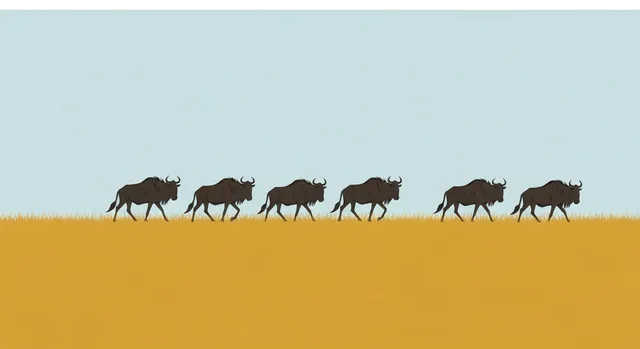
Why myths cling to the Serengeti
The Serengeti is one of the most photographed, filmed and dreamed-about places on earth, and that fame is exactly why so much folklore travels with it. Wildlife documentaries compress a year of patient filming into a thrilling hour, tour brochures lean on superlatives, and a friend's once-in-a-lifetime story hardens into a rule of thumb that may not survive contact with the real plains. None of this is malicious — it is the natural drift of a place big enough to mean something different to everyone who goes. But the myths do real harm when they shape a booking: people fly in for the 'wrong' fortnight, pay for the 'wrong' sector, or arrive expecting a guaranteed spectacle and feel cheated by a wild place behaving wildly.
The antidote is not cynicism but accuracy. The Serengeti is every bit as extraordinary as its reputation — the difference is that the reality rewards travellers who understand how it actually works, rather than how the highlight reel implies it does. This page walks through the myths we hear most often, corrects each with what the ecosystem really does, and points you to the deeper guides where the practical planning lives. Read it before you fix your dates, and you will arrive with expectations the plains can actually meet.
Myth 1: 'The migration happens at one set time'
This is the misunderstanding that derails more trips than any other. People speak of 'the migration' as though it were a festival with a published date — fly in on the right weekend and witness it, miss the weekend and miss it entirely. In truth the Great Migration is not an event at all but a continuous, year-round movement: roughly 1.5 million wildebeest, with hundreds of thousands of zebra and gazelle, looping clockwise through the greater Serengeti–Mara ecosystem in an endless search for fresh grazing and water. The herds are always somewhere on the plains. The only real question is which chapter of the story you want to stand inside.
Because the animals follow the rains rather than a calendar, the timing of each chapter shifts from year to year, sometimes by a fortnight or more in either direction. As a rough, evergreen guide drawn from long-term averages — always worth verifying against current conditions for your exact dates — calving fills the southern Ndutu plains around the start of the year, the herds press west through the Grumeti country in mid-year, the famous Mara crossings cluster in the far north through the dry months, and the columns turn south again as the short rains break. Treat any month-by-month map as a 30-year average, never a timetable, and you will never book the 'wrong' weekend, because there is no single right one.
- The migration is a year-round clockwise loop, not a scheduled event — the herds are always somewhere in the ecosystem.
- Timing follows rainfall, so it shifts year to year; treat any monthly placement as a long-term average to verify, not a fixed date.
- Pick the chapter you want — calving, the western river country, the northern crossings — then choose your dates and sector to match.
- A camp perfectly placed for one chapter can be hours from the action in another, so location must follow your month.
Myth 2: 'I can book a guaranteed river crossing'
The Mara River crossing is the image that sells the Serengeti — thousands of wildebeest hurling themselves down a bank into crocodile-dark water — and it is the single most requested 'must-see' on any northern itinerary. So it is understandable that travellers ask operators to guarantee one, and that some less scrupulous sellers imply they can. They cannot, and any promise of a crossing on a named day should be treated as a red flag. Crossings happen mainly in the dry-season window around the Kogatende sector in the far north, but whether a given herd crosses at dawn, at noon, or simply mills on the bank all day and wanders off is governed by weather, available grazing, the level of the river and the collective nerve of the animals themselves. It is genuinely unpredictable, and that is the point.
What you can do is stack the odds honestly. Base yourself in the north during the crossing window rather than passing through for a single rushed day; give yourself three or more nights so a quiet morning is not the whole trip; and travel with a patient guide who reads the herds and is willing to wait. Even then, the river may not oblige — and the waiting, the tension on the bank, the false starts and the sudden roar of hooves are themselves the experience, not a delay before it. Arrive understanding that a crossing is a gift the plains may or may not give, and you will treasure it if it comes and still have a magnificent safari if it does not.
- No ethical operator can schedule or guarantee a crossing — they hinge on weather, grazing, river levels and the herds' nerve.
- Crossings cluster in the dry-season window in the far north around Kogatende, but the day and hour are pure wild luck.
- Improve your odds with several nights in the north during the window and a patient guide, not with a promise.
- A guaranteed-crossing pitch is a warning sign about the operator, not a feature of the trip.
Myth 3: 'The Big Five are guaranteed in a day'
The Big Five — lion, leopard, elephant, buffalo and rhino — is a hunting-era checklist that has become a safari sales line, and it sets up two false expectations at once: that all five are equally findable, and that a competent guide will produce them on demand within a drive or two. The Serengeti does hold all five, and on lions, elephants and buffalo it delivers generously: lions are widespread and often easy to find, the central Seronera valley is justly famous for leopards draped in riverine fig trees, and elephant and buffalo are common across much of the park. But rhino are the honest exception. Black rhino survive in the Serengeti only in small, carefully protected numbers, and a sighting here is rare luck rather than an expectation — the neighbouring Ngorongoro Crater is the far more reliable place to see one.
More fundamentally, every sighting is a probability, never a promise. Wildlife is wild; it moves, hides, hunts and sleeps on its own schedule, and no guide can summon it. What a good guide does is shift the odds dramatically in your favour — knowing where the resident leopard suns itself, which kopje a pride favours, how the cats follow the herds in calving season — which is precisely why an experienced guide matters more than a long target list. The richest safaris are had by travellers who come curious about everything the plains offer, from a cheetah on the hunt to a dung beetle rolling its prize, rather than ticking five boxes and feeling short-changed by the wild for behaving wildly.
- The Serengeti holds all of the Big Five, with outstanding lion, leopard, elephant and buffalo viewing.
- Rhino are the genuine exception here — scarce and protected; the Ngorongoro Crater is the more reliable place to see one.
- Every sighting is a probability, not a guarantee — a great guide raises the odds, but no one can promise an animal.
- Come for the whole spectacle, not a five-box checklist, and the Serengeti rarely disappoints.
Myth 4: 'More money means better wildlife'
It is easy to assume that the ultra-luxury camps with the eye-watering rates must somehow deliver better animals — closer lions, more crossings, rarer cats — than the modest tented camp down the track. They do not. The wildlife belongs to no one and reads no price list: the same pride of lions, the same leopard, the same wildebeest river walk past the budget campsite and the suite with the copper bath alike. A premium safari buys comfort, space, privacy, beautiful design, attentive service, finer food and often a private vehicle that lets you linger at a sighting on your own schedule. Those are real and worthwhile things. But they are not better wildlife — they are a better way to be comfortable while watching the same wildlife.
Where money genuinely changes what you see is more subtle and worth understanding. A private vehicle means you are not pulled away from a leopard because three other guests want lunch. A camp in a remote, low-traffic concession may mean fewer vehicles crowding a sighting. A truly outstanding guide — who can be found at many price points, not only the top — will find you more than a plush lodge with a mediocre one. So spend on the things that shape the experience: the guide, the vehicle arrangement, the placement of the camp for your season. Do not assume the headline rate is buying you animals. The cheapest honest safari and the most expensive one are looking at the very same plains.
- Price buys comfort, space, privacy and service — not closer or rarer animals.
- The same lions, leopards and herds pass the budget camp and the luxury suite alike.
- What money can genuinely improve: a private vehicle's flexibility, a quieter concession, and access to a great guide.
- A brilliant guide at a modest price will out-show a plush lodge with a weak one.
Myth 5: 'A Serengeti safari is only for the rich'
The brochure imagery — infinity pools over the plains, private jets to bush airstrips, butlers with binoculars — makes the Serengeti look like the preserve of the wealthy, and at the top end it certainly can be. But that is one tier of a much broader spectrum, and the same park is reachable on a far more modest budget than most first-timers assume. The cost comes down through four levers: sharing a vehicle on a small-group joining safari instead of hiring a private one, choosing simpler accommodation such as public campsites or modest lodges, driving overland from Arusha instead of flying between airstrips, and travelling in the green low season when rates fall. Pull two or three of those and a genuine Serengeti trip moves within reach of many travellers who assumed it never could be.
There is an honest caveat: the Serengeti has a fixed cost floor that no budget can dodge. Park entry, concession and conservation fees are set by the authorities and charged per person, per day, the same for the camper and the lodge guest — and those fees, which change over time and should be checked against official sources rather than any figure quoted online, fund the conservation that keeps the place wild. A reputable operator and a roadworthy vehicle cost real money too, and these are never the place to economise. But once you accept that floor, the layers above it — where you sleep, how you travel, when you go — are flexible enough that 'only for the rich' is simply not true. It is a trip to save for, not a trip to rule out.
- Four levers lower the cost: shared vehicles, simpler camps, driving instead of flying, and green-season timing.
- A fixed floor of park, concession and conservation fees applies to everyone — verify current amounts via official sources, never a quoted figure.
- Never economise on the operator or the vehicle; save on comfort and timing instead.
- The Serengeti is a trip to save for, not a trip reserved for the wealthy.
Myth 6: 'There is a wrong time to go'
Tied to the migration-timing myth is a quieter one: the fear that there is a 'bad' time to visit the Serengeti, a dead stretch when the plains empty and the trip is wasted. There genuinely is not. The dry season from roughly mid-year onward is the classic peak — clear skies, thinning bush, wildlife concentrated at water and the northern crossings — and it is busy and premium-priced for exactly those reasons. But every other month has its own argument. The start of the year brings calving on the southern plains and the most intense predator action of the year. The green low season of the long rains turns the plains emerald and cinematic, drops rates sharply, thins the crowds, and still shows you abundant wildlife — resident lions, leopards and cheetahs do not migrate; they hold their territories around Seronera all year.
So the real task is not avoiding a wrong time but matching the right time to what you most want — and then placing yourself in the sector that month points to. Want the crossings and easy dry-season game viewing, and willing to share the plains and pay peak rates? Come in the dry months and base in the north. Want newborns and cheetahs hunting on open ground? Come for calving and base in the south. Want emerald drama, value and quiet, and relaxed about the odd afternoon storm? Come green and linger in the centre. The Serengeti is a moving ecosystem with a different gift in every season, which means the only truly wrong time to go is never.
- Every season has a story — dry-season crossings, early-year calving, or emerald low-season plains and value.
- Resident big cats around Seronera stay put all year, so wildlife is never absent, even off-peak.
- Match the season to the event you want, then base in the sector that month points to.
- The only wrong time to visit the Serengeti is no time at all.

Related guides

The Great Migration in the Serengeti
How the Great Migration actually works — the year-round clockwise loop through the Serengeti–Mara ecosystem, why the rains run the show, where the herds usually move month to month, and how to plan a safari around it without pretending nature is on a timetable.
Read guide
Is the Serengeti Worth It Without the Migration?
Whether the Serengeti is worth visiting outside the peak migration — the short answer is yes. Resident big cats, vast landscapes, superb birding, lower rates and far fewer vehicles make the off-peak months their own kind of magic.
Read guide
Responsible Safari in the Serengeti
How to travel the Serengeti responsibly — choosing ethical operators and guides, viewing wildlife without disturbing it, reducing your footprint, supporting conservation and communities, and understanding the pressures this ecosystem faces. Honest, evergreen guidance to verify before you go.
Read guideMore in Getting There
6
Accessible Serengeti Safari Planning
How to plan an accessible Serengeti safari — adapted vehicles and transfers, level camps and bathrooms, airstrip and fly-in considerations, medical support and evacuation, and why a private, tailored trip is usually the key to travelling well with mobility or other needs.
Read guide
Arusha to the Serengeti
How to get from Arusha to the Serengeti — the overland drive through Ngorongoro, the light-aircraft fly-in, and the overnight-routing options — with the time, comfort and cost trade-offs of each.
Read guide
Bush Flight Luggage Rules for the Serengeti
How luggage works on a Serengeti safari — the strict soft-bag and weight rules for light bush aircraft, what counts toward your allowance, how to pack camera gear, and how the same bags ride in a safari vehicle.
Read guide
Driving to the Serengeti: Roads, Timing and the Long-Haul Reality
What driving to the Serengeti is really like — the road route from Arusha through Ngorongoro, gate timing, road conditions in the dry and the rains, vehicle choice, and why nearly everyone travels with an operator rather than self-driving.
Read guide
Drone Rules in the Serengeti: Why They're Restricted and What to Do Instead
Why drones are restricted in the Serengeti, why general visitors should not assume they can fly one, what a permit would realistically involve, and the better ways to capture sweeping aerial-style images of the plains — from a balloon flight to a long lens.
Read guide
Food & Drink on a Serengeti Safari
What eating and drinking on a Serengeti safari is really like — camp meals from budget to ultra-luxury, bush breakfasts and picnic lunches, sundowners and the bar, drinking water, and how camps handle dietary needs, allergies and children.
Read guide