
Serengeti in October
October is the late-season turn: the herds begin drifting back south through the north and the Lobo country, crossings grow patchier, heat builds, and the camps quieten. The dry season's last, calmer act before the rains.

Photo: Carlos Torres / Unsplash
- ✓October usually sees the migration begin its return movement south, lingering in the north and drifting through the Lobo area on a 30-year average.
- ✓Late crossings of the Mara are still possible early in the month but grow patchier as the herds move on — never schedulable.
- ✓Crowds and rates ease from the peak as late season sets in, often making October the quietest of the dry-season months.
- ✓Expect building heat and haze before the short rains, with deep dry-season game viewing still very good.
- ✓A strong-value window for travellers who want dry-season wildlife without the August premium.
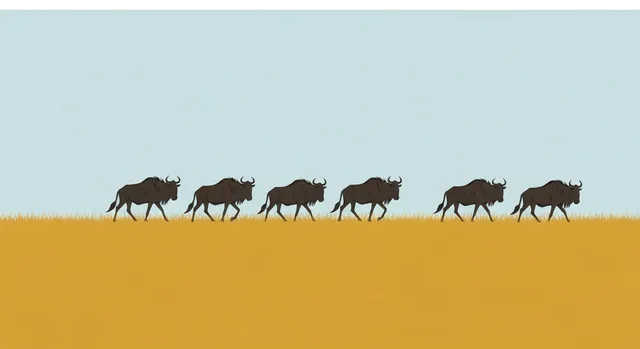
The dry season's last calm act
October is the long exhale at the end of the dry season. The frantic energy of the northern crossings has begun to settle, the herds start their slow drift back south, and the whole park feels a little emptier of vehicles as peak season winds down. The grass is at its most parched and the bush at its most open, so wildlife stays concentrated around the permanent water — and the game viewing remains genuinely excellent right across the Serengeti.
There is a particular pleasure to October. The premium and the press of the headline months have eased, the light turns hazy and amber as heat builds, and you can have a kopje or a riverbank closer to yourself. For travellers who care more about space and value than about guaranteed crossing drama, the late dry season is a quietly rewarding time to be on the plains.
Where the herds usually are in October
On the long-run average, October is a transitional month. Early on, large numbers can still be in the far north, with late Mara crossings possible as the herds move back and forth. As the month goes on, the migration generally begins its return south, often drifting through the Lobo area in the northeast — rolling, kopje-studded country that comes into its own as the herds pass through on their way back toward the central and southern plains.
The familiar honesty applies and matters even more in a transitional month: these are 30-year averages, and the exact timing of the southward turn swings with the first rains. Crossings cannot be scheduled, and by October they are increasingly a matter of being in the right place as the herds thin out. If you are chasing late crossings, weight your trip to early October and the north; if you simply want fine dry-season wildlife, the Lobo and central areas reward the late-season traveller. Verify the live picture with your operator before booking.
- Most likely pattern: late northern presence early, shifting to a return-south drift through Lobo.
- Possible event: late Mara crossings, patchier than the peak months — never guaranteed.
- The Lobo area in the northeast is a strong October base as the herds pass through.

Weather, heat and the edge of the rains
October weather is hot and dry, with the heat and haze building noticeably as the month progresses toward the short rains that typically break around November. Dawns are no longer as bitingly cold as midwinter, but layers still earn their place; the real change is the rising afternoon warmth and the amber, dusty quality of the light. The first isolated build-up storms can appear late in the month — a dramatic, welcome herald rather than a washout.
On the ground, the deep dry season keeps the bush thin and the wildlife concentrated, so general game viewing stays strong. Pack sun protection for the fierce high-altitude light, care for camera gear against the dust, and a light rain layer if you are travelling late in the month. The reward for the heat is space, value and a park that feels less trafficked than it has in months.

Which region and camp to base in
October's basing decision depends on what you are chasing, because the month splits in two. If late crossings are the dream, weight your trip to early October and the far north near Kogatende, where large numbers can still linger and late Mara crossings remain possible — book a northern camp positioned for the season and give yourself nights rather than hours, because the herds are thinning and the drama is patchier than the peak months. As the month goes on, the migration generally begins its return south, often drifting through the rolling, kopje-studded Lobo country in the northeast; a Lobo camp comes into its own here, placing you in the herds' path as they pass back through toward the central plains.
If you would rather not gamble on thinning crossings at all, a central Seronera base is a dependable late-season choice — its resident lions, leopards and cheetahs hold year-round, and the deep dry season keeps general game viewing strong. The October advantage across all of these is space and value: as late season sets in, demand and rates ease from the peak, so you have more choice of camp and gentler pricing than the headline months, though the best camps still reward booking ahead. A flexible, value-minded plan — north early, or Lobo and central as the herds drift south — gets the most from the month.
- Early October, north near Kogatende: best chance at late, patchier Mara crossings.
- Later October, Lobo country: in the herds' path as the migration drifts south.
- Central Seronera: dependable resident big cats and strong dry-season viewing.
- Easing demand means more choice and value — but book the best camps ahead.
- Match the base to the goal: crossings early and north, or the return south via Lobo.
Who October suits — and what to manage
October suits the value-minded traveller who wants genuine dry-season wildlife without the August premium, and who prizes space over a guaranteed headline crossing. It rewards anyone happy to follow the quieter return movement — return visitors who know the late season's particular pleasures, photographers drawn to the hazy amber light and the first dramatic build-up storms, and those who would rather have a kopje or a riverbank closer to themselves. The deep dry season keeps the bush thin and wildlife concentrated around water, so general game viewing stays genuinely good across the park even as the migration's frantic energy settles.
The expectations to manage are sharper in a transitional month. Crossings cannot be scheduled in any month, and by October they are increasingly a matter of being in the right place as the herds thin and the southward turn begins — frame any late crossing as a possible gift, not a plan, and accept that its timing swings with the first rains. Expect building heat and haze rather than the biting cold dawns of midwinter, with isolated build-up storms possible late in the month as the short rains approach; pack sun protection, care for camera gear against the dust, and a light rain layer for late October. As always, keep park fees, gate hours and conservation charges to current official sources — Tanzania National Parks (TANAPA) and your operator — rather than fixed figures that date quickly.
- Best for: value-minded travellers who prize space over a guaranteed crossing.
- Manage: late crossings are patchy and weather-driven — never scheduled.
- The southward turn's timing swings with the first rains — verify the live picture.
- Building heat and haze, possible late-month storms — sun, dust and a light rain layer.
- Confirm current fees and gate hours with TANAPA and your operator, not fixed quotes.
Planning an October safari
October rewards a flexible, value-minded plan. If late crossings are the dream, base in the north early in the month and give yourself nights rather than hours; if you would rather follow the return movement, a Lobo or central camp puts you in the herds' path as they drift south. Either way, the easing demand means more availability and gentler rates than the August peak, though the best camps still reward booking ahead.
As a transitional month, October combines well with the rest of the Northern Circuit — pair the plains with the Ngorongoro Crater and Tarangire, or finish on Zanzibar's warm sand before the rains arrive. For travellers weighing the months, October offers a compelling trade: a little less certainty about the herds in exchange for more space, better value and the quiet beauty of the dry season's final act.

Related guides

Lobo Serengeti Guide
A guide to the Lobo area of the northern-central Serengeti — its hills, woodlands and granite kopjes, the return-migration possibilities that make it a strategic October–November base, and how Lobo fits a northern itinerary.
Read guide
The Migration in the Northern Serengeti
How the Great Migration plays out in the Northern Serengeti — dry-season timing, Mara River strategy, the Kogatende camps, and why staying close to the river for several nights matters more than anything else.
Read guide
Serengeti Dry Season Safari
What the dry season means for a Serengeti safari — the famous Mara River crossings, the easiest game viewing of the year as wildlife concentrates around water, plus the realities of dust, crowds, premium prices and early-booking camps.
Read guideMore in When to Go
6
Best Months for Serengeti Photography
Which Serengeti months deliver the photographs you want — dramatic light and dust, emerald plains, newborns, river crossings, big cats and fewer vehicles in your frame.
Read guide
Calving Season in the Serengeti
Calving season on the southern Serengeti plains around Ndutu — when roughly half a million wildebeest are born in about three weeks, why it draws the densest predator action of the year, and how to plan a green-season safari around it.
Read guide
Calving Season in the Serengeti (Ndutu)
Calving season on the southern Serengeti plains around Ndutu — when roughly half a million wildebeest are born in about three weeks, why it draws the densest predator action of the year, and how to plan a green-season safari around it.
Read guide
Calving Season vs River Crossings
Two faces of the Great Migration: the southern Ndutu calving in the green months, and the northern Mara crossings in the dry. Decide between them by wildlife, budget, crowds, predictability and the kind of drama you want.
Read guide
Christmas & New Year in the Serengeti
How to plan a Christmas or New Year safari in the Serengeti — green December plains, gathering herds, premium festive camps, family-friendly logistics and the flights that make a holiday trip work. Romantic, festive and worth booking early.
Read guide
Great Migration Planning Mistakes
The planning mistakes that make travellers miss the herds, overspend, or book the wrong Serengeti sector — and how to avoid each one so your dates, your camp and the migration actually line up.
Read guide