
Serengeti Dry Season Safari
What the dry season means for a Serengeti safari — the famous Mara River crossings, the easiest game viewing of the year as wildlife concentrates around water, plus the realities of dust, crowds, premium prices and early-booking camps.

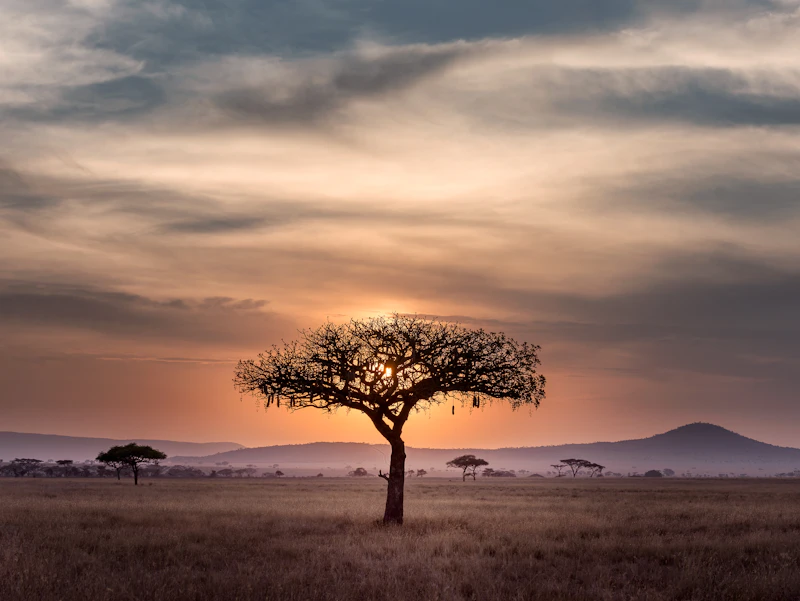
Photo: Helena Pfisterer / Unsplash
- ✓The long dry season runs roughly June to October — clear skies, thinning bush and the easiest game viewing of the year.
- ✓It is crossing season: the herds reach the Mara River in the far north, usually peaking August into September.
- ✓Wildlife concentrates around shrinking water, making animals easier to find than at any other time.
- ✓It is also peak season — the busiest, most expensive stretch of the year, with northern camps booking out far ahead.
- ✓Expect dust, hard light and cooler nights; pack layers and book early for the prime crossing dates.
The classic time to go
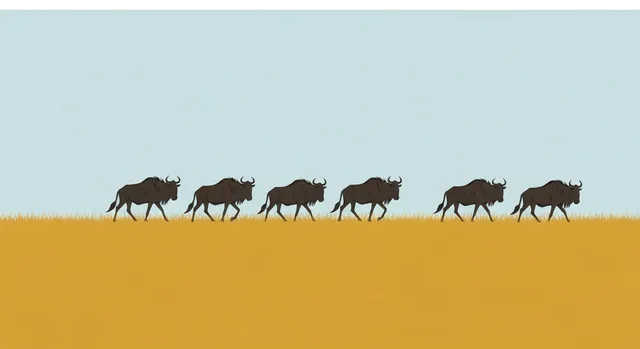
When people picture a Serengeti safari — clear skies, golden grass, big herds and the great river crossings — they are usually picturing the dry season. Running roughly from June to October, it is the park's peak window for good reason: the bush thins, the rains stop, wildlife concentrates around the last water, and the migration reaches the Mara River in the far north. It is the easiest, most reliable game viewing of the year, and for most first-time visitors it is the natural choice. It is also the busiest and most expensive stretch, which is the central trade-off to understand before you commit.
Like the rest of the Serengeti calendar, the dry season is not a fixed schedule. Treat June-to-October as a long-term average; the rains can start or end a couple of weeks early or late, and the exact position of the herds shifts with them. Always verify the likely picture for your specific dates close to travel rather than trusting a generic chart.
Easier game viewing as the water shrinks
The defining feature of the dry season is concentration. As the rains stop and the plains dry out, surface water vanishes from all but a few rivers and waterholes, and wildlife is drawn to what remains. Animals that were scattered across endless green in the wet months bunch up around the shrinking water, which makes them dramatically easier to find. At the same time the bush thins and the grass shortens, opening up sightlines and removing the cover that hides animals earlier in the year.
The result is the most productive general game viewing of the Serengeti year. Resident big cats around the central Seronera valley — lions on the kopjes, leopards in the riverine figs — are easier to spot against the open, dry-season backdrop, and the predictable movement to water concentrates the action. As always, sightings are never guaranteed, but the odds are at their best in these months.
- Thinning bush and short grass open up long sightlines.
- Wildlife concentrates around the last rivers and waterholes.
- Resident big cats are easier to find around Seronera.
- Clear, dry days — though hard midday light and dust come with them.
Crossing season in the north
The dry season is also crossing season. As the southern and central plains dry out, the herds push north to the greener grazing beyond the Mara River in the Kogatende sector, and from roughly July they begin to cross — usually peaking August into September and continuing into October. This is the single most cinematic event the Serengeti offers, and it is the reason so many travellers specifically target the dry months in the far north.
It is worth repeating the honest caveat: a crossing cannot be scheduled or guaranteed. It depends on rain, river level, grazing and the herds' collective nerve, and a quiet day is normal. The way to weight the odds is to base yourself in the north for several nights during the window with a patient guide. If the crossings are your goal, the dry season is non-negotiable — but build the trip to give the river time to surprise you.
Crowds, cost and camp availability
The flip side of all this is that the dry season is peak season — the busiest and most expensive stretch of the Serengeti year. The central park sees the most vehicles now, and while the far north stays far quieter than the centre, popular crossing points can gather a line of cars at the height of the season. Camps, especially the limited beds in the north and around the prime crossing country, book out a year or more ahead for peak dates. If you want the dry season, plan early — late planning often means the best-placed camps are simply gone.
Costs rise to match demand. Rates are at their highest in these months, and the squeeze on northern beds adds a premium. As ever, do not anchor to fixed figures from memory: rates and park fees change, so verify current numbers with operators and official sources close to travel. The principle to plan around is that timing and placement drive cost more than luxury labels do, and the dry season's peak dates are the priciest of all.
Practicalities: dust, light and cool nights
Travelling in the dry season means travelling in dust. The tracks are powder-dry, and a day of game drives leaves a fine film on everything; a buff or scarf and a dust-proof bag for cameras earn their place. The midday light is hard and flat — early mornings and late afternoons are far kinder for photography, which is one reason game drives are built around the cooler ends of the day. Skies are reliably clear, which is a blessing for convenience and a slight curse for dramatic photographs compared with the green season's storm skies.
Temperatures swing more than people expect. Dry-season days are warm to hot, but nights and early mornings, especially at altitude on the southern plains, can be genuinely cold — open game-drive vehicles at dawn are bracing. Pack layers: something warm for the first hour of a drive, lighter clothing for the heat of the day. With clear roads, easy access and concentrated wildlife, the dry season is the most logistically straightforward time to safari — which, together with the crossings, is exactly why it is the classic choice.
When the dry season actually runs, and how it shifts
The Serengeti's dry season runs, very roughly, from June through October, with a shorter dry spell often falling around January and February between the short and long rains. The main dry season builds from the end of the long rains in late May or June, deepens through the cool, clear months of July and August, and reaches its driest, dustiest extreme by September and October before the short rains break and green the plains again late in the year. That long arc is why the crossings cluster in the second half of it and why camp availability tightens earliest for July to October. But these months are long-term averages drawn from decades of pattern, not a fixed timetable — the rains can break early or hang on late, and a 'dry' month can deliver a surprise storm.
That variability matters for planning because the dry season's defining features all depend on how dry it actually is in a given year. The concentration of wildlife around shrinking water, the firmness of the tracks, the readiness of the northern herds to cross — all of these strengthen as the season deepens and reverse quickly once the rains arrive. A trip timed for late October can catch either the peak of the dry crossings or the first green flush of the short rains, depending on the year. The sensible approach is to treat the calendar as a guide, build a little flexibility into the dates, and confirm the live conditions and the likely herd position with your operator close to travel rather than trusting a month name to behave.
- The main dry season runs roughly June–October, with a shorter dry spell often around January–February.
- It deepens to its driest, dustiest extreme by September–October before the short rains break.
- Crossings cluster in the second half, and camp availability tightens earliest for July–October.
- These months are long-term averages, not a timetable — rains can break early or hang on late.
- Confirm the live conditions and likely herd position with your operator close to travel.
Who the dry season suits best
The dry season is the default recommendation for a reason, and it suits some travellers especially well. First-timers benefit from its sheer reliability: clear roads, easy access, wildlife concentrated and visible around the remaining water, and the lowest chance of weather disrupting plans. Anyone whose heart is set on the northern Mara River crossings essentially must come in the dry-season window, since that is when the herds gather to cross. Travellers with fixed dates in the northern-hemisphere summer holidays find the dry season conveniently aligned, and those who simply want the most game for the least logistical fuss get exactly that. If you value certainty and the famous crossings over solitude and value, the dry season is built for you.
It is equally honest to say who might prefer another season. The dry months are the busiest and most expensive of the year, with popular sightings drawing lines of vehicles and the best camps booked out far ahead, so travellers who prize quiet and value may do better in the shoulder or green months. Photographers who love dramatic storm skies and lush green backdrops, and anyone drawn to the calving spectacle, are better served by the southern summer. And the dust and the cold dawns, while easily managed, are real. The dry season is the safest, most reliable choice and the only time for the classic crossings — but it is a choice with trade-offs, so weigh certainty and the crossings against crowds, cost and the alternatives, and book early if you go.
- Best for first-timers, crossing-seekers and anyone valuing reliability over solitude.
- Conveniently aligned with northern-hemisphere summer holiday dates.
- The trade-off is the busiest, priciest months, with vehicles at popular sightings and camps booked far ahead.
- Photographers wanting storm skies or the calving spectacle may prefer the green season.
- If you go, book early — the best dry-season camps sell out furthest ahead.
Related guides
Best Time to Visit the Serengeti
The best time to visit the Serengeti depends on the event you most want to witness. Match the month to the migration — calving, river crossings or big-cat hunting — and build the rest of the trip around the herds, the weather, the crowds and your budget.
Read guide
Serengeti Green Season Safari
Why the Serengeti's green season can be the best-value, most beautiful time to go — calving on the southern plains, dramatic light and storm skies, superb birding, lush landscapes, fewer vehicles and gentler rates.
Read guide
Mara River Crossings in the Serengeti
How to plan a Northern Serengeti river-crossing safari without false promises — when the Mara crossings happen at Kogatende, why timing is luck, where to stay, and how to watch with good wildlife etiquette.
Read guideMore in When to Go
6
Best Months for Serengeti Photography
Which Serengeti months deliver the photographs you want — dramatic light and dust, emerald plains, newborns, river crossings, big cats and fewer vehicles in your frame.
Read guide
Calving Season in the Serengeti
Calving season on the southern Serengeti plains around Ndutu — when roughly half a million wildebeest are born in about three weeks, why it draws the densest predator action of the year, and how to plan a green-season safari around it.
Read guide
Calving Season in the Serengeti (Ndutu)
Calving season on the southern Serengeti plains around Ndutu — when roughly half a million wildebeest are born in about three weeks, why it draws the densest predator action of the year, and how to plan a green-season safari around it.
Read guide
Calving Season vs River Crossings
Two faces of the Great Migration: the southern Ndutu calving in the green months, and the northern Mara crossings in the dry. Decide between them by wildlife, budget, crowds, predictability and the kind of drama you want.
Read guide
Christmas & New Year in the Serengeti
How to plan a Christmas or New Year safari in the Serengeti — green December plains, gathering herds, premium festive camps, family-friendly logistics and the flights that make a holiday trip work. Romantic, festive and worth booking early.
Read guide
Great Migration Planning Mistakes
The planning mistakes that make travellers miss the herds, overspend, or book the wrong Serengeti sector — and how to avoid each one so your dates, your camp and the migration actually line up.
Read guide