
Olduvai Gorge with Serengeti: Adding the Cradle of Humankind
How to fold Olduvai Gorge and the Ngorongoro highlands into a Serengeti safari — the short detour that adds millions of years of human-origins context to the same plains you'll watch the migration cross.

Photo: Kinyua Seaman / Unsplash
- ✓Olduvai Gorge sits inside the Ngorongoro Conservation Area, almost exactly on the road most travellers already drive between the Crater and the southern Serengeti.
- ✓It is one of the most important paleoanthropological sites on Earth — the place that helped prove humanity's deep roots in East Africa.
- ✓Adding it costs little more than a half-day: a museum visit and a stop at the gorge edge slot neatly into the transfer day.
- ✓It pairs naturally with the Ndutu plains and calving season, which lie a short drive on toward the Serengeti's southern edge.
- ✓Treat it as context, not a wildlife stop — the reward is understanding the landscape your safari moves through, not ticking off animals.
- ✓Keep entry, museum and Conservation Area fees to official sources and your operator, and verify opening details close to travel.
Why a fossil gorge belongs on a safari
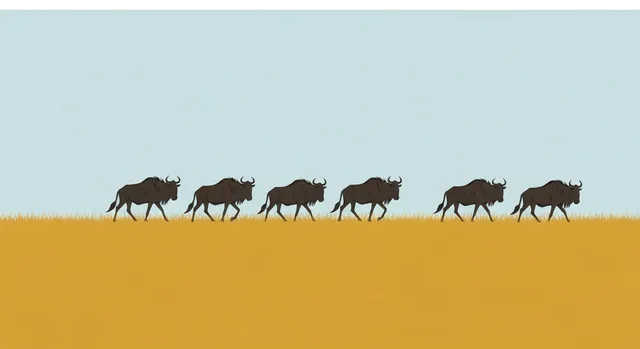
Most people come to the Serengeti for the living — the herds, the cats, the great river crossings — and never think to stop for the dead. Yet a few hours' detour from the road they already drive lies Olduvai Gorge, the steep-sided ravine where the story of our own species was pulled, fragment by fragment, out of the rock. To stand at its edge is to feel the same plains differently: the endless grassland the wildebeest cross is also the ground our earliest ancestors walked, hunted and buried their tools in, almost two million years ago. The migration and the human story share a single stage.
That is the quiet argument for adding Olduvai to a Serengeti trip. It is not a wildlife site and it will not give you a fifth Big Five tick. What it gives you is depth — the sense that this corner of Tanzania is not just a spectacular game park but the literal cradle of humankind, a place where deep time is visible in the banded walls of a gorge. For travellers who like their landscapes to come with meaning, it transforms the drive between the Ngorongoro Crater and the southern Serengeti from a transfer into a pilgrimage.
At a glance: Olduvai Gorge with the Serengeti
A quick orientation before the detail. Everything here is evergreen — confirm current entry, museum and Conservation Area fees, plus opening hours, with official sources and your operator close to travel.
- Where: inside the Ngorongoro Conservation Area, between the Crater highlands and the southern Serengeti's Naabi Hill Gate.
- What: a steep ravine and a small on-site museum, one of the world's foremost human-origins sites.
- Why it matters: early hominin fossils and stone tools found here helped establish East Africa as the cradle of humankind.
- Time needed: roughly a half-day — a museum visit and a stop at the gorge overlook slot into the transfer.
- Best paired with: a Crater day and an onward run to Ndutu or central Seronera in the Serengeti.
- Mindset: history and context, not game viewing — the wildlife comes before and after.
- Fees: separate from your safari; covered by Conservation Area and site charges — verify amounts.
What Olduvai Gorge actually is
Olduvai Gorge is a roughly 50-kilometre ravine carved by an ancient river through the layered sediments of the Ngorongoro Conservation Area, on the eastern edge of the Serengeti ecosystem. Those layers are the point: each band of rock is a slice of deep time, and over decades of patient excavation — most famously by Louis and Mary Leakey from the mid-twentieth century onward — the gorge gave up some of the most significant early-human discoveries ever made. Stone tools, hominin fossils and the evidence of how our ancestors lived turned this unassuming gully into a cornerstone of paleoanthropology. The name itself is an anglicised version of 'Oldupai', the Maasai word for the wild sisal that grows here.
It is worth setting expectations honestly. Olduvai is not a grand monument or a dramatic dig you watch in action; it is a modest, atmospheric site with a small museum and a viewpoint over the gorge. The drama is intellectual, not visual. What you take away is the realisation that the same volcanic-ash soils that feed the short-grass plains the wildebeest calve on are the soils that preserved our oldest story — a single landscape doing double duty as the Serengeti's nursery and humanity's. For the right traveller, that connection is worth far more than a flashier stop.
Slotting it into the transfer day
The beauty of Olduvai is that it asks almost nothing extra of your itinerary. It sits within the Ngorongoro Conservation Area, close to the road that nearly every Northern Circuit safari already drives between the Crater highlands and the southern Serengeti gate at Naabi Hill. That means you do not have to carve out a dedicated day — you simply build the stop into the transfer you were making anyway. A museum visit and a pause at the gorge edge fit comfortably into a half-day, leaving the rest for the descent onto the plains and the run to camp.
The sequencing that works best is a Crater experience in the morning, Olduvai as a mid-journey stop, and an arrival at your Serengeti sector in the afternoon. Because the detour does draw on the same finite daylight as the crater and the drive, the usual discipline applies: start early, keep the crater portion proportionate to how far your camp sits beyond the gate, and treat Olduvai as a focused pause rather than an open-ended wander. If your Serengeti base is the southern Ndutu plains, this works especially smoothly — Ndutu is close to the Conservation Area edge, so the whole day stays unhurried. For a far-north camp, you would more likely visit Olduvai on a slower-paced circuit rather than racing a distant gate.
- Morning: a Crater game drive or rim visit, timed to your onward distance.
- Midday: the Olduvai museum and gorge overlook — a focused half-day stop.
- Afternoon: descend across the Conservation Area, clear Naabi Hill Gate, run to camp.
- Easiest pairing: a southern Serengeti / Ndutu base, close to the Conservation Area edge.
- Keep the crater portion tight if your Serengeti sector is far north.
Who should add it — and who can skip it
Olduvai rewards a particular kind of traveller. If you are drawn to human history, archaeology or the deep story of where we come from — or if you simply like understanding the ground beneath a great landscape — it will be a highlight, a moment of perspective that reframes the whole safari. Families with curious older children often find it a meaningful counterweight to the animal-focused days, and honeymooners or slow travellers with time in hand can savour it as a thoughtful interlude between the Crater and the plains. It is also a gentle stop, with no walking demands, which suits travellers who want a break from long game drives.
Equally, it is fine to skip. If your time is tight, your priority is maximising wildlife hours, or the day's geography means a long haul to a far sector, the half-day is better spent on the plains. Olduvai is context, not the main event — there is no shame in driving past it to chase the migration. The right call comes down to your interests and your daylight budget. Where it shines is on the unhurried Crater-to-southern-Serengeti transfer, for the traveller who wants their safari to carry the weight of the place it moves through.
Common questions about Olduvai Gorge and the Serengeti
Where is Olduvai Gorge in relation to the Serengeti? It sits inside the Ngorongoro Conservation Area, on the road most travellers already drive between the Crater highlands and the southern Serengeti gate at Naabi Hill — so it is a short detour rather than a separate journey.
How much time do I need? Roughly a half-day. A visit to the small museum and a stop at the gorge overlook slot into the transfer day without needing a dedicated extra day.
Will I see wildlife at Olduvai? Treat it as a history and context stop, not a game drive. The wildlife comes before, on the Crater, and after, on the Serengeti plains.
Is it worth it? If you are interested in human origins, archaeology or the deep story of the landscape, yes — it adds real meaning. If your priority is maximum wildlife time on a tight trip, you can comfortably skip it.
What does it pair best with? An unhurried Crater morning and an onward run to the southern Serengeti, especially Ndutu in calving season, which lies close to the Conservation Area edge.
What about fees and opening hours? Entry and museum charges are separate from your safari and sit under Conservation Area arrangements. Confirm current amounts and opening details with official sources and your operator close to travel.
Related guides

Ngorongoro Crater with the Serengeti: How to Combine Them
How to combine the Ngorongoro Crater with a Serengeti safari — the route, how many nights to give each, how the fees stack up, the wildlife you'll see including black rhino, and how to time it around the migration and permits.
Read guide
Ngorongoro to Serengeti: Routing the Leg Without Wasting Daylight
How to route from the Ngorongoro Crater or Ndutu into the Serengeti's sectors — the drive down through the Conservation Area to Naabi Hill, timing it around gate hours, and choosing the right sector so you don't waste a day of daylight.
Read guide
Five-Day Serengeti Safari
A classic five-day Serengeti and Ngorongoro Crater route with better pacing, more wildlife diversity and sound camp logic — how to combine the central plains with the great caldera without rushing, by road or by air.
Read guideMore in Combine With
6
Arusha before Serengeti
How to use Arusha well before a Serengeti safari — as the place to land and recover from a long flight, sort gear and last-minute shopping, sleep an overnight if your timings demand it, and meet your operator and brief your guide. The gateway town's practical role, and why a night here often pays for itself. Evergreen and honest about logistics.
Read guide
Kilimanjaro and Serengeti
How to combine Kilimanjaro — a full summit climb or simply its views — with Serengeti safari days: which order to do them, how much recovery time to build in, the flights and transfers that link them, and the seasonal choices that make or break the trip. Evergreen and honest about timings.
Read guide
Lake Manyara with Serengeti
When Lake Manyara is worth adding to a Serengeti safari — its groundwater forest, flamingo-fringed soda lake and birdlife — and how it slots into a shorter or richer Northern Circuit route.
Read guide
Lake Natron and Serengeti
How to add Lake Natron — its flamingos, its blood-red soda flats, the great Rift Valley scenery and the volcanic backdrop of Ol Doinyo Lengai — to a Serengeti itinerary. The routing, the timing, what the detour actually offers and who it suits. Evergreen and honest about logistics.
Read guide
Lake Victoria after Serengeti
When and how to add Lake Victoria to the end of a Serengeti safari — the city of Mwanza, the western access through the park, the lake views and the slow, water-side change of pace. The routing, who it suits and when it actually works after the Western Corridor. Evergreen and honest about logistics.
Read guide
Maasai Mara & Serengeti safari
How to combine Kenya's Maasai Mara with Tanzania's Serengeti on one safari — the two halves of a single ecosystem and the same migration. The border logistics, the flights, the visas and the seasonal timing that decides which side to watch the crossings from. Evergreen and honest about timings.
Read guide