
Serengeti Lodge vs Tented Camp
Lodge, tented camp, mobile camp or campsite — the four ways to sleep in the Serengeti explained for first-timers, with the trade-offs in comfort, atmosphere, location and price.

Photo: Peter Thomas / Unsplash
- ✓There are four broad ways to sleep in the Serengeti: a permanent lodge, a permanent tented camp, a seasonal mobile camp, and a basic campsite — a ladder of comfort, atmosphere and price.
- ✓A lodge is solid-walled and hotel-like: maximum comfort and reliability, year-round, usually in the central sectors.
- ✓A tented camp is canvas with a real bed and an en-suite bathroom — the romance of sleeping in the bush with most of a lodge's comfort.
- ✓A mobile camp is a lightweight tented camp that relocates to follow the migration, trading some comfort for unbeatable proximity to the herds.
- ✓Location often matters more than the building: the best lodge in the wrong sector misses the action, so choose where to be before you choose what to sleep in.
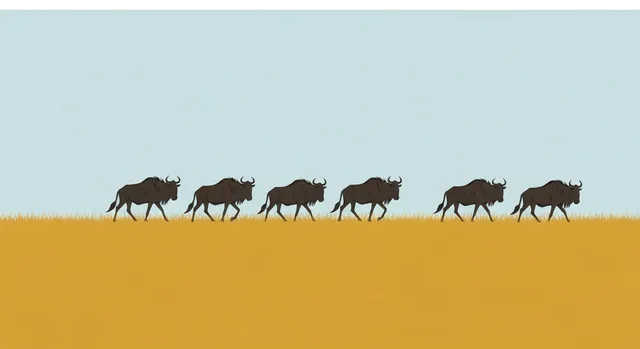
The four ways to sleep in the Serengeti
First-time visitors often get tangled in the vocabulary of Serengeti accommodation, because 'camp' can mean anything from a dome tent on shared ground to a canvas suite with a copper bath. It helps to picture a single ladder with four rungs. At the top for comfort sits the permanent lodge — a solid building of stone, timber and thatch, run much like a remote hotel. Below it, the permanent tented camp swaps walls for canvas while keeping a real bed and a proper bathroom. Below that, the mobile camp is a lighter tented camp built to be packed up and moved with the seasons. At the foot of the ladder is the basic campsite, where you sleep in a simple tent at the park's public grounds.
None of these is better in the abstract; each is a different balance of comfort, atmosphere, location and price. A lodge maximises reliability and ease. A tented camp adds the romance of the bush without giving up much comfort. A mobile camp trades some of that comfort for the unbeatable advantage of being where the herds are. And a campsite strips it all back to the raw, affordable adventure of canvas under the stars. The right choice is the one whose balance matches your trip — and, just as often, the sector and season you are travelling in.
Lodge: comfort and reliability
A permanent lodge is the most hotel-like way to experience the Serengeti, and for many travellers that is exactly the point. Built of solid materials and open year-round, lodges typically offer the fullest comforts the bush allows: en-suite rooms with reliable plumbing and hot water, often a swimming pool, a restaurant, a bar, sometimes a spa, and frequently mains or generator electricity that keeps the lights and the chargers running. They are the easiest, lowest-friction option — and because most cluster in the central sectors around Seronera, they pair naturally with the park's most reliable year-round wildlife.
The trade-offs are atmosphere and movement. A lodge can feel a step removed from the wild — you are looking out at the bush rather than sleeping inside it — and because it is fixed in place, it cannot follow the migration. A central lodge that is perfectly placed for resident lions and a comfortable first safari can be hours from a July river crossing in the north. Lodges suit families, first-timers, travellers who want guaranteed comfort, and anyone basing a trip on resident game rather than chasing the herds. If reliability and ease rank above proximity and romance, the lodge is your rung of the ladder.
- Best for: families, first-timers, comfort-first travellers, and resident-wildlife trips in the central park.
- Strengths: solid rooms, reliable power and plumbing, pools, restaurants, year-round opening.
- Trade-offs: less immersion in the bush, and fixed in place — it cannot follow the migration.

Tented camp: the romance of canvas
A permanent tented camp is, for many, the quintessential safari experience — and the sweet spot between comfort and atmosphere. Picture a large, walk-in canvas tent on a raised platform, with a proper bed, rugs, a writing desk and an en-suite bathroom with a flushing loo and a hot shower. The walls are canvas, so the bush comes to you: the dawn chorus, the rasp of a distant lion, the rustle of something passing in the night. You are sleeping in the wild, with most of a lodge's comfort intact. It is the style that feels most like the safari of the imagination, and it is why so many honeymooners and repeat travellers choose it.
Compared with a lodge, a tented camp tends to be smaller and more intimate, with fewer guests and a more personal, owner-run feel. Power may be solar with set charging hours rather than around-the-clock mains, and there is less likely to be a pool, though many of the best have one. The atmosphere is the draw: the proximity to the bush, the lantern light, the fire under the stars. Tented camps suit travellers who want romance and immersion without roughing it, who value intimacy over scale, and who are happy to trade a sliver of a lodge's convenience for the feeling of being properly in the wild.
- Best for: honeymooners, romantics, repeat safari-goers, and anyone wanting immersion without discomfort.
- Strengths: real beds and en-suite bathrooms inside canvas — the bush at arm's length, intimate scale.
- Trade-offs: smaller, sometimes solar power and set charging hours, not always a pool.
Mobile camp and campsite: proximity and thrift
The bottom two rungs are about movement and money. A mobile camp is a lightweight, fully serviced tented camp built to be struck and re-pitched as the seasons change, so it stays close to the migration: a southern site near Ndutu for the calving plains, then a northern site near Kogatende for the Mara crossings. It keeps real beds, en-suite bush bathrooms and a proper kitchen, but the comforts are more elemental than a permanent camp's — simpler power, no pool, and a footprint light enough to vanish when the herds move on. What you buy is proximity: the closest a bed can get to the migration, often a short drive from the action when lodge guests are hours away.
A campsite is the rawest and cheapest option — a simple tent at the park's public grounds, usually as part of a group overland safari, with shared basic ablutions, no power to speak of and wildlife moving freely through unfenced ground at night. It strips comfort to the bone in exchange for the lowest price and the most elemental adventure. The crucial caveat for both these rungs is that the fixed park, camping and conservation fees are the same whatever you sleep in, so the savings come from accommodation alone — and migration timing is always a long-run average the rains can shift, never a guarantee.
- Mobile camp — best for: migration purists, photographers and honeymooners chasing proximity over polish.
- Mobile camp — strengths: relocates with the herds; real beds in canvas, minutes from the action in season.
- Campsite — best for: budget travellers and adventurers happy to trade comfort for the lowest price.
- Campsite — strengths: cheapest sleep in the park, raw immersion; but basic, shared and unfenced.
At a glance: which rung suits you
A quick scorecard of the four styles — read across, then weight the rows that matter most for your trip.
- Lodge: most comfort, year-round, central, hotel-like; least immersion; cannot move with the herds.
- Tented camp: high comfort plus bush immersion; intimate scale; the romantic sweet spot.
- Mobile camp: real comfort in canvas, relocates with the migration; closest to the action in season.
- Campsite: cheapest and rawest; basic, shared, unfenced; the adventure budget option.
- Across all four: fixed park and camping fees are identical — and location often matters more than the building.
- Always verify current rates, what is included and migration placement for your dates before booking.
Location first: the rule that beats the building
The single most useful principle for sleeping in the Serengeti cuts across all four styles: choose where to be before you choose what to sleep in. The park is vast — roughly 14,750 km² — and the herds move clockwise through it across the year, so the difference between a camp that is minutes from the action and one that is half a day's drive away is enormous. A magnificent lodge in central Seronera is the wrong choice for a traveller whose whole reason for coming is an August river crossing in the far north. Decide the sector your dates point to, then pick the best accommodation style available there.
That is why migration travellers so often end up in tented or mobile camps in the north and south, while resident-wildlife and first-time travellers favour central lodges. It is also why the honest answer to 'lodge or tented camp?' is usually 'where will the herds be, and what is your budget?'. Treat all migration timing as a roughly 30-year average that the rains can swing a fortnight either way, never book on the promise of a guaranteed crossing, and verify the live picture for your exact dates. Get the location right and any of these four styles can deliver a superb safari; get it wrong and the plushest lodge in the park will leave you watching the action from afar.
Common questions about Serengeti accommodation
The questions first-timers ask most often, answered plainly and kept evergreen.
- What's the difference between a lodge and a tented camp? A lodge is a solid building run like a remote hotel; a tented camp is walk-in canvas with a real bed and en-suite bathroom. Same comfort, different feel — the tent puts you inside the bush.
- Is a tented camp safe? Yes. Permanent tented camps have secure tents and staff escort you after dark; the canvas is for atmosphere, not exposure. Follow the camp's rules and it is as safe as a lodge.
- Which is more comfortable? A lodge, marginally — solid walls, reliable mains power and usually a pool. A good tented camp is close behind and many travellers prefer its intimacy.
- Which should a first-timer choose? Often a central lodge or permanent tented camp in Seronera for reliable year-round game and easy logistics, unless your dates are built around a specific migration event.
- Do lodges and camps cost the same in park fees? Yes. Park-entry, camping and conservation fees are fixed and identical whatever you sleep in — verify the current amounts before booking.
- Lodge or mobile camp for the migration? A mobile camp, almost always — it relocates to stay near the herds, while a fixed lodge cannot follow them.
- Can I mix styles on one trip? Yes, and it is often the smartest plan — a comfortable central lodge for the first nights and resident big cats, then a tented or mobile camp for the migration, giving you an easy start and an immersive finish in the right order.
- Is a tented camp colder or noisier than a lodge? You will hear more of the bush through canvas, which most travellers love, and nights at altitude are cool whatever you sleep in — a good camp provides hot-water bottles and warm bedding, so pack layers and expect chilly dawns either way.

Related guides

Best Tented Camps in the Serengeti
How to choose the best tented camp in the Serengeti — classic, mobile, luxury and family-friendly canvas compared across the park's sectors, with honest, no-guarantee guidance on placement and season.
Read guide
Best Serengeti Safari Lodges & Camps
How to choose the best Serengeti lodge or camp — what separates a permanent lodge, a classic tented camp and a mobile camp, and how to match each to your sector, your season, your migration goal and your budget from honest value to ultra-luxury. The right lodge is the one in the right place for your dates.
Read guideMobile Camps in the Serengeti
How seasonal mobile camps follow the migration around the Serengeti, what staying in one is really like, and who should choose canvas-that-moves over a permanent lodge.
Read guideMore in Where to Stay
6
Accessible Lodges in the Serengeti
Accessibility-aware planning for a Serengeti safari — how to read a lodge for steps, showers, paths and vehicle transfers, where fly-in helps, what medical support exists in a remote park, and the questions to ask before you book.
Read guide
All-Inclusive Serengeti Lodges
What 'all-inclusive' actually means at a Serengeti lodge or camp, what tends to be quietly excluded, and how to read two quotes side by side so you are comparing the same trip — not the same word.
Read guide
Best Serengeti Camps for Big Cats
Where to stay in the Serengeti for the best lion, cheetah and leopard viewing — from the kopjes and river valleys of Seronera to the eastern plains and the calving grounds — and how to read placement, season and guiding before you book.
Read guide
Best Serengeti Camps for Photographers
How to choose a Serengeti camp if photography is the point of the trip — placement near the action, the right vehicle and bean-bag set-up, guides who think like photographers, and the logic of a private vehicle and the golden hours.
Read guide
Best Small Camps in the Serengeti
Why the Serengeti's smallest camps — often just a handful of tents — deliver quieter guiding, attentive hosting and a more immersive sense of wilderness, who they suit, and how to choose and book an intimate camp well.
Read guideBudget Camping in the Serengeti
How budget camping in the Serengeti really works — public campsites, basic tented options and group safaris — what it costs you in comfort, and the few things budget travellers should never compromise on.
Read guide