
Serengeti in May
May is the migration's great transition: the long rains taper, the herds stream north and west toward the Grumeti and the Western Corridor, and a quiet, green, good-value Serengeti rewards flexible travellers before the dry-season peak.

Photo: Doina Gavrilov / Unsplash
- ✓May is a transition month — the long rains usually ease through it as the dry season approaches.
- ✓The herds are typically moving north and west, with the leading columns heading toward the Grumeti River and the Western Corridor.
- ✓Plains stay green and quiet, with low-season value still in play before the peak-price dry months arrive.
- ✓The first rut can begin late in the season, with bull wildebeest sparring as the columns stream on.
- ✓Movement and timing are 30-year averages and especially fluid in May — verify your dates and keep camp plans flexible.
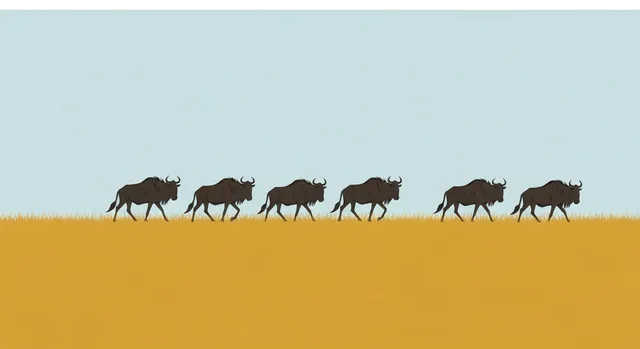
Where the herds are in May
May is the migration in full flow. Having left the southern calving plains behind, the herds spend the month streaming north and west through the central Serengeti's woodlands and onto the Western Corridor, drawn toward the Grumeti River — the migration's first major water test of the year. In a typical year the leading columns are well into the western reaches by late May, strung out in long, dramatic lines across the country.
It is one of the most evocative chapters of the loop: tens of thousands of animals on the move, often in single-file columns miles long, with bull wildebeest beginning to spar as the rut stirs late in the season. But it is also fluid — the precise position depends heavily on the rains, and the herds can be spread across a large area in transit. Treat May timing as a long-term average and confirm the live picture for your exact dates before you commit to a sector.
May at a glance
A quick frame for planning the transition month. Set expectations, then verify the migration's live position, conditions and current fees before booking.
- Migration: streaming north and west toward the Grumeti and Western Corridor (30-year average; verify).
- Weather: long rains tapering through the month toward the dry season; greener early, drier late.
- Wildlife: dramatic moving columns, the early rut, resident game reliable in the centre.
- Crowds & value: still quiet and good value early; rates begin to firm as the dry season nears.
- Best for: flexible travellers, photographers of herds on the move, value-seekers ahead of the peak.
- Best sector to base in: central Seronera early, shifting toward the Western Corridor late month.
Weather: the rains taper
May usually marks the easing of the long rains. Early in the month can still be properly wet, a continuation of April's pattern, but as the weeks pass the storms tend to thin out and the long dry season begins to take hold — drier, clearer and firmer underfoot by late May in most years. It is a genuinely transitional month, and conditions can swing from one week to the next.
That makes May a rewarding gamble for travellers who value greenery and quiet over certainty. The plains are still lush, the air washed clean, vehicle numbers low, and the light often superb as skies clear. Pack for both worlds: waterproofs and warm layers for cool, damp early-month mornings, plus dust protection for the drier, brighter days that follow. As always, none of this is guaranteed — May is the month the Serengeti changes its mind.
Following a moving migration
Watching the migration in transit is a different pleasure from a river crossing or the calving plains. There is no single set-piece to wait for; instead the reward is scale and movement — endless columns of wildebeest and zebra flowing across the land, the dust and noise of a herd on the march, the early sparring of the rut. For photographers, the long lines of animals under big transitional skies make for some of the most evocative imagery of the whole year.
Because the herds are spread and shifting, basing yourself well matters more than usual. Central Seronera is a strong, all-weather anchor early in the month, with the option to lean west toward the Grumeti and Western Corridor as the columns advance later in May. Resident wildlife in the centre — lion, leopard and a full cast of plains game — keeps the game viewing reliable even when the migration is between landmarks. Sightings are never promised, and a guide who can read the herds' direction of travel is invaluable in a transition month.
Value, planning and combining
May still carries much of the low season's appeal: quiet plains and good value early on, with rates beginning to firm as the dry-season peak approaches toward month-end. For travellers who can stay flexible, it is one of the year's smartest windows — green-season character and prices with the dry season on the horizon. Keep your itinerary adaptable so you can follow the herds north and west, and confirm camp positions against the migration for your exact dates.
May combines well with the Northern Circuit, and easing rains make the overland legs through Ngorongoro and Tarangire less of a gamble than in April, though early-month roads can still be heavy — allow some buffer or lean on flights. A Zanzibar beach finish makes a fine contrast. Park fees, conservation levies and camp rates change over time and some seasonal camps are still reopening after the rains, so confirm openings and current figures with official and operator sources rather than relying on quoted numbers.
Related guides

The Grumeti River Migration
The migration's first water test: Western Corridor timing, the Grumeti River's giant crocodiles, where to base yourself, and why a Grumeti crossing is a quieter, less predictable affair than the famous Mara.
Read guide
Western Corridor of the Serengeti
The Western Corridor is the Serengeti's long western arm reaching toward Lake Victoria — Grumeti River country, the migration's first water test, giant crocodiles and quieter, lower-crowd camps. When the west is worth the detour, and when it is not.
Read guide
The Great Migration, Month by Month
Where the wildebeest herds usually are in the Serengeti for each month of the year — calving in the south, the Grumeti in the west, the Mara crossings in the north — with the realistic odds of a river crossing and the right sector and camp to aim for.
Read guideMore in When to Go
6
Best Months for Serengeti Photography
Which Serengeti months deliver the photographs you want — dramatic light and dust, emerald plains, newborns, river crossings, big cats and fewer vehicles in your frame.
Read guide
Calving Season in the Serengeti
Calving season on the southern Serengeti plains around Ndutu — when roughly half a million wildebeest are born in about three weeks, why it draws the densest predator action of the year, and how to plan a green-season safari around it.
Read guide
Calving Season in the Serengeti (Ndutu)
Calving season on the southern Serengeti plains around Ndutu — when roughly half a million wildebeest are born in about three weeks, why it draws the densest predator action of the year, and how to plan a green-season safari around it.
Read guide
Calving Season vs River Crossings
Two faces of the Great Migration: the southern Ndutu calving in the green months, and the northern Mara crossings in the dry. Decide between them by wildlife, budget, crowds, predictability and the kind of drama you want.
Read guide
Christmas & New Year in the Serengeti
How to plan a Christmas or New Year safari in the Serengeti — green December plains, gathering herds, premium festive camps, family-friendly logistics and the flights that make a holiday trip work. Romantic, festive and worth booking early.
Read guide
Great Migration Planning Mistakes
The planning mistakes that make travellers miss the herds, overspend, or book the wrong Serengeti sector — and how to avoid each one so your dates, your camp and the migration actually line up.
Read guide