
Serengeti Wildlife Calendar, Month by Month
A month-by-month Serengeti wildlife calendar that looks beyond the migration — big cats and predator action, newborns and calving, birdlife and the migrant influx, elephants, and the green-season drama — so you can match your trip to the wildlife you most want to see.

Photo: Adrien Olichon / Unsplash
- ✓There is wonderful wildlife in the Serengeti in every single month — the resident lions, leopards, cheetahs, elephants and birds never leave, so the park is never 'closed' for wildlife.
- ✓January to March is calving and predator season on the southern Ndutu plains, and the peak of the birding year as migrant species swell the resident list.
- ✓April and May are the lush green low season — quiet, dramatic and full of newborns and breeding birds — with the trade-off of the year's heaviest rain.
- ✓June to October is the dry season: thinning bush, game concentrated at water, the easiest big-cat viewing, and the famous Mara River crossings in the far north.
- ✓November and December bring the short rains, returning migrant birds and the herds turning back south, refreshing the plains for the next calving cycle.
- ✓Treat every month here as a 30-year average that follows the rains, not a fixed schedule — verify the live picture for your exact dates before you book.
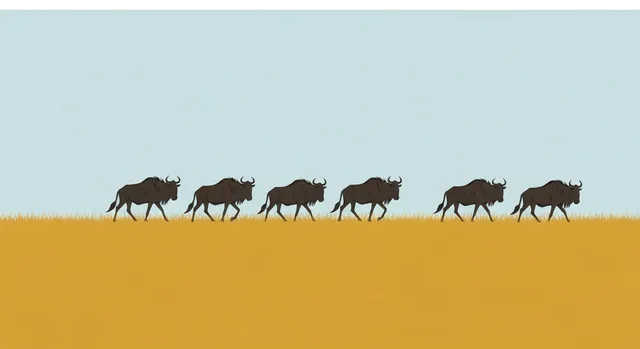
Beyond the migration: the wildlife year never stops
Most Serengeti calendars are really migration calendars — they track 1.5 million wildebeest around their clockwise loop and leave it there. That loop matters, and we cover it in detail elsewhere. But it is only one thread in a far richer tapestry, and planning a trip solely around the herds means missing the rest. The Serengeti's resident wildlife — its lions and leopards and cheetahs, its elephants and giraffes, its hundreds of bird species — never migrates anywhere. The cats hold their territories around Seronera all year. The point of this page is to map the whole wildlife year, so that whatever month your life allows, you arrive knowing what the season is offering and how to make the most of it.
Think of the Serengeti year as two great seasons with softer shoulders between them: the green season of the rains, roughly November to May, when the plains are lush, prey is dispersed, newborns arrive and the birding peaks; and the dry season, roughly June to October, when the land browns, game crowds around shrinking water, the bush thins for clear viewing, and the river crossings unfold in the north. Each has its own wildlife signature. Below, we walk the months in turn, then group them into the seasons so you can plan around the experience you most want — calving and predators, birding, the easiest game viewing, or green-season solitude.
At a glance: the wildlife year in four chapters
A quick orientation card before the month-by-month detail. These are evergreen, long-run averages that follow the rains — not a timetable — so confirm the live picture for your dates.
- Jan–Mar (late green): calving on the southern Ndutu plains, the year's densest predator action, and the peak of the birding season.
- Apr–May (long rains): lush, quiet and great value, with newborns, breeding birds and dramatic skies — but heavy tracks and afternoon storms.
- Jun–Oct (dry): thinning bush, game concentrated at water, the easiest big-cat viewing, and the Mara River crossings in the far north.
- Nov–Dec (short rains): returning migrant birds, fresh green plains, and the herds turning back south to begin the cycle again.
- All year: resident lion, leopard, cheetah, elephant, giraffe, buffalo and hippo around Seronera and the central park.
- Always verify: timing shifts with the rains — check the live migration and weather picture for your exact dates.
January to March: calving, predators and the birding peak
The first quarter of the year is, for many wildlife travellers, the most rewarding window of all — and it has almost nothing to do with river crossings. As the short rains green the southern short-grass plains around Ndutu, the wildebeest gather to give birth, and in a window of roughly three weeks peaking around February they drop something on the order of half a million calves onto open ground. This is the calving spectacle, and it is the engine of the season's wildlife. The concentration of vulnerable newborns draws every predator in the ecosystem — lions, cheetahs, hyenas and jackals — onto open, treeless plains where you can watch the drama unfold in the clear. For predator action, nothing else in the Serengeti year compares.
It is also the peak of the birding year. The resident species are joined by Palearctic and intra-African migrants, and many birds are in fresh breeding plumage, so a checklist that runs to a few dozen in the dry season can swell past a hundred species in a good few days now. The plains are green and flower-strewn, the light is dramatic between showers, and the southern sector that everyone ignores in the dry months is suddenly the heart of the action. The trade-off is unsettled weather — expect some rain — and the need to base yourself south near Ndutu rather than in the central park.
- Calving peaks around February on the southern Ndutu plains — verify against the long-run pattern.
- The year's densest predator action: lions, cheetahs and hyenas on open ground.
- Cheetahs hunting in the clear on short grass — the best window anywhere to try.
- Peak birding, with migrants in and many species in breeding plumage.
- Base south near Ndutu; expect green-season showers and soft light.
April and May: the green low season
April and May bring the long rains, and with them the quietest, lushest and best-value stretch of the Serengeti year. This is the season that experienced travellers and photographers quietly prize. The plains turn an emerald that the dry months never see, wildflowers bloom, the skies stack up with dramatic cloud, and the light between storms is some of the most beautiful in Africa. Prey is dispersed across abundant grazing, so game viewing takes more patience than the dry season — but the rewards are real: very few other vehicles, soft rates, and a park that feels like your own. The resident cats are still here, the late calves are still being born, and the bush is alive with breeding birds and fresh new growth.
The honest trade-off is the weather. These are the heaviest rains of the year, falling mostly as intense afternoon storms rather than all-day drizzle, and they can make black-cotton tracks heavy going. Some camps in the most weather-exposed sectors close for part of this window, and a few roads become difficult. For travellers who value solitude, atmosphere and value over the certainty of concentrated dry-season game, the green low season is a wonderful secret. Pack warm layers for cool mornings and reliable rain protection, build flexibility into your route, and accept the occasional muddy track as the price of having the plains nearly to yourself.
- The greenest, quietest and best-value season, with dramatic light and few vehicles.
- Dispersed prey means patient game viewing — but resident cats, late calves and breeding birds remain.
- Heaviest rain of the year, mostly as afternoon storms; some tracks and camps affected.
- Best for photographers, value-seekers and anyone who prizes solitude over crowds.
- Pack warm layers and proper rain protection; build flexibility into the route.
June to October: the dry season and the crossings
The long dry season is peak time, and for good reason where wildlife viewing is concerned. As the rains end and the land dries, water shrinks back to the permanent rivers and waterholes, and animals are forced to gather around them. The bush thins and browns, opening up long sightlines, and game that was scattered across green plains in April is now concentrated and far easier to find. This is the season of the easiest big-cat viewing of the year: lions and cheetahs near water, leopards along the Seronera river valleys, and resident prides that no longer have to range far. Elephant, buffalo, giraffe and hippo are all reliably about, and the clear skies and dust-gold light make it the classic safari postcard.
It is also crossing season. From around July the leading edge of the migration reaches the Mara River in the far north around Kogatende, and the herds pile up and pour across crocodile-dark water in the single most cinematic hour in African wildlife — peaking around August and continuing into September and October as the herds move back and forth. No ethical guide can schedule a crossing; they hinge on weather, grazing and the herds' collective nerve, so give yourself several nights in the north to weight the odds. The catch with the dry season everywhere is that it is the busiest and priciest stretch, and the best northern camps book out far ahead. But for sheer ease of wildlife viewing combined with the chance of the crossings, June to October is hard to beat.
- Thinning, browning bush and shrinking water concentrate game for the easiest viewing.
- The best big-cat odds of the year — lions, cheetahs and leopards near water.
- Mara River crossings in the far north, peaking around August (never guaranteed).
- Clear skies and dust-gold light, classic for photography.
- Busiest and priciest season — northern camps book out furthest ahead.
November and December: short rains and the turn south
As the dry season breaks, usually around November, the short rains arrive and the whole ecosystem exhales. The dust settles, the plains flush green almost overnight, and the migration, which spent the dry months in the north, begins its long turn back south towards the calving grounds. For wildlife, this is a season of renewal and movement: the returning rains pull intra-African migrant birds back in, raptors and storks follow the fresh insect life, and the plains come alive again with the promise of the next generation. It is a quieter, softer window than the dry-season peak, with the herds on the move and the southern plains greening up for the calving to come.
December sits on the cusp. Early in the month the short rains continue and the herds keep drifting south; by late December, in a good year, the leading wildebeest are already spreading across the southern plains around Ndutu, and the first calves can appear. It is a season of dramatic skies and excellent value before the calving peak draws the crowds. As always, the rains drive the timing, and the short rains are less predictable than the long ones — some years they are brief and patchy, others sustained — so this is a window where verifying the live picture for your exact dates matters more than ever. Treat the whole calendar as a long-run average, confirm conditions close to travel, and you can read the Serengeti's wildlife year like a map.
- Short rains refresh the plains and pull migrant birds back into the ecosystem.
- The herds turn south, with the first calves possible on the southern plains by late December.
- A quieter, softer, better-value window before the calving peak.
- Short-rain timing is less predictable than the long rains — verify your dates closely.
Related guides

The Great Migration, Month by Month
Where the wildebeest herds usually are in the Serengeti for each month of the year — calving in the south, the Grumeti in the west, the Mara crossings in the north — with the realistic odds of a river crossing and the right sector and camp to aim for.
Read guide
Wildlife in the Serengeti
The hub for Serengeti wildlife — the lions, leopards and cheetahs, the elephants and hippos, the wildebeest millions and the birds — with where to find each, when, and an honest sense of the odds.
Read guide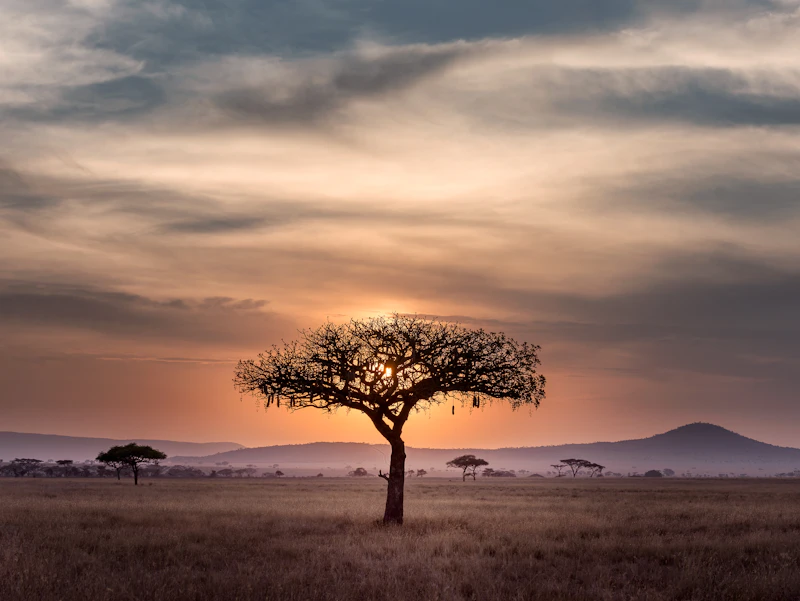
Best Time to Visit the Serengeti
The best time to visit the Serengeti depends on the event you most want to witness. Match the month to the migration — calving, river crossings or big-cat hunting — and build the rest of the trip around the herds, the weather, the crowds and your budget.
Read guideMore in Wildlife
6
Big Cats in the Serengeti
A guide to the Serengeti's three great cats — lion, cheetah and leopard — where each is most likely, how their behaviour shapes a sighting, and why a patient vehicle and a good guide matter more than any guarantee.
Read guide
Birdwatching in the Serengeti
A traveller's guide to birding the Serengeti — the rollers, ostriches, raptors and wet-season migrants that fill the plains — and how to add birdwatching to a safari without losing the mammal focus.
Read guide
Black Rhino in the Serengeti
Honest expectations for seeing black rhino in the Serengeti — why sightings are rare, where the small protected population lives around the Moru Kopjes, and why the Ngorongoro Crater is often the better add-on for rhino.
Read guide
Buffalo in the Serengeti
Cape buffalo in the Serengeti — herd behaviour, the long rivalry with lions, why solitary old bulls demand respect, and why buffalo deserve more than a quick tick on the Big Five checklist.
Read guide
Camera Gear for a Serengeti Safari
A practical packing guide to camera gear for a Serengeti safari — lenses and bodies, batteries and cards, the all-important bean bag, dust protection, your phone, binoculars and how to pack it all for strict light-aircraft limits.
Read guide
Crocodiles in the Serengeti
Where the Serengeti's Nile crocodiles live, the role they play in the Grumeti and Mara River crossings, and how to watch the drama responsibly — with honest, no-guarantee expectations.
Read guide